
Truly Preserved is reader-supported. If you buy through a link on this page we may earn a commission at no extra cost to you. Nobody pays for placement or scores.
THE SHORT ANSWER
Yes, you can plant expired seeds — the date on the packet is a “packed for” year, not a death date. What changes with age is the share that sprouts: germination falls a little every year, and vigor falls first. Test before you trust the packet: put 10 seeds on a damp paper towel in a sealed bag somewhere warm (above 70°F), and count sprouts after the packet’s germination window, or 7–10 days if it gives none. At 70–90% sprouted, sow a little thicker and plant. Below 70%, Illinois Extension’s advice is to buy fresh seed — and at 50% or lower, Iowa State Extension says the packet is not worth sowing at all.
Every spring the same drawer gets opened: half-used packets from two, three, five years ago, each stamped with a year that has already passed. The instinct is to treat that stamp like the date on a milk carton. It is not. Under the Federal Seed Act, a home-garden packet carries the year it was packed for — the season its germination was tested for — not an expiration date after which the seed is dead. Seed does not switch off on a birthday. It fades, crop by crop and storage spot by storage spot, which is why a five-year-old cucumber packet kept in a cool jar can out-sprout a two-year-old onion packet that spent a summer in a hot shed. This page is built from the extension services’ own germination-test instructions — Illinois and Iowa State, read in full — plus the viability tables those same services publish, so you can stop guessing from the stamp and measure the packet in front of you.
What does the date on a seed packet actually mean?
The date on a seed packet means the seed was tested and packed for that growing season — nothing more final than that. Federal rules for vegetable seed in interstate commerce set minimum germination standards a lot has to meet to be sold without a low-germination warning on the label (7 CFR 201.31): 80% for lettuce and peas, 75% for cabbage, sweet corn and tomatoes, 70% for beans and onions, and as low as 55% for carrots and peppers. A packet stamped for last year met its crop’s standard when it was tested. It did not promise anything about this year, and it does not forfeit anything this year either.
That is also why two packets of the same age can behave so differently. The stamp records when the seed was packed. It says nothing about where the packet has lived since — and where it lived is most of the story, as our seed storage guide works through in detail: every 10°F of extra warmth and every point of extra seed moisture roughly halves storage life. Age is the weakest of the three facts about an old packet. Crop and storage history matter more, and the test below matters most.


Presto 16-Quart Pressure Canner (01755)
The lightest, shortest, easiest canner here to lift and store — the right first canner if your batches are small and your cabinets are low.
$151.63 from Amazon
Morton Canning and Pickling Salt, 4 lb
The pure salt three of the ten categories are written around.
$2.68 from AmazonHow do you test whether expired seeds will still sprout?
You test expired seeds with the paper-towel germination test, and it takes ten seeds and a week. Illinois Extension’s version, step for step:
- Place 10 seeds on a slightly damp paper towel. Damp, not soaked — a dripping towel rots seed instead of sprouting it.
- Fold or roll the towel around the seeds and seal it in a closed plastic bag so it cannot dry out. Write the crop and the date on the bag.
- Keep it somewhere warm, above 70°F. The top of the refrigerator works; light is not a factor for most seed.
- Check at the germination time printed on the packet. If the packet gives none, check at 7–10 days.
- Unroll and count. Each sprouted seed out of ten is ten points: 8 of 10 is an 80% germination rate.
Iowa State Extension runs the same test with a bigger sample and says so plainly: at least 20 seeds, 50 is better, 100 is best, kept at 70–80°F and checked daily after the first two or three days. With ten seeds, one stubborn seed swings the result by ten points; with twenty, the number steadies. For a packet you are counting on — the vault varieties you cannot easily replace — use twenty. For a half-packet of radishes, ten is honest enough.
Run the test about a month before planting time, which is Iowa State’s timing and the part most people skip. A test in January that fails leaves you weeks to order fresh seed. The same test run the morning you meant to sow leaves you a bare row and a late start. And the sprouts are not wasted: Illinois notes the germinated seeds can go straight into soil or a pot — cut the towel around any root that has grown into it and plant seed, towel and all.
What germination rate is good enough to plant?
A germination rate of 90% or better is very good, 70–90% is plantable if you sow thicker, and 50% or below is the replace-it line. The two extension services draw those lines in almost the same place:
| Your test result | What it means | What to do |
|---|---|---|
| 90–100% | Very good (Iowa State) | Sow normally |
| 70–90% | Still sound (Illinois) | Sow a little thicker than normal |
| 50–70% | Thin and weakening | Sow heavy or replace; do not count on it alone |
| 50% or below | Too low to be worth using (Iowa State) | Discard and buy fresh seed |
One warning sits underneath that table, and Illinois states it directly: a seed lot loses vigor before it loses germination. An old packet can still post a respectable sprout count in a warm towel and then produce slow, weak seedlings that never quite catch up in real soil. That is why the middle band is a judgment call rather than a pass. At 75% on a crop you can re-sow in a week — lettuce, beans, radish — planting thick is a fair bet. At 75% on tomatoes you start once, indoors, in February, weak seedlings cost you the season, not a week. We would replace the tomato packet and plant the lettuce.

COSORI Premium CP267-FD
Stainless trays, a 48-hour timer, and digital controls set to the degree.
$135.99 from Amazon
Nesco VS-12 Vacuum Sealer
A full-featured countertop sealer for bagging batches before they go into storage.
$108.18 from Amazon
Which expired seeds are worth testing, and which are not?
Onion, parsley and parsnip packets past their first year or two are rarely worth the towel; tomato, cucumber and cabbage packets several years old usually are. The crop sets the clock before storage ever gets a vote. Illinois Extension’s own examples make the spread plain: parsley and onion seed last a year or two, while watermelon and cabbage should last four years or more. Iowa State’s viability table puts numbers on the same spread — onion at 1 year, corn and peppers at 2, beans, carrots and peas at 3, tomatoes at 4, and broccoli, cabbage, cucumber, lettuce and radish at 5, all of it assuming the seed was stored properly.
So read an old packet in that order. A four-year-old tomato packet from a cool drawer: test it, expect a decent result. A four-year-old onion packet from the same drawer: the crop’s own span says the test is a formality — replace it. Our companion page, how long vegetable seeds last, carries the full crop-by-crop table with the places the extension services disagree with each other, because on lettuce they disagree by five years and pretending otherwise would be its own kind of sloppy.
Can you do anything to help old seeds sprout?
No soak, scarifying trick, or tonic brings back a seed whose embryo has died — and dead is what most failed old seed is. The treatments that circulate every spring help seed that is alive but dormant, held back by a hard coat or a chemical brake. Ordinary aged vegetable seed is not dormant; it is deteriorated, which is a different problem with no remedy. What you can honestly do for a marginal packet is arithmetic, not revival: sow at the rate the test supports (at 60% germination, roughly two seeds for every plant you want, plus a margin), sow it where a thin stand costs you least, and keep a fresh packet of the same crop as the backup if the crop matters.
The large-seed shortcut deserves the same honesty. Illinois offers a water test for peas, beans and corn — sinkers are fine, floaters get tossed — as a quick sort for big seed. Treat it as a sort, not a verdict: it can cull obviously hollow seed before the real test, but the paper towel is still the measurement. If the two disagree, believe the towel.

METRONIC Impulse Sealer
Heat-seals the mylar bags that replace torn or opened seed packets.
$39.99 from Amazon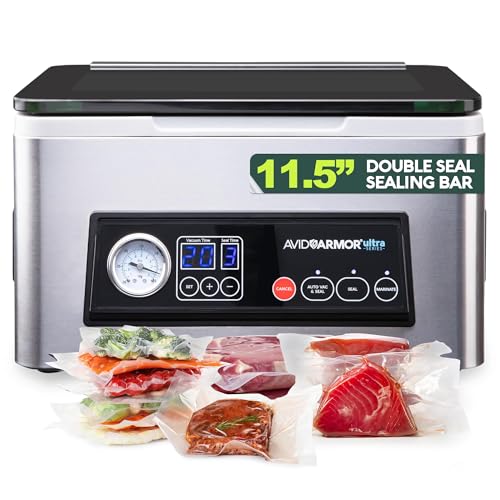
Avid Armor USV20
The chamber machine — the gentlest seal for delicate seed, with no crushing suction on the packet.
$349.00 from Amazon
Mrs. Wages Pickling and Canning Salt
The resealable-pouch version of the same additive-free rule.
$19.32 from AmazonWhat should you do with a seed vault’s oldest packets?
A seed vault’s oldest packets should be grown out or tested on a rotation, not discovered dead in the year you need them. That is the whole difference between a garden drawer and a preparedness vault: the drawer’s failure costs a spring, the vault’s failure costs the plan. Test each vault variety every year or two — twenty seeds, one towel, a week — and write the percentage and the date on the packet. When a variety slides under 70%, grow it out that season and save fresh seed from the plants, or replace the packet while the variety is still sold. In our heirloom seed vault comparison, the recount found the headline seed counts lean heavily on exactly the long-lived crops — lettuce and celery in the Open Seed Vault’s case — which is the flattering direction. The short-lived corner of any vault, the onions and peppers, is where the rotation earns its keep.
Questions readers ask next
Do seeds expire all at once?
No — seeds in a packet expire one by one, which is why germination is a percentage and not a yes or no. A five-year-old packet is not dead or alive; it might be a 60% packet. The towel test measures where on that slide your packet currently sits.
Is the float test reliable for old seeds?
The float test is a rough sort for large seed only — peas, beans and corn, per Illinois Extension — where sinkers are kept and floaters tossed. It does not measure a germination percentage and it does not work as a verdict for small seed. The paper-towel test is the reliable measurement.
Can you plant the seeds that sprouted in the test?
Yes — Illinois Extension says the sprouted test seeds can be planted in the garden or a container. Roots often grow into the towel, so cut or tear the towel around the seed and plant both. Handle them gently; a torn root is a dead seedling.
How long does a germination test take?
A germination test takes as long as the crop takes to sprout: check at the days-to-germination printed on the packet, or at 7–10 days if the packet gives none. Iowa State has you checking daily after day two or three, and calling the result once a further week shows no new sprouts.

Score out of 10
Gardeners Basics Seed Vault
When germination testing says the old seed is done, this is the vault our seed comparison scores highest.
$23.95 from Amazon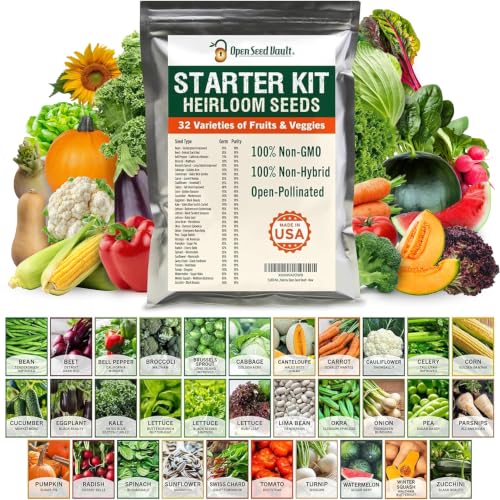
Open Seed Vault, 32 Varieties
Thirty-two heirloom varieties in one vault — the broad replacement for a seed stash that has aged out.
$28.99 from AmazonFrequently asked questions
Can you plant expired seeds?
Yes. The packet date is a “packed for” year, not an expiration date. Germination falls gradually with age, so test the packet — 10 to 20 seeds on a damp paper towel — and plant it if 70% or more sprout, sowing thicker at the lower end of that band.
What germination percentage is too low to plant?
Iowa State Extension puts the line at 50% or below: too low to be worth using, discard and replace. Between 50% and 70% the seed can still fill a row if sown heavily, but vigor is already fading, so do not make it the only packet you depend on.
How many seeds should I test?
Illinois Extension’s standard test uses 10 seeds, which makes the math simple. Iowa State recommends at least 20, and says 50 is better and 100 is best, because a bigger sample steadies the percentage. Use 20 or more for any packet that matters.
Which seeds go bad fastest?
Onion seed is the shortest-lived common vegetable seed at about 1 year in the extension tables, with parsley and parsnip close behind. Corn and peppers run about 2 years. At the other end, cucumber, radish, cabbage and broccoli commonly hold 5 years when stored cool and dry.
Sources & freshness: University of Illinois Extension, “Test Seed Viability” (extension.illinois.edu), and Iowa State University Extension, “How to Store Seeds and Test Germination Rates” (yardandgarden.extension.iastate.edu), both read November 11, 2026; federal minimum germination standards, 7 CFR 201.31.

Survival Garden Seeds, Home Garden Collection
A home-garden seed collection for restocking the varieties your germination test just retired.
$29.97 from Amazon
Wallaby 1-Gallon Mylar Bags
Cool, dry and dark is the storage rule — sealed mylar keeps moisture and light off seed packets between seasons.
Check Availability
PackFreshUSA 300cc Oxygen Absorbers
An absorber in the sealed bag strips the oxygen that ages stored seed and food alike.
Check AvailabilityMore answers like this one: this page lives on the Preserve the Seed page, beside our seed storage protocol and the vault recount — and its companion, how long vegetable seeds last, carries the crop-by-crop years.
Talk it over with other readers. The Truly Preserved Community on Facebook is where readers compare notes on food storage, water, and backup power — and where your questions help decide what we research next. Join the group →
Viewers also searched for these items.
Centrum Adult Multivitamin
The boring, complete answer to the BYU numbers: one bottle covers a person for months, stores beside the food, and costs less than a single freeze-dried entree.
$12.00 from Amazon
Sour Patch Kids (5 lb)
The bulk bag is the economical way to feed a freeze dryer — one bag fills several tray loads, and the pieces are the standard size every candy-mode timing is written for.
$20.99 from Amazon
Robinair 13203 Vacuum Pump Oil
A pump that runs quiet and pulls nothing is very often an oil problem — this is the replacement our maintenance guide names.
$16.79 from AmazonPrices shown on this page were last checked November 26, 2026 — prices change; check before you buy.