
Affiliate Disclosure: Truly Preserved is reader-supported. When you buy through links on this page, we may earn a commission at no extra cost to you. As an Amazon Associate, Truly Preserved earns from qualifying purchases. Learn more.
Most seed storage advice is written for next spring. Ours is not. This page is about how to store seeds long term — the vault you bought for five or ten years from now, not the half-packet of basil on the kitchen counter. The difference matters, because the rules change with the timeline: a packet that shrugs off one warm summer can be dead by year three in the same drawer. This guide is built from university extension guidance — Colorado State, Utah State, Iowa State, Delaware, UC and USDA sources — read side by side on October 31, 2026, and checked against what the seed sellers themselves publish. Where those sources disagree, and on lettuce they flatly disagree, we say so instead of picking the number that looks best in a chart. We don’t sell seeds; we did the homework. The Preserve the Seed hub is where this page lives, next to our recount of what is actually inside the three big vault kits.
The Short Version
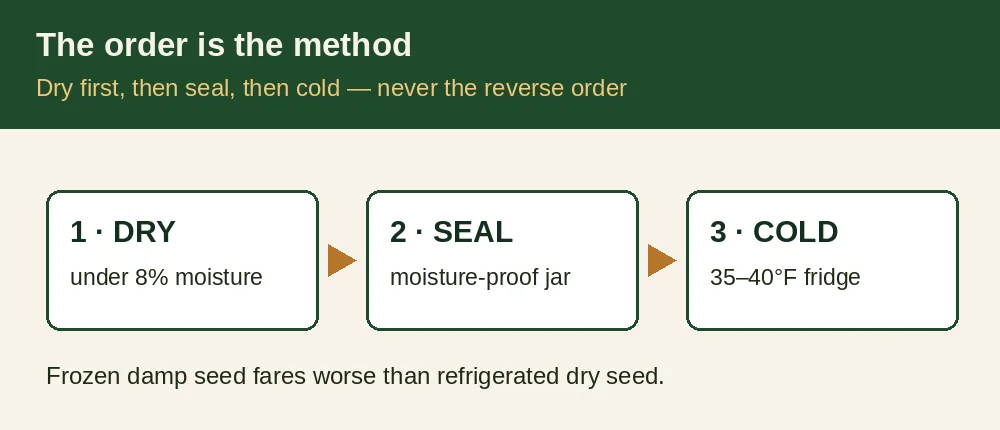
Dry first, cold second, sealed always. Seed stored below 8% moisture and below 40°F can last 10 years or more, per Colorado State Extension. Every 1% of extra moisture in the seed, and roughly every 10°F of extra warmth, cuts that life in half. A sealed jar in the refrigerator is the safest default for most households. The freezer is the longest-life option, but only for seed that went in properly dry — damp seed frozen is damp seed killed. Skip the oxygen absorber: at low moisture and temperature, extension research says oxygen has not been shown to matter. And no storage method saves a vault you never open — test a few seeds from each packet every year or two, and grow out the short-lived crops before they fade.
How we got these numbers: We read the current extension fact sheets from Colorado State, Utah State, Iowa State, Delaware and UC, the USDA’s own seed-bank storage notes, and the storage guides of the three vault makers in our seed vault comparison, then kept only the figures at least two sources support — and flagged the ones they fight about. Read our full methodology.
What Temperature and Humidity Do Seeds Actually Need?
Seeds need it dry and cool, and the two numbers that run everything are seed moisture below 8% and storage temperature below 40°F — that is Colorado State Extension’s line for storage that stretches to 10 or more years. Utah State lands in nearly the same place: an ideal of 35–40°F and relative humidity under 40%, and a hard warning not to store seed above 70°F or above 60% humidity.
The rule of thumb seed people have used since the 1960s is Harrington’s: add the temperature in Fahrenheit to the relative humidity, and keep the sum under 100, with no more than half of it coming from humidity. A 40°F refrigerator at 30% humidity sums to 70 — comfortable. A 75°F garage at 65% humidity sums to 140, and seed ages fast in it. Harrington’s second rule is the one worth taping to the jar: storage life roughly halves for every 1% rise in seed moisture and every 10°F rise in temperature. Run that arithmetic on a closet versus a fridge — 70°F against 40°F is three halvings — and the same packet that lasts 3 years on the shelf has something like eight times the life refrigerated, if it went in dry. That is arithmetic on the rule, not a promise, but it is why the fridge beats the fancy box in a warm room every time.
Harrington’s rule: temperature + humidity, summed
Keep the sum under 100, with no more than half of it from humidity.
Fridge, Freezer, or Closet — Which One Is Right?
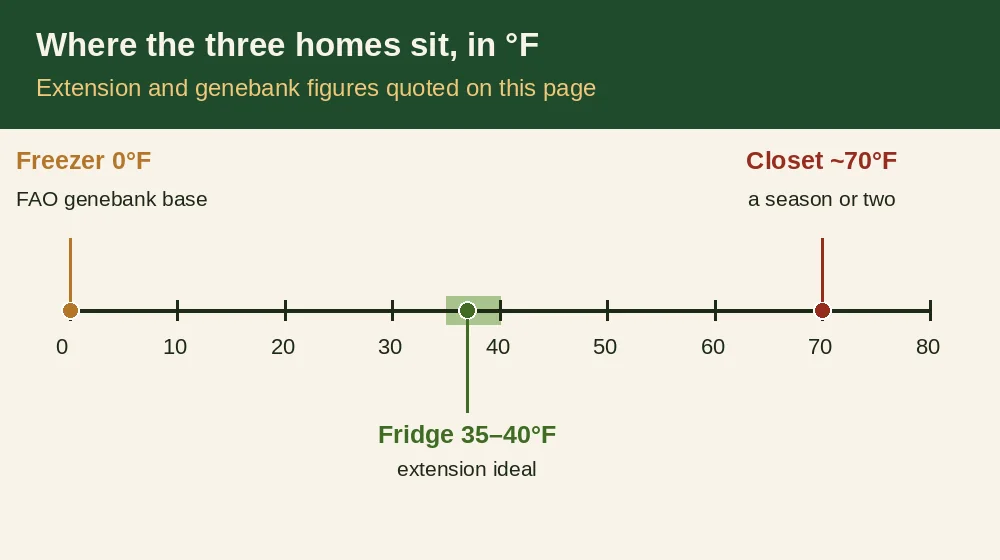
For most households, the refrigerator is right. It holds the 35–40°F the extension services ask for, and its one flaw — humid air inside — is fixed by the sealed container the seed should be in anyway. Keep the jar at the back, not in the door, where the temperature swings every time someone hunts for the pickles.
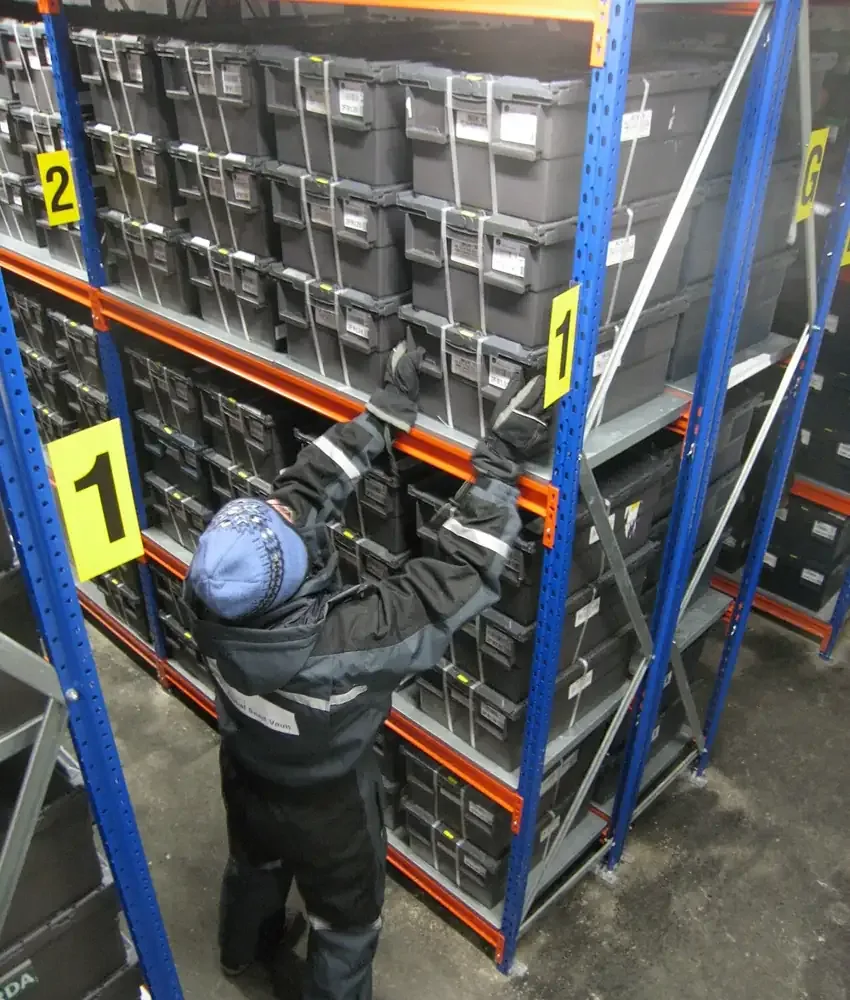
The freezer is the seed-bank method: the FAO genebank standard stores base collections at 0°F (−18°C) in sealed, moisture-proof containers, and USDA’s own collection keeps working stock at about 39°F and 30% humidity — under those controlled conditions, some crops have held above 65% germination for 25 to 40 years. A home freezer can borrow the method, with two honest warnings. First, the seed must be drier than refrigerator seed — around 5% moisture is the target the heritage-seed guidance gives for freezing, against the general under-8% rule — because water inside a seed expands as ice and can rupture the cells that make it alive. Second, a frost-free freezer warms itself up on a cycle to melt ice, and that quiet freeze-thaw rhythm is exactly what stored seed does not want; a chest freezer that just sits there cold is the better box. If you cannot verify your seed is dry, the fridge is not the timid choice — it is the correct one. Purdue’s guidance to home gardeners is fridge, not freezer, for precisely that reason.
The closet is fine for a season or two. Delaware Extension puts useful life at roughly 2 to 5 years at about 70°F and 50% humidity, depending on the crop. The garage, the shed and the attic are not fine at any timeline: they are the hottest, dampest, most changeable air in the house, and every source we read names them as the worst places seed can live.
Can You Freeze Seeds Without Killing Them?
Yes — if they are dry, sealed, and left alone. Dry seed tolerates cold that would shock a gardener: what kills frozen seed is moisture, not temperature. Seal dry seed in a moisture-proof jar or a heat-sealed mylar bag, freeze it once, and do not keep pulling it out to admire it. Every trip from freezer to counter and back is a stress cycle, and seed you will dip into every year belongs in small separate jars, one per year, so the main store is opened once.
The step everyone skips is the thaw. When the jar comes out, leave it sealed on the counter until it is fully back to room temperature before you open it — Seed Savers Exchange gives its freezer jars about 4 hours. Open a cold jar in a warm kitchen and the room’s moisture condenses straight onto the cold seed, undoing months of dry storage in a minute. Smaller containers warm faster than big jars, which is why the timings you will see quoted run from under an hour to a full day; the rule underneath all of them is the same — sealed until warm, no exceptions. One bonus of the freezer: three days in it kills the insects, including the bruchid beetles that ride inside dry beans, which is why extension guidance sends legume seed through a short freeze before long storage.
Should You Put an Oxygen Absorber in With Seeds?
No — and this is the point where food-storage habit and seed-storage evidence part company. Oxygen absorbers are right for rice, beans and flour you plan to eat. Seed you plan to plant is alive, and the strongest evidence we found says the absorber is solving a problem that does not exist: in Colorado State’s words, when seed moisture and storage temperature are low, the presence of oxygen has not been shown to be a factor in seed longevity, and germination is unaffected by storage in nitrogen, carbon dioxide, partial vacuum or plain air. One major seed seller, Gardeners Basics, says the same from the trade side — it does not put absorbers in its own vault kits, because moisture and heat do the damage. A few seed sellers go further and warn absorbers can harm planting seed; the evidence for harm is thinner than the evidence for pointlessness, so we will say it plainly: an absorber in a seed jar is money spent on the wrong enemy. Spend it on a jar that seals and a spot that stays cold.
Mylar is a different question. As a container, mylar earns its place: it blocks light and moisture, and it is what the vault kits themselves ship in. But a zip-top mylar bag you open every spring is not the same barrier as a heat-sealed one, and neither fixes seed that was damp when it went in. Our full rundown of bag thicknesses and sealing is in the mylar bags guide — the food rules and the seed rules share the bag and part ways at the absorber.
Paper Packet, Plastic Bag, Mylar, or Jar — What Should Seeds Live In?
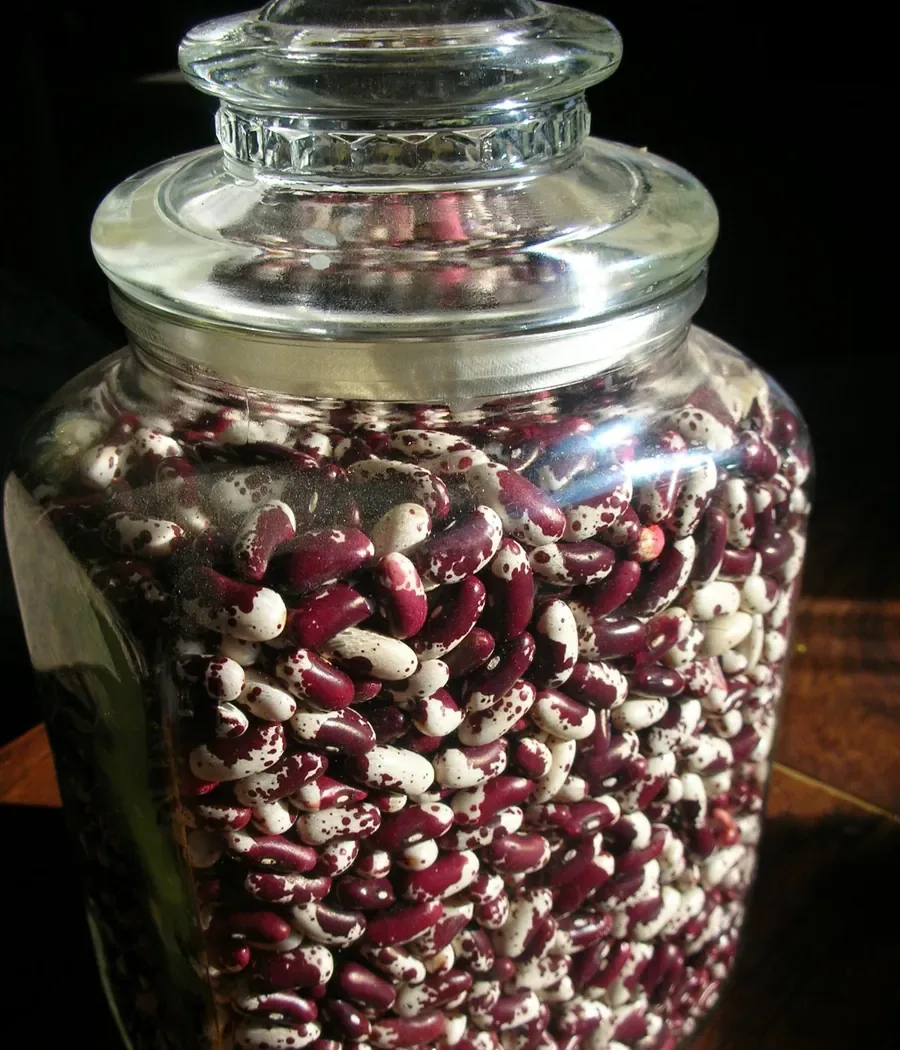
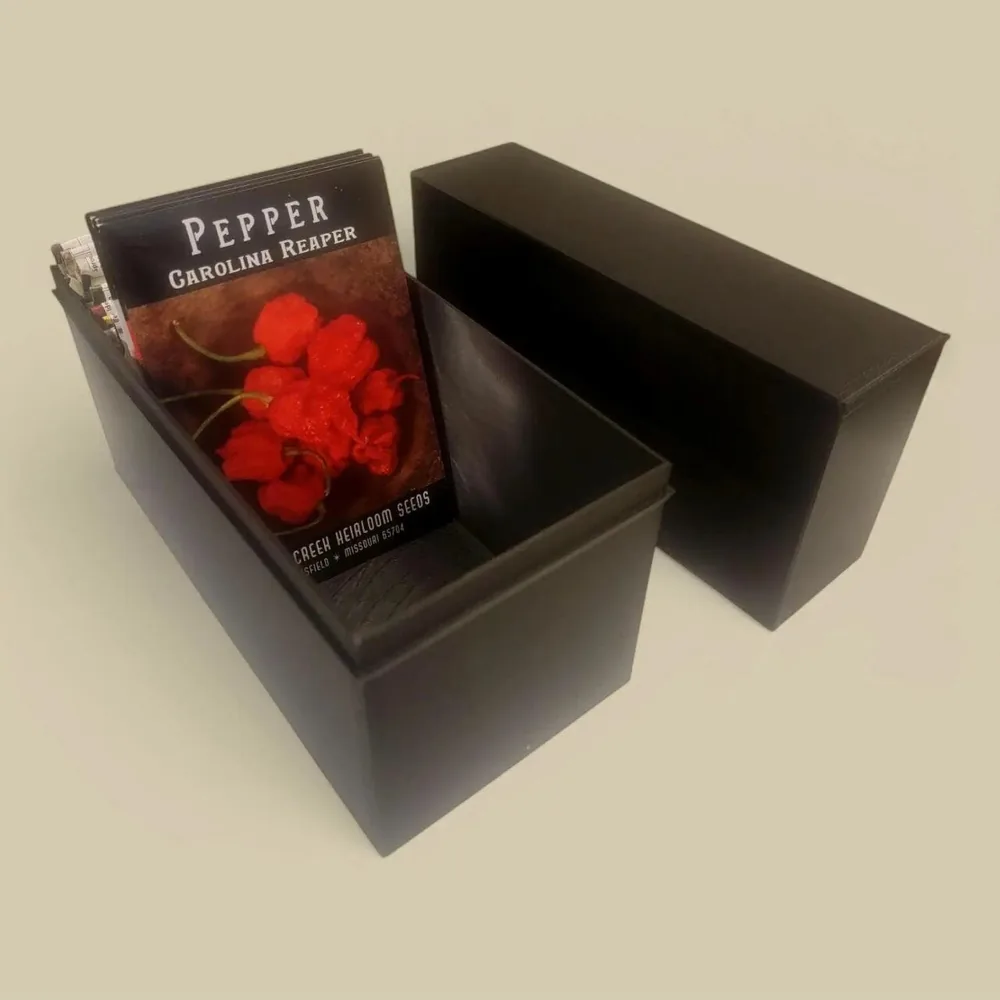
A paper packet inside a sealed jar is the setup the evidence keeps circling back to. The packet holds the variety name and the date, breathes just enough that not-quite-dry seed can keep drying instead of molding, and the jar does the actual work of keeping room humidity out. Colorado State is blunt about the outer layer: use sealed cans or jars rather than plastic bags, and judge a container moisture-proof if it would keep seed dry submerged in water. A zip bag of seed tossed in a drawer fails on both counts — plastic passes moisture slowly over years, and seed sealed in damp has nowhere for that moisture to go but into mold.
If your seed is not as dry as you would like — and home-saved seed rarely is — dry it in the jar with silica gel the way Iowa State Extension describes: seed in its labeled envelope, an equal weight of silica gel in a second envelope, both sealed in the jar for a week or two, then the gel comes out. No silica on hand, two heaping tablespoons of powdered nonfat dry milk wrapped in tissue is the extension-cited substitute, good for about six months. One caution from the same sources: do not chase zero. Seed dried below roughly 3–5% moisture can be damaged or driven dormant, and beans and peas dried too hard can turn “hard seed” that refuses to take up water at planting — Colorado State says over-dried legumes germinate better after two weeks in humid air before sowing. Dry enough is under 8%. Drier than that is a freezer project, not a default.
How Long Do Seeds Last, Crop by Crop?
Seed does not expire on a date; it fades. A packet at 90% germination when packed slides to 70%, then 40%, then a scattering — which is why the charts below are planning years, the span you can sow at the normal rate and expect a stand, not the year the last seed dies. Research plots tell the longer story: at room conditions around 68°F and 50% humidity, lettuce took about 4.6 years to fall to half germination and peas about 13.9 years, and tomato seed in the USDA genebank took 73 years to reach the halfway mark. Your grandfather’s ten-year-old tomato seeds sprouting is not a miracle and the chart’s 4 years is not a lie; they are measuring different things.
| Crop | Years in cool, dry storage | Best for |
|---|---|---|
| Onion, parsnip, parsley | 1 | Buying fresh every year — no storage trick fixes these |
| Sweet corn | 1–2 | Planting out within two seasons |
| Pepper, leek, okra | 2 | A two-year rotation, tested before you rely on it |
| Beans, peas, carrot, spinach | 3 | The middle of the vault — refresh on a three-year cycle |
| Tomato, squash, pumpkin, cabbage family, beet | 4 | Four-year planning with a germination test in year three |
| Cucumber, melon, endive | 5 | The longest-lived staples in a home vault |
| Lettuce | Sources disagree — 1 to 6 | Treating as short-lived until your own test says otherwise |
Planning years in cool, dry storage, by crop group
Colorado State Extension’s relative-longevity figures, as tabled above. Lettuce is not charted — the sources disagree, from 1 to 6 years.
Years are Colorado State Extension’s relative-longevity figures for seed kept dry and cool; carrot and sweet corn run a year longer in some older charts, so we print the conservative number.
Lettuce deserves its own paragraph because it is the biggest fight in the seed-storage literature. Colorado State’s current fact sheet gives lettuce one year. The older chart tradition that most websites copy — it traces to a 1954 leaflet by Harrington and Minges — gives it six. Both cannot be your planning number. Our call: treat lettuce as a 1-to-2-year seed, buy it fresh, and let your own germination test argue otherwise. It costs a packet to be careful and a garden bed to be wrong in June.
How Do You Test Whether Old Seeds Are Still Good?
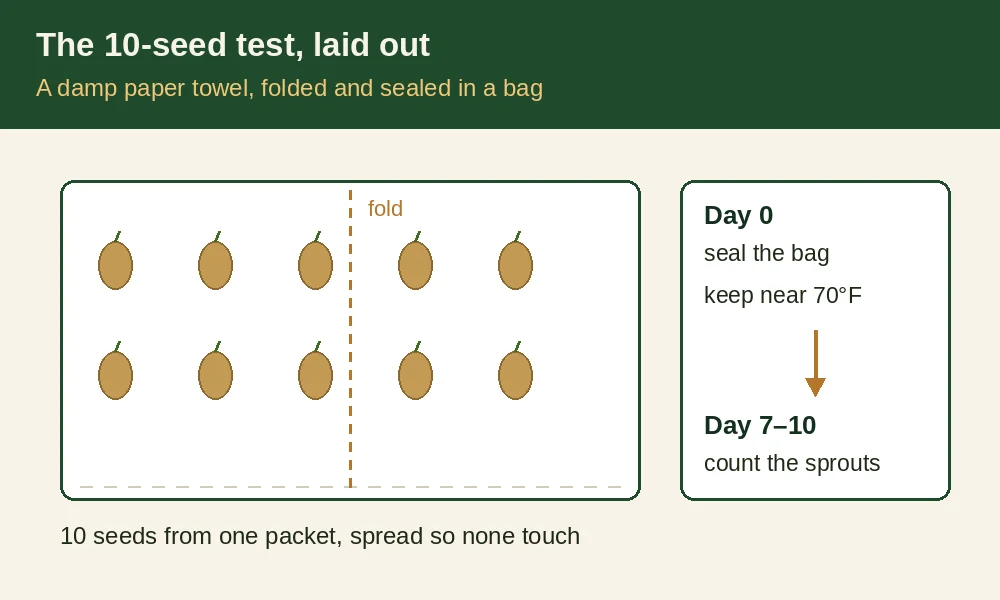
With ten seeds and a paper towel. Lay ten seeds from the packet on a damp — not dripping — paper towel, fold it over, seal it in a bag, and keep it somewhere near 70°F. Check at the crop’s normal sprouting window, usually 7 to 10 days. Illinois Extension’s reading of the count: 8 to 10 sprouted, plant as normal. Five to seven, the seed is usable but tired — sow about half again as thick. Under five, or under about 70% on the stricter extension line, replace the packet. Run the test in late winter, not at planting time, so a failed packet is a shopping trip instead of a lost row. And write the result and the date on the packet; a vault with test dates on it is a plan, and a vault without them is a hope.
What Does This Mean for the Seed Vault You Already Bought?
It means the vault’s clock started the day it was packed, and the marketing on the box is not the clock. When we recounted the three big kits in our heirloom seed vault comparison (prices checked October 25, 2026), the storage paperwork told three different stories. Gardeners Basics ($29.95) claims a 25-year shelf life on its Amazon page, while its own storage guide gives most vegetables 2 to 5 years, crop by crop — we believe the guide. Survival Garden Seeds ($29.99) says 3 to 5 years in its FAQ and prints a packed-for date with every lot tested, the most honest paperwork of the three. Open Seed Vault ($24.99) offers a “20+ years” answer in seller Q&A with no published guide behind it. Germination is also the live argument in the owner reviews: on the Gardeners Basics listing, across about 9,300 ratings, germination is the most-mentioned topic in Amazon’s review summary — 120 positive mentions against 69 negative, with 10 of 24 mentions about seed condition calling the seed old or tired.
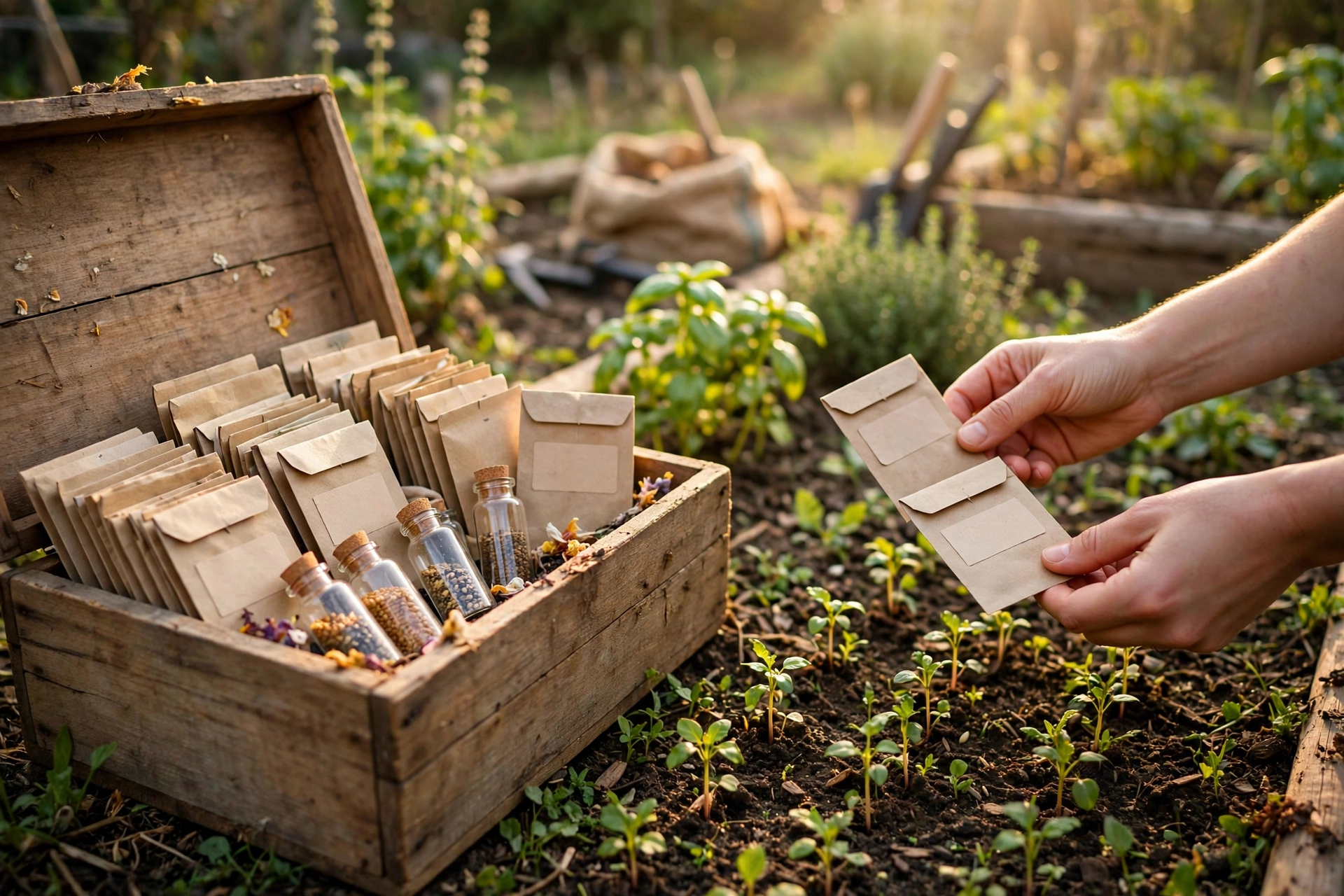
The counts matter as much as the storage. Strip the lettuce, celery and wildflower that pad the headline numbers and the food seed in those kits runs about $4.40 per 1,000 seeds for Gardeners Basics, roughly $2.30–$3.30 for Survival Garden Seeds, and $4.84 for Open Seed Vault — while the crops that carry the calories, beans, peas, corn and squash, arrive a few dozen at a time. None of that makes a vault a bad buy. It makes it a garden plan with a refresh bill attached: plant from it every year, save seed from what grows, replace the one- and two-year crops on schedule, and a $25–$30 vault stays alive indefinitely for a few dollars a year. Seal it in a closet and forget it, and the same money buys you a box of dead lettuce in year five. If you are choosing between a vault and individual packets, buy packets for the short-lived crops you will rotate anyway, and let a vault do what it is good at — a dated, counted, cold-stored base of the four- and five-year crops.
The Honest Caveats
Three, and they matter. First, the viability charts disagree with each other more than any seller admits — lettuce is the extreme case, but carrot and sweet corn also move by a year between sources, and every chart on the internet descends from a small set of aging references. Treat any single number, ours included, as a planning figure with a test behind it, not a date stamp. Second, colder and drier is not better without limit: seed can be over-dried into dormancy or hard seed, and frozen damp seed is worse off than refrigerated dry seed. The order of operations — dry, then seal, then cold — is the whole method. Third, no source we trust publishes a neat table of “this crop lasts X years on the shelf and Y in the freezer,” and neither do we. The doubling rule is the honest bridge between the two, and anyone selling you exact freezer years per crop is decorating.
Questions Gardeners Ask About Storing Seeds
How long do seeds last? One to five years for most vegetables in cool, dry storage — onion and parsnip about a year, cucumber and melon about five — and 10 or more years is achievable for many crops dried below 8% moisture and kept below 40°F. The crop matters more than the brand: the same jar that keeps cucumber for five years will not save last year’s onion seed.
Can you freeze seeds, or does freezing kill them? You can, and seed banks do it at 0°F as their standard method. What kills seed is freezing it damp — aim for about 5% moisture, seal it moisture-proof, freeze it once, and let the sealed container warm fully to room temperature before opening it, so condensation lands on the jar and not the seed.
Should I vacuum-seal seeds or use oxygen absorbers? Neither is needed for planting seed. Colorado State’s research summary is that at low moisture and temperature, oxygen has not been shown to affect how long seed lasts. A sealed glass jar does the job; save the absorbers for the food buckets, where they belong.
Can I store seeds in their original paper packets? Yes — inside something sealed. The packet alone breathes and wicks humidity, so packets go into a jar, a sealed can, or a heat-sealed mylar bag, and that container goes somewhere cold. Paper inside airtight is the system; paper alone in a drawer is how packets die young.
Is it OK to store seeds in the garage? It is one of the worst places in the house. Garages swing hot in summer and damp in winter, and every 10°F of warmth roughly halves storage life. A garage-stored vault can lose in one summer what a refrigerated one keeps for years.
How do I test if old seeds are still good? Ten seeds on a damp paper towel in a sealed bag at room temperature, checked in 7 to 10 days. Eight or more sprouted, plant normally; five to seven, sow thicker; fewer than five, buy a fresh packet. Test in late winter so a dead packet is an errand, not a lost planting.
Sources & freshness: Colorado State Extension Fact Sheet 7.221 (Storing Vegetable and Flower Seeds), Utah State University Extension seed storage guidance, Iowa State Extension (harvesting and storing seeds), University of Delaware Extension (Harrington’s rules), UC ANR seed saving basics, USDA ARS seed storage notes, Seed Savers Exchange storage guidance, and the makers’ storage guides behind our seed vault comparison. Prices last checked: October 25, 2026 (vault comparison). Last updated: October 31, 2026.
Talk it over with other readers. The Truly Preserved Community on Facebook is where readers compare notes on food storage, water, and backup power — and where your questions help decide what we research next. Join the group →