
Truly Preserved is reader-supported. If you buy through a link on this page we may earn a commission at no extra cost to you. Nobody pays for placement or scores.
THE SHORT ANSWER
Select firm, young, tender broccoli with compact heads, remove leaves and woody portions, and soak the heads in brine — 4 teaspoons salt to 1 gallon water — for 30 minutes to remove insects. Split the heads lengthwise so the flowerets are no more than 1 1/2 inches across. Water blanch 3 minutes or steam blanch 5 minutes, cool promptly, drain, and package leaving no headspace. Seal and freeze at 0°F or below. Every figure on this page comes from the tested source credited at the bottom.
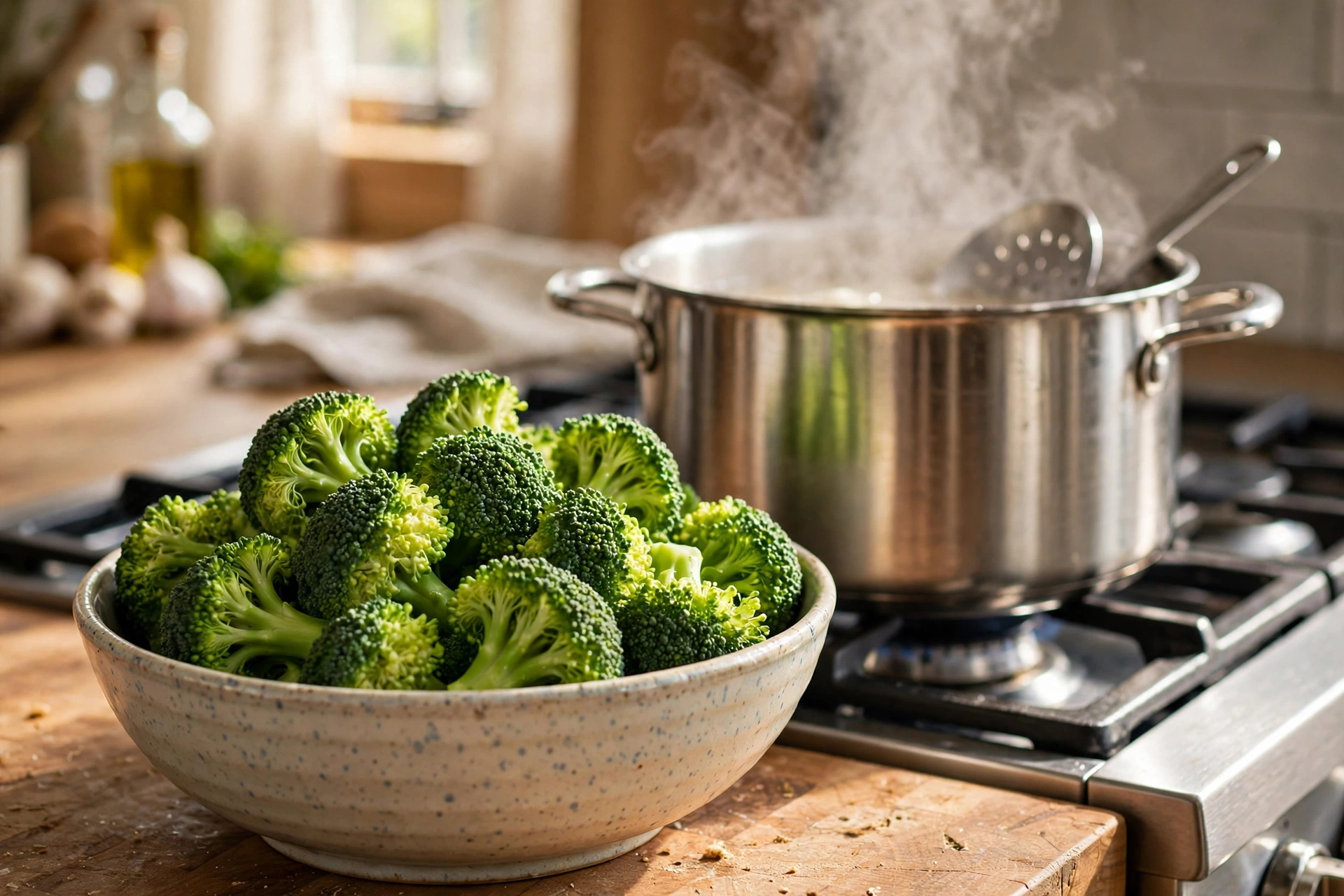
Broccoli is the vegetable that most clearly rewards doing the freezer job properly. Blanched and frozen at the right size, it comes out green and firm enough for any cooked dish. Frozen raw, or blanched in oversized chunks that never heated through, it comes out gray, soft, and strong-smelling — the version that gives frozen vegetables a bad name. The procedure here has two details home freezers most often skip, and both are in the source for a reason: a brine soak that drives out the small insects that hide in a compact head, and a strict size limit on the flowerets, because blanching time only works if the heat can reach the center.
This guide follows the National Center for Home Food Preservation’s tested procedure for freezing broccoli exactly — its brine, its size, and both of its blanching times. It is part of our preservation guides. The same blanch-cool-pack pattern runs through how to freeze green beans and the category flagship, how to freeze sweet corn.
What You Need
Select firm, young, tender stalks with compact heads — yellowing or opening heads are past the point freezing can help. You need salt for the brine, at 4 teaspoons salt to 1 gallon water, and a bowl big enough to immerse the heads for 30 minutes. For blanching, a pot at 1 gallon of water per pound of prepared broccoli with a basket and lid, or a steamer setup for the steam blanch, plus cold water at 60°F or below for prompt cooling. The flowerets must end up no more than 1 1/2 inches across, so a knife you can split stalks lengthwise with is part of the kit, along with freezer bags or containers.

Ziploc Freezer Quart Bags
Quart freezer bags portion the finished broccoli flat, so packages freeze fast, stack tight, and thaw one meal at a time instead of in one solid block.
$26.48 from Amazon
FoodSaver Elite Vacuum Sealer
A vacuum sealer pulls the air that causes freezer burn off every package, which is how this batch keeps its quality through the full storage window this page gives.
$218.56 from Amazon
Nesco VS-12 Vacuum Sealer
A second vacuum sealer sized for steady harvest-day work — sealing package after package without a cool-down pause while the produce is at its freshest.
$108.18 from AmazonBefore You Start
Size is the safety-and-quality figure in this procedure, and it is set before any water boils: flowerets no more than 1 1/2 inches across. A thick stalk with a wide head blanches on the outside and stays raw at the core in 3 minutes, and the raw core keeps its enzymes. Split heads lengthwise to get the size down rather than leaving chunky pieces and guessing at extra time — the source gives one time for one size. The brine soak is the other non-optional step: 30 minutes in 4 teaspoons salt to 1 gallon water, to remove insects that washing alone misses in a compact head.
It is worth understanding what the blanch is actually doing, because it explains why the size rule and the timing rule are the same rule. Inside a cut piece of broccoli, enzymes keep working after harvest — changing flavor, fading color, and toughening texture — and they keep working, more slowly, even at freezer temperatures. Heat is what stops them, and heat reaches the center of a floweret last. A piece at the tested size heats through in the tested time, all the way to the core where the enzymes are. A piece twice as wide gets a cooked rind and a raw center in the same 3 minutes, and the raw center is exactly where the off-flavors develop a month later. That is also why cooling promptly matters just as much: a basket of blanched broccoli left sitting hot on the counter keeps cooking from its own heat, trading the firm texture you blanched to protect for the soft, army-green result people blame on freezing itself. Blanch, cool, drain, pack — four verbs, no optional ones, and the order is the recipe.
How to Freeze Broccoli, Step by Step
- Select and trim. Select firm, young, tender stalks with compact heads. Remove leaves and woody portions, and separate the heads into convenient-size sections.
- Brine for 30 minutes. Immerse the sections in brine — 4 teaspoons salt to 1 gallon water — for 30 minutes to remove insects. Drain and rinse before blanching.
- Split to size. Split the heads lengthwise so the flowerets are no more than 1 1/2 inches across. Every piece should be at or under that size before it goes near the water.
- Blanch — 3 minutes in water, or 5 in steam. Water blanch the flowerets for 3 minutes in boiling water, at 1 gallon of water per pound, timing from when the water returns to the boil. Or steam blanch for 5 minutes.
- Cool promptly and drain. Cool the broccoli promptly in cold water at 60°F or below, for about the same time it blanched, then drain it thoroughly — florets hold water in the head, so let them sit in the colander and give them a shake.
- Pack with no headspace. Package the drained broccoli leaving no headspace. Seal, label with the date, and freeze at 0°F or below.
The Numbers: Blanching Times by Method
Broccoli’s blanching time is written for one size — flowerets 1 1/2 inches across — and two methods. The table keeps them together so the size condition travels with the times.
| Item | Figure | Notes |
|---|---|---|
| Floweret size | No more than 1 1/2 inches across | Split lengthwise to size |
| Brine | 4 teaspoons salt to 1 gallon water, 30 minutes | To remove insects |
| Water blanching | 3 minutes | Boiling water, 1 gallon per pound |
| Steam blanching | 5 minutes | Covered steamer |
| Headspace | None | Package leaving no headspace |
If a stalk will not split down to 1 1/2 inches across, it is trim for soup stock, not a freezing piece with a guessed time. The procedure’s quality comes from every piece matching the size the 3 minutes was tested on.
Broccoli florets freeze loose and cook from frozen, which makes portion size the whole game. The two products below portion blanched florets for the meals they actually land in — family sides in one, single pans in the other.

Etekcity Digital Kitchen Scale
A kitchen scale turns a garden pile into known pounds, which is what the per-pound ratios and yield figures in this guide are planned from.
$9.99 from Amazon
Ball Half-Pint Mason Jars, 12-Pack
Half-pint jars portion broccoli for the freezer in single-meal amounts for small households — nothing opened and wasted.
Check AvailabilityCommon Mistakes
Skipping the brine soak. A compact broccoli head hides small insects where a rinse cannot reach. The source’s answer is 30 minutes in brine at 4 teaspoons salt to 1 gallon water — finding out at the table is the alternative.
Blanching oversized pieces on the standard time. The 3-minute water blanch is written for flowerets no more than 1 1/2 inches across. A 3-inch chunk is raw in the middle at 3 minutes, enzymes and all.
Freezing broccoli raw. Unblanched broccoli loses color, flavor, and texture in storage and cooks up strong and gray. The blanch — 3 minutes in water or 5 in steam — is the procedure, not an optional polish.
Packing wet florets. Florets trap cooling water in the head. Packed wet, that water becomes a shell of ice around every piece. Drain thoroughly, and shake the colander more than feels necessary.
Storage and Shelf Life
Keep the freezer at 0°F or below the whole time. The National Center lists fruits and vegetables at 8 to 12 months of approximate storage at 0°F when the food has been prepared and packaged correctly, and those times are about quality — properly frozen food held at 0°F does not become unsafe at the end of them, it simply tastes less like the day it was picked. Label every package with the contents and the date, keep a simple list of what went in, and arrange the freezer so the oldest packages get used first. A package that warms up, loses its seal, or comes back from a long power cut with ice crystals melted away should move to the front of the meal plan rather than back into long storage — and if the power question is the one you are planning around, how to keep food safe if the power goes out covers what stays safe and for how long. Frozen broccoli is a cooked-dish vegetable: soups, casseroles, stir-fries, and roasted sides all take it straight from frozen, so pack in the amounts a single dish uses.
Cook frozen broccoli a little shorter than fresh — it was blanched before freezing, so it starts partway cooked, and a full fresh-broccoli cooking time is how frozen florets end up soft. Soups and casseroles forgive the difference; a plain side dish does not, so check it a minute early.
Viewers also searched for these items.

ThermoPro Instant-Read Thermometer
An instant-read thermometer confirms the cooling and reheating temperatures this procedure depends on, instead of guessing from steam and habit.
$8.99 from Amazon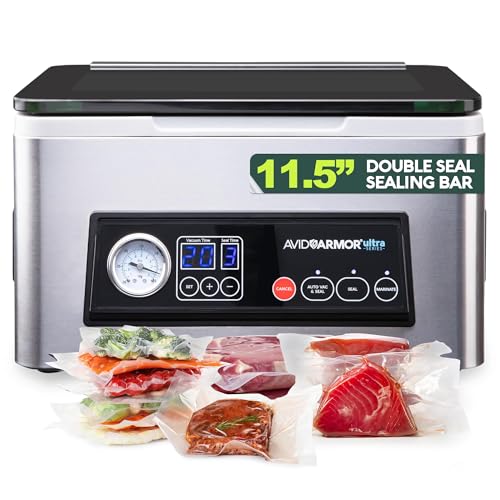
Avid Armor USV20 Chamber Vacuum Sealer
A chamber sealer handles liquid-heavy packages that a standard suction sealer struggles with, sealing them flat without drawing liquid into the seal.
$349.00 from Amazon
IRIS USA Airtight Container, 30 lb, with Wheels
An airtight container keeps finished packages and dry goods sealed against freezer air and odors between the harvest and the meal.
$23.99 from AmazonFrequently Asked Questions
Why soak broccoli in brine before freezing?
To remove insects. The procedure immerses the heads in brine — 4 teaspoons salt to 1 gallon water — for 30 minutes before blanching.
How long do I blanch broccoli?
3 minutes in boiling water, or 5 minutes steamed — for flowerets no more than 1 1/2 inches across.
How much headspace do I leave?
None. The procedure says to package the cooled, drained broccoli leaving no headspace.
Can I freeze broccoli without blanching it?
The tested procedure blanches every batch — blanching slows or stops the enzymes that cause loss of flavor, color and texture, and raw-frozen broccoli shows exactly those losses within weeks.
Procedure, brine, and blanching times: National Center for Home Food Preservation, “Freezing Broccoli,” from So Easy to Preserve, 6th ed., University of Georgia Cooperative Extension, via the: National Center for Home Food Preservation.
Prices shown on this page were last checked November 26, 2026 — prices change; check before you buy.
Talk it over with other readers
The Truly Preserved Community on Facebook is where readers compare notes on food storage, water, and backup power — and where your questions help decide what we research next.