
Truly Preserved is reader-supported. If you buy through a link on this page we may earn a commission at no extra cost to you. Nobody pays for placement or scores.
THE SHORT ANSWER
Select firm, ripe tomatoes with deep red color. For raw tomatoes: wash, dip in boiling water for 30 seconds to loosen the skins, core and peel, then freeze whole or in pieces with 1 inch of headspace. For stewed tomatoes: peel and quarter them, cover and cook until tender — 10 to 20 minutes — cool the pan in cold water, and pack with headspace. The source is plain that thawed tomatoes will not be solid, so frozen tomatoes are for cooking and seasoning. Every figure on this page comes from the tested source credited at the bottom.
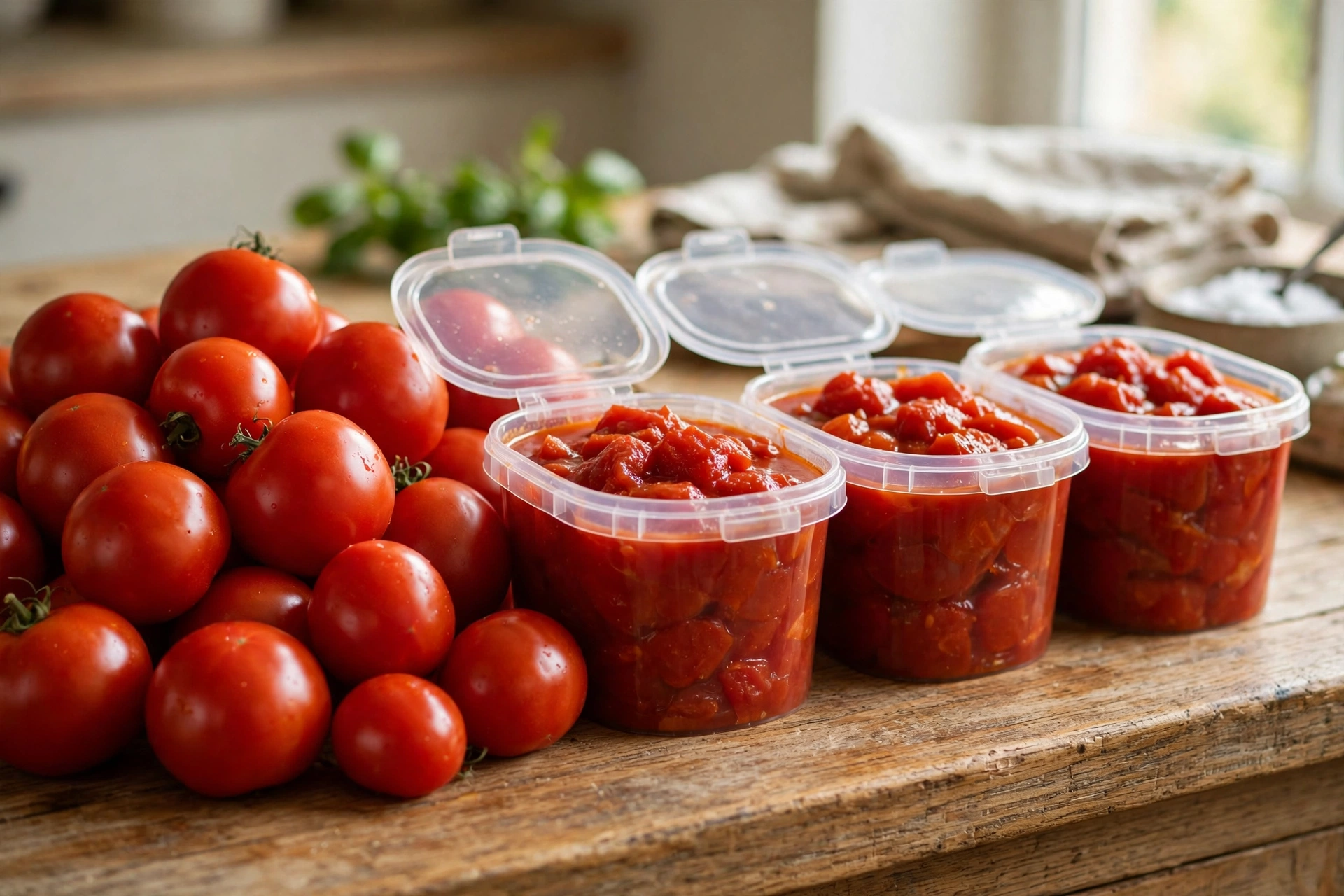
Tomatoes are the garden’s biggest surplus and the freezer’s easiest customer — no blanching program, no brine, no syrup. They are also the food people most often freeze with the wrong expectation. A frozen tomato thaws soft, because freezing breaks down the structure that makes a fresh tomato sliceable, and the National Center for Home Food Preservation says so in the procedure itself: use frozen tomatoes only for cooking or seasoning, as tomatoes will not be solid when thawed. Planned that way — sauces, soups, stews, and chili all winter — a freezer full of tomatoes is a pantry. Planned as sandwich tomatoes, it is a disappointment.
This guide follows the National Center’s tested procedures for freezing tomatoes exactly: raw, juice, and stewed, with its times and headspace. It is part of our preservation guides. Tomatoes headed for soup connect directly to how to freeze soup and meals in portions, and the blanched side of the harvest is in how to freeze sweet corn.
What You Need
Select firm, ripe tomatoes with deep red color — freezing will not ripen or improve a pale one. For the raw pack you need a pot of boiling water for the 30-second dip that loosens skins, a knife for coring, and freezer containers with room for 1 inch of headspace. For juice, add a sieve and, if desired, salt at 1 teaspoon to each quart of juice. For stewed tomatoes, a pot with a lid big enough to cook the quartered tomatoes until tender, and a sink or basin of cold water to cool the pan. If the tomatoes are going into glass, how to freeze food in mason jars covers the jar side of freezing in detail.

Ball Half-Pint Mason Jars, 12-Pack
Half-pint jars hold a recipe's worth of tomatoes for the freezer — one jar is what a weeknight sauce calls for.
Check Availability
Ziploc Freezer Quart Bags
Quart freezer bags portion the finished tomatoes flat, so packages freeze fast, stack tight, and thaw one meal at a time instead of in one solid block.
$26.48 from AmazonBefore You Start
Set the expectation first, because it decides the form. Raw-frozen tomatoes are the fastest to put up and the plainest to use: peeled, frozen whole or in pieces, and destined for the pot. Stewed tomatoes take 10 to 20 minutes of cooking up front and come out of the freezer nearly ready to serve. Juice takes a simmer and a sieve and freezes as an ingredient. All three are cooking tomatoes. The other rule is headspace: tomatoes and their juice expand as they freeze, and the raw pack’s figure is a full 1 inch — the largest in this set of guides — so leave it.
Choosing between the three forms is really choosing when the work happens. The raw pack puts almost all of it at the cooking end: ten minutes of dipping and peeling today, and a thawed tomato that still needs to become sauce in January. The stewed pack moves the work to harvest day, when the kitchen is already set up and the tomatoes are at their peak, and pays it back with containers that need little more than reheating and seasoning. Juice splits the difference and freezes as the most flexible ingredient of the three, ready for soups, braises, and sauces that start with a tomato base. Most gardens end up doing some of each — the best-looking ripe tomatoes raw for flexibility, the slightly overripe and odd-shaped ones stewed before they can spoil, and the surplus of everything juiced. What matters is that each container is labeled with its form, because a quart of juice and a quart of stewed tomatoes look identical through frosted plastic and behave very differently in a recipe.
How to Freeze Tomatoes, Step by Step
- Select firm, ripe tomatoes. Choose tomatoes with deep red color, firm and ripe. Sort out anything soft, moldy, or under-ripe.
- Raw pack — dip, core, and peel. Wash the tomatoes and dip them in boiling water for 30 seconds to loosen the skins. Core and peel them.
- Raw pack — freeze whole or in pieces. Freeze the peeled tomatoes whole or cut them in pieces. Pack into containers, leaving 1-inch headspace. Seal and freeze.
- Juice (optional form). Wash, sort and trim firm, vine-ripened tomatoes, cut them in quarters or eighths, and simmer 5 to 10 minutes. Press through a sieve. If desired, season with 1 teaspoon salt to each quart of juice. Pour into containers, leaving headspace, seal, and freeze.
- Stewed (optional form). Remove the stem ends, peel and quarter ripe tomatoes. Cover and cook until tender — 10 to 20 minutes. Place the pan containing the tomatoes in cold water to cool.
- Pack stewed tomatoes and freeze. Pack the cooled stewed tomatoes into containers, leaving headspace. Seal, label with the form and the date, and freeze at 0°F or below.
The Numbers: Times for Each Form
Tomatoes have three tested forms and three different clocks. The table keeps each form with its own times so a raw pack never borrows the stewed pack’s cooking time, or the other way around.
| Form | Heat step | Time | Headspace |
|---|---|---|---|
| Raw | Dip in boiling water to loosen skins | 30 seconds | 1 inch |
| Juice | Simmer, then press through a sieve | 5 to 10 minutes | Leave headspace (liquid pack: 1/2 inch wide-top pint, 1 inch wide-top quart) |
| Stewed | Cover and cook until tender | 10 to 20 minutes | Leave headspace (liquid pack: 1/2 inch wide-top pint, 1 inch wide-top quart) |
The optional salt in the juice is 1 teaspoon to each quart of juice, and it is seasoning, not preservation. The stewed pack’s cooling step — the pan set in cold water — is part of the procedure: stewed tomatoes packed hot into containers freeze slowly and unevenly.
Stewed tomatoes and juice are liquids, and liquids belong in containers that respect expansion. The two products below are the container side of this job — rigid jars for the stewed batch, and a sealer for the raw pieces that freeze flat.

FoodSaver Elite Vacuum Sealer
A vacuum sealer pulls the air that causes freezer burn off every package, which is how this batch keeps its quality through the full storage window this page gives.
$218.56 from Amazon
Etekcity Digital Kitchen Scale
A kitchen scale turns a garden pile into known pounds, which is what the per-pound ratios and yield figures in this guide are planned from.
$9.99 from AmazonCommon Mistakes
Freezing tomatoes for slicing. The source states it in the procedure: use frozen tomatoes only for cooking or seasoning, as tomatoes will not be solid when thawed. Freeze them for the pot and they are excellent; freeze them for sandwiches and they are not.
Skipping the 30-second dip and fighting the skins. Half a minute in boiling water loosens the skins so they slip. Peeling raw tomatoes with a knife wastes fruit and time, and leaves skin flecks that no sauce forgives.
Packing raw tomatoes with no headspace. The raw pack’s headspace is 1 inch — tomatoes give off juice and expand. A brim-full container pushes its lid in the freezer and thaws into a puddle on the shelf.
Packing stewed tomatoes hot. The procedure cools the pan in cold water before packing. Hot stewed tomatoes packed straight from the stove warm the freezer, freeze slowly, and can thaw the packages already in there.
Storage and Shelf Life
Keep the freezer at 0°F or below the whole time. The National Center lists fruits and vegetables at 8 to 12 months of approximate storage at 0°F when the food has been prepared and packaged correctly, and those times are about quality — properly frozen food held at 0°F does not become unsafe at the end of them, it simply tastes less like the day it was picked. Label every package with the contents and the date, keep a simple list of what went in, and arrange the freezer so the oldest packages get used first. A package that warms up, loses its seal, or comes back from a long power cut with ice crystals melted away should move to the front of the meal plan rather than back into long storage — and if the power question is the one you are planning around, how to keep food safe if the power goes out covers what stays safe and for how long. Raw-frozen tomatoes are best used at the earlier end of the range — plan them into the first sauces of the season rather than the last, and let the stewed and juiced forms carry the longer storage.
When a recipe calls for frozen tomatoes, thaw raw ones in a bowl and keep every drop of the juice that collects — that juice is part of the tomato, and pouring it away thins the sauce you froze them for. Stewed tomatoes and juice go straight from the container into the pot.
Viewers also searched for these items.

ThermoPro Instant-Read Thermometer
An instant-read thermometer confirms the cooling and reheating temperatures this procedure depends on, instead of guessing from steam and habit.
$8.99 from Amazon
Nesco VS-12 Vacuum Sealer
A second vacuum sealer sized for steady harvest-day work — sealing package after package without a cool-down pause while the produce is at its freshest.
$108.18 from Amazon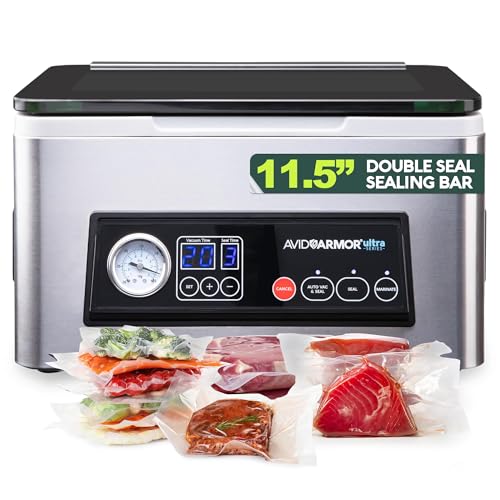
Avid Armor USV20 Chamber Vacuum Sealer
A chamber sealer handles liquid-heavy packages that a standard suction sealer struggles with, sealing them flat without drawing liquid into the seal.
$349.00 from AmazonFrequently Asked Questions
Can I freeze tomatoes raw?
Yes. Wash, dip in boiling water for 30 seconds to loosen skins, core and peel, freeze whole or in pieces, and pack with 1-inch headspace.
Why are thawed tomatoes so soft?
Freezing breaks down the tomato’s structure. The source directs that frozen tomatoes be used only for cooking or seasoning, as they will not be solid when thawed.
How long do stewed tomatoes cook?
Cover and cook until tender — 10 to 20 minutes — then cool the pan in cold water before packing.
How much salt goes in tomato juice?
If desired, 1 teaspoon salt to each quart of juice, after simmering 5 to 10 minutes and pressing through a sieve.
Procedure and times: National Center for Home Food Preservation, “Freezing Tomatoes,” from So Easy to Preserve, 6th ed., University of Georgia Cooperative Extension, via the: National Center for Home Food Preservation.
Prices shown on this page were last checked November 26, 2026 — prices change; check before you buy.
Talk it over with other readers
The Truly Preserved Community on Facebook is where readers compare notes on food storage, water, and backup power — and where your questions help decide what we research next.