
Truly Preserved is reader-supported. If you buy through a link on this page we may earn a commission at no extra cost to you. Nobody pays for placement or scores.
THE SHORT ANSWER
Cool cooked soup and meals promptly, portion them into freezer containers or bags in the sizes a meal actually uses, and leave headspace for expansion — for a liquid pack, 1/2 inch in a wide-top pint, 1 inch in a wide-top quart, 3/4 inch in a narrow-top pint, and 1 1/2 inches in a narrow-top quart. Freeze at 0°F or below. For best quality, the Food Safety and Inspection Service gives soups and stews 2 to 3 months in the freezer, and casseroles 2 to 3 months. Every figure on this page comes from the tested sources credited at the bottom.
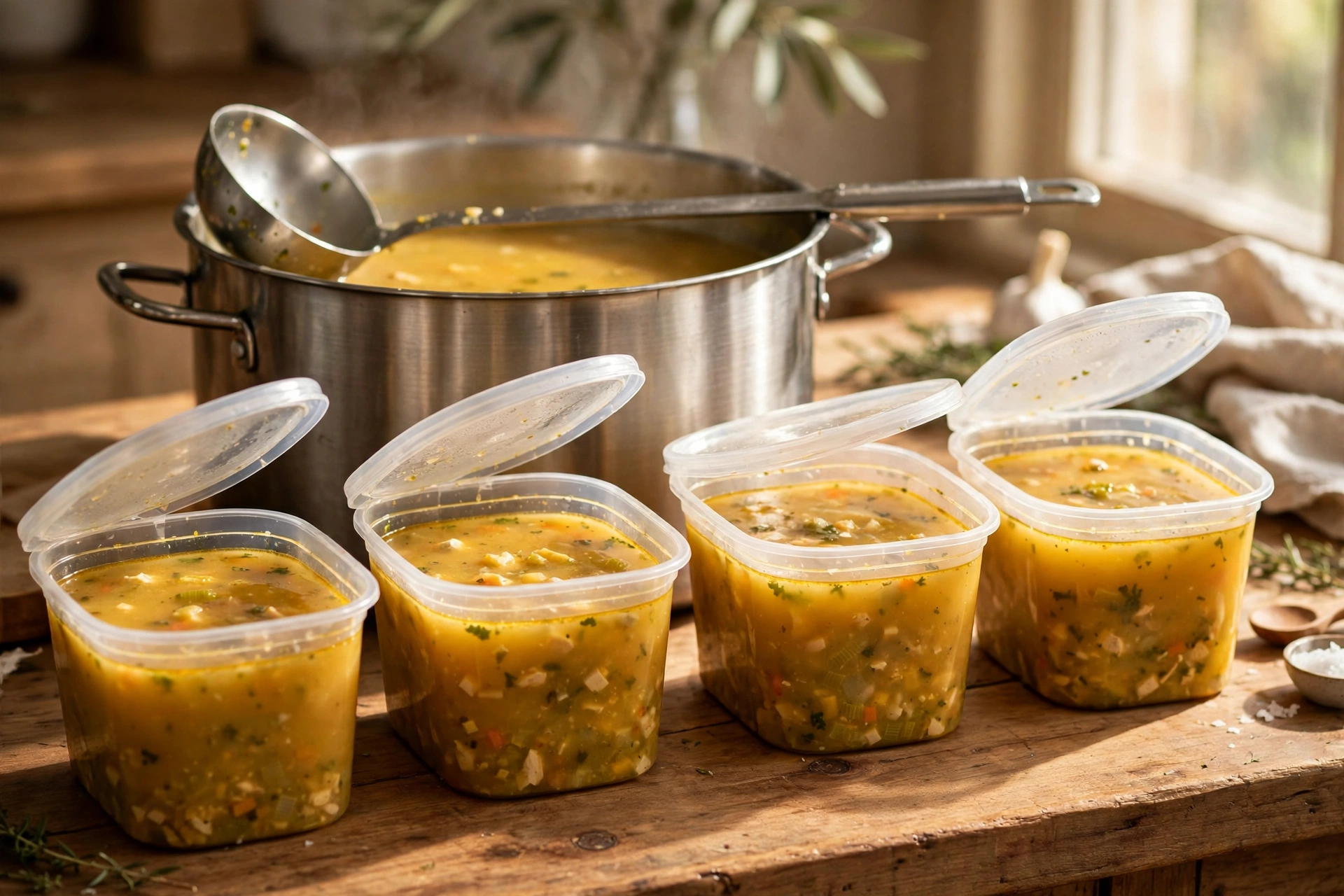
The difference between a freezer that feeds you and a freezer that guilts you is portioning. A gallon of soup frozen in one block is a project; the same soup frozen in pint and quart portions is a dozen easy meals. This guide is about the second kind — cooking once, cooling the food promptly and safely, and putting it away in the exact sizes it will be eaten, with the headspace liquids need and the storage times the Food Safety and Inspection Service actually gives for cooked dishes, which are shorter than most people assume.
This guide follows the FSIS freezer storage figures and the National Center for Home Food Preservation’s headspace table exactly. It is part of our preservation guides, and it sits right beside can you freeze soup in mason jars — read that one before any soup goes into glass — and how to freeze food in mason jars for the general jar method. The vegetables that fill the soup start in how to freeze tomatoes and how to freeze sweet corn.
What You Need
Cooked soup, stew, or a finished meal, cooled before it is portioned — hot food packed and frozen in bulk freezes slowly and warms everything around it. Portioning is by the meal: pints for one or two servings, quarts for a family pot, matched to the containers you have. Rigid containers and freezer bags both work; bags freeze flat and stack, containers stand up and pour. What is not optional is headspace: soup is a liquid pack, and the figures are 1/2 inch in a wide-top pint, 1 inch in a wide-top quart, 3/4 inch in a narrow-top pint, and 1 1/2 inches in a narrow-top quart. In glass, leave the full amount and use jars made for freezing — the mason jar guide linked above covers which ones.

Ball Half-Pint Mason Jars, 12-Pack
Half-pint jars hold a single small portion for the freezer — one jar is one light lunch, thawed without committing a whole batch.
Check Availability
Ziploc Freezer Quart Bags
Quart freezer bags portion the finished soup and meals in portions flat, so packages freeze fast, stack tight, and thaw one meal at a time instead of in one solid block.
$26.48 from AmazonBefore You Start
Two clocks run on cooked food, and both are shorter than instinct says. In the refrigerator, soups and stews keep 3 to 4 days — so the decision to freeze is made the day the pot is cooked, not on day four when the leftovers look tired. In the freezer, FSIS storage times are for quality only, because food stored constantly at 0°F stays safe indefinitely — but soups and stews hold their best quality for 2 to 3 months, not the year that frozen vegetables get. Portion with that window in mind: freeze the amount your household will actually eat in the next few months, in portions that thaw in one meal, and label every container with the contents and the date it was frozen.
How to Freeze Soup and Meals in Portions, Step by Step
- Cook, then cool the pot promptly. Finish the dish, then cool it promptly before portioning — set the pan in cold water to bring the temperature down, the same cooling step the stewed tomato procedure uses, rather than leaving a hot pot standing on the counter.
- Choose portions by the meal. Ladle the cooled food into pint and quart containers or bags in single-meal sizes. A portion that matches a meal thaws once and is eaten; an oversized block gets thawed, partly used, and refrozen in spirit if not in fact.
- Leave the liquid-pack headspace. Fill to 1/2 inch from the top in a wide-top pint, 1 inch in a wide-top quart, 3/4 inch in a narrow-top pint, and 1 1/2 inches in a narrow-top quart. Soup expands as it freezes; this space is where it goes.
- Seal and press out air. Seal containers tight. For bags, press out the air, seal, and lay them flat — flat bags freeze fast, stack tight, and thaw quickly under cold water or in a pot.
- Label with contents and date. Write what it is and the date it was frozen on every portion. In the freezer, every soup looks like every other soup, and the date is what the 2 to 3 month quality window runs from.
- Freeze at 0°F or below. Freeze portions spread out until solid, then stack them. Keep the freezer at 0°F or below — that temperature is the condition every storage time on this page assumes.
- Thaw in the refrigerator, not on the counter. Move a portion to the refrigerator to thaw, or reheat it from frozen in a pot. Cooked dishes are never thawed out on the kitchen counter.
The Numbers: Storage Times and Headspace
Two tables run this page: how long cooked dishes keep their quality in the freezer, from the FSIS storage chart, and how much headspace a liquid pack needs, from the National Center’s table. Both assume a freezer held at 0°F or below.
| Food (FSIS freezer storage chart, 0°F or below) | Best quality | In the refrigerator |
|---|---|---|
| Soups and stews | 2 to 3 months | 3 to 4 days |
| Casseroles | 2 to 3 months | 3 to 4 days |
| Cooked meat and meat casseroles | 2 to 3 months | 3 to 4 days |
| Gravy and meat broth | 2 to 3 months | 3 to 4 days |
| Frozen dinners and entrees | 3 to 4 months | Keep frozen until used |
| Liquid pack headspace | Wide-top pint | Wide-top quart | Narrow-top pint | Narrow-top quart |
|---|---|---|---|---|
| Soup, stew, and other liquids | 1/2 inch | 1 inch | 3/4 inch | 1 1/2 inches |
The FSIS times are quality times, and the chart says so itself: because freezing at 0°F keeps food safe indefinitely, recommended storage times are for quality only. Past 2 to 3 months a soup is not dangerous — it is dull, and the freezer’s job is dinner, not archaeology. Rotate portions oldest-first.
Portioning lives or dies on containers and seals. The two products below are the working pair for this job — rigid jars for the portions that will be reheated often, and a sealer for the flat bags that fill the gaps between them.

FoodSaver Elite Vacuum Sealer
A vacuum sealer pulls the air that causes freezer burn off every package, which is how this batch keeps its quality through the full storage window this page gives.
$218.56 from Amazon
ThermoPro Instant-Read Thermometer
An instant-read thermometer confirms the cooling and reheating temperatures this procedure depends on, instead of guessing from steam and habit.
$8.99 from AmazonCommon Mistakes
Freezing the whole pot in one container. One giant block thaws slowly, eats unevenly, and invites refreezing leftovers. Portions sized to a meal are the entire method — freeze in pints and quarts, not in the stockpot’s image.
Filling containers to the brim. Soup expands as it freezes. Without the liquid-pack headspace — up to 1 1/2 inches in a narrow-top quart — the expansion pushes lids off, splits bags, and can crack glass.
Putting soup in any jar that fits. Freezing in glass is a method with rules, not a default. Use jars made for freezing, leave the full headspace, and read the mason jar guide before a narrow-neck jar of soup goes in — that is exactly the breakage it exists to prevent.
Keeping frozen soup for a year because vegetables last that long. Different foods, different clocks: fruits and vegetables get 8 to 12 months, but FSIS gives soups and stews 2 to 3 months for best quality. Date every portion and cook to the shorter clock.
Thawing dinner on the counter. Cooked food thaws in the refrigerator or reheats from frozen. The counter method holds food for hours at the temperatures the whole cooling-and-freezing routine exists to avoid.
Storage and Shelf Life
Store portions at 0°F or below, stacked flat or standing in a single dated row, oldest at the front. FSIS storage times are for quality only — food held constantly at 0°F remains safe indefinitely — but plan soup and stew portions around the 2 to 3 month window, casseroles the same, and frozen dinners and entrees at 3 to 4 months, and the freezer becomes a rotation instead of an archive. If the power goes out, a full freezer of portioned meals is also the household’s buffer — how to keep food safe if the power goes out covers how long frozen food holds and what to check before eating it. Keep the freezer door closed during an outage; every look inside spends cold you cannot replace until the power returns.
Viewers also searched for these items.

Etekcity Digital Kitchen Scale
A kitchen scale turns a garden pile into known pounds, which is what the per-pound ratios and yield figures in this guide are planned from.
$9.99 from Amazon
Nesco VS-12 Vacuum Sealer
A second vacuum sealer sized for steady harvest-day work — sealing package after package without a cool-down pause while the produce is at its freshest.
$108.18 from Amazon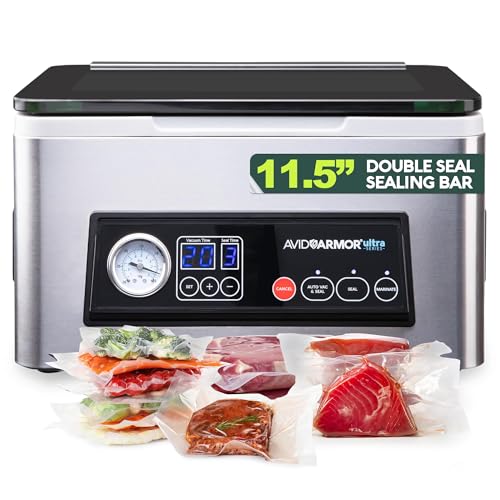
Avid Armor USV20 Chamber Vacuum Sealer
A chamber sealer handles liquid-heavy packages that a standard suction sealer struggles with, sealing them flat without drawing liquid into the seal.
$349.00 from AmazonFrequently Asked Questions
How long does frozen soup keep?
For best quality, 2 to 3 months at 0°F or below, per the FSIS freezer storage chart. Food held constantly at 0°F remains safe indefinitely; the months are about quality.
How much headspace does soup need?
As a liquid pack: 1/2 inch in a wide-top pint, 1 inch in a wide-top quart, 3/4 inch in a narrow-top pint, and 1 1/2 inches in a narrow-top quart.
Can I freeze soup in mason jars?
Yes, with the rules that keep glass from breaking — jars made for freezing, the full liquid-pack headspace, and no narrow-neck jar filled into the neck. The full method is in the linked mason jar guide.
How long can soup sit in the refrigerator before I freeze it?
Soups and stews keep 3 to 4 days refrigerated. Freeze portions the day the pot is cooked whenever you can — freezing on day four starts the quality clock with four-day-old soup.
Storage times: USDA Food Safety and Inspection Service, “Freezing and Food Safety” freezer storage chart; headspace: National Center for Home Food Preservation, “Headspace to Allow,” from So Easy to Preserve, 6th ed., via the: National Center for Home Food Preservation; the FSIS chart is at fsis.usda.gov, “Freezing and Food Safety”.
Prices shown on this page were last checked November 26, 2026 — prices change; check before you buy.
Talk it over with other readers
The Truly Preserved Community on Facebook is where readers compare notes on food storage, water, and backup power — and where your questions help decide what we research next.