
Truly Preserved is reader-supported. If you buy through a link on this page we may earn a commission at no extra cost to you. Nobody pays for placement or scores.
THE SHORT ANSWER
Wash fresh herbs, drain them, and pat them dry with paper towels. For the simplest pack, wrap a few sprigs or leaves in freezer wrap, place them in a freezer bag, seal, and freeze. For portions, chop the herbs and freeze them in ice cube trays — about 1 tablespoon per section in water, or mixed with oil at 1/3 to 1/2 cup oil to 2 cups chopped herbs. One safety rule governs the oil method: oil is only added to herbs if the mixture will be frozen — do not store herbs in oil at room temperature. Every figure on this page comes from the tested sources credited at the bottom.
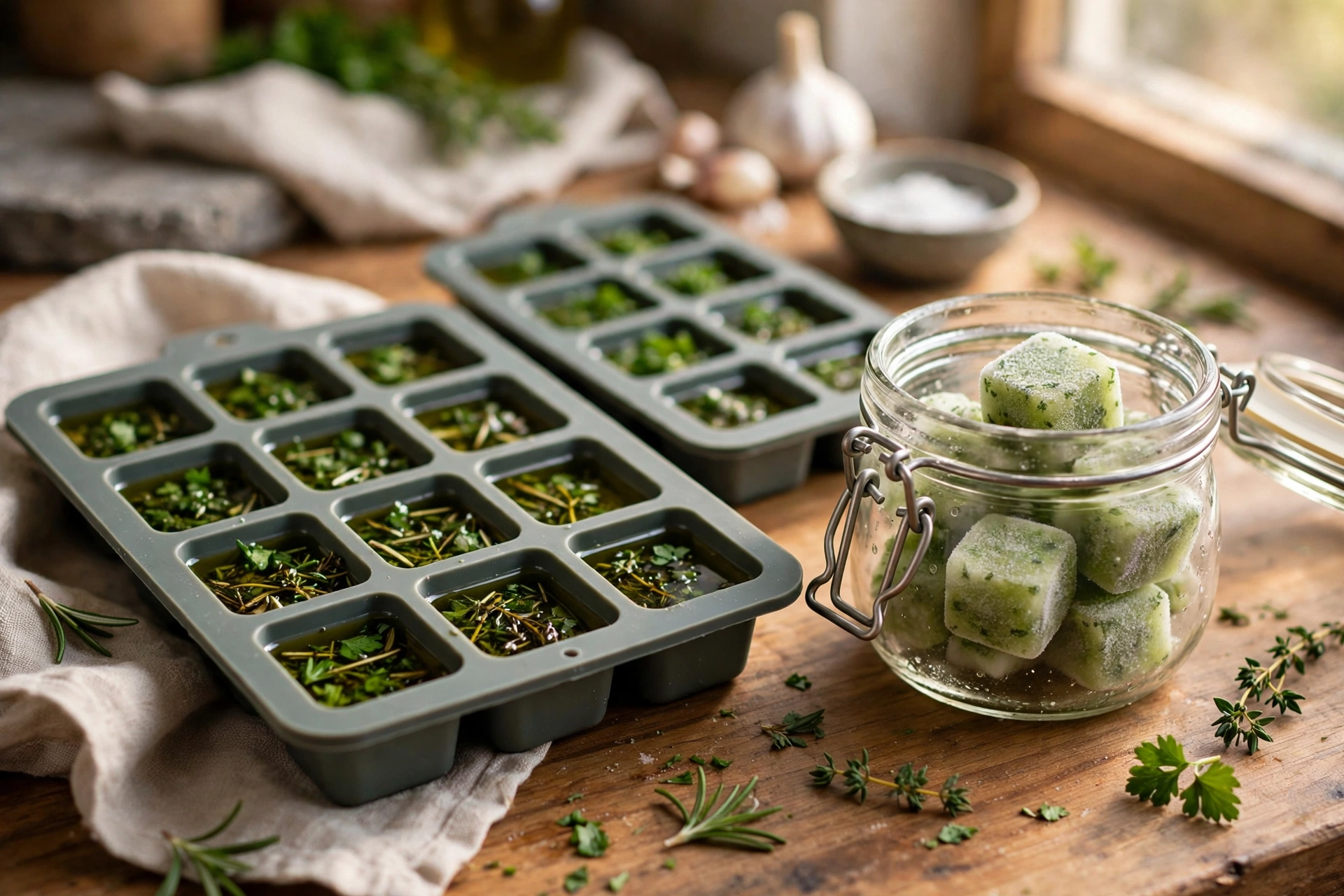
Herbs are the harvest that dries badly and freezes well — basil most of all, which turns black in a dehydrator and keeps its summer flavor in the freezer. Frozen herbs are cooking herbs: the National Center for Home Food Preservation is plain that they can be chopped and used in cooked dishes, and that they usually are not suitable for garnish, because the frozen product becomes limp when it thaws. Accept that one trade and the freezer gives you parsley, dill, basil, chives, mint, and tarragon in measured, ready-to-drop-in portions all winter.
This guide follows the National Center’s tested sprig method and Penn State Extension’s ice-cube methods — in water and in oil — with their amounts exactly as given, including the oil safety note stated in full. It is part of our preservation guides. Herbs frozen in oil go straight into the dishes in how to freeze soup and meals in portions, and the vegetable they most often season is in how to freeze sweet corn.
What You Need
Fresh herbs, picked or bought at their best — freezing works well for parsley, dill, basil, chives, lemon balm, mint, and tarragon, among others. For the sprig pack: freezer wrap and freezer bags. For cubes: ice cube trays, and either water or oil — the oil measure is 1/3 to 1/2 cup oil mixed with 2 cups chopped herbs, and a neutral-flavored oil such as canola lets the herb’s flavor dominate, while olive oil suits herbs it complements. Frozen herbs are used in the same proportion as fresh herbs, so portion cubes at the amount a recipe actually calls for — about 1 tablespoon per section is the extension’s measure for the water method.

Ziploc Freezer Quart Bags
Quart freezer bags portion the finished herbs flat, so packages freeze fast, stack tight, and thaw one meal at a time instead of in one solid block.
$26.48 from Amazon
FoodSaver Elite Vacuum Sealer
A vacuum sealer pulls the air that causes freezer burn off every package, which is how this batch keeps its quality through the full storage window this page gives.
$218.56 from AmazonBefore You Start
The safety note comes before the method, because it is the one rule on this page that is about harm rather than quality: oil should only be added to herbs if it will be frozen. Do not store herbs in oil at room temperature. Herb-and-oil mixtures live in the freezer, full stop — a jar of basil oil on the counter is not a version of this recipe, it is a different and unsafe one. The quality rules are simpler: wash, drain, and pat the herbs dry before they are wrapped or cubed, because surface water becomes ice; and double-wrap strong-smelling herbs in foil or use freezer jars, because herbs give off odors that other freezer foods absorb, and take odors in return.
A word on which herbs earn their freezer space. The soft, leafy herbs — basil, parsley, cilantro, dill, mint, tarragon, chives — are the ones freezing treats kindly, because their flavor lives in delicate leaves that drying strips or turns musty. Woody herbs like rosemary and thyme dry well and keep their character on the stem, so the freezer is usually better spent on the leafy ones, though nothing in the sources forbids freezing the woody herbs for cooked dishes too. Basil is the special case that makes the whole method worthwhile: it blackens when it dries and fades in the refrigerator within days, but frozen in oil it keeps both its color and its summer flavor, which is why the oil cube method and basil are mentioned together in the extension guidance. Freeze the herbs you actually cook with, in the amounts your recipes actually call for, and the freezer drawer becomes a seasoning shelf instead of a museum of good intentions.
How to Freeze Herbs, Step by Step
- Wash, drain, and pat dry. Wash the herbs, drain them, and pat them dry with paper towels. Every method on this page starts here.
- Sprig pack (the National Center’s method). Wrap a few sprigs or leaves in freezer wrap and place the wrapped sprigs in a freezer bag. Seal and freeze. To use, chop the frozen herbs straight into cooked dishes.
- Water cubes. Strip the leaves from the stems and chop them. Fill an ice cube tray half full of water, place about 1 tablespoon of herbs in each section, and push the herbs under the water as much as possible. Freeze, then the next day, when the cubes are frozen solid, add additional water to top off each cube and freeze solid again.
- Oil cubes and paste. Chop the herbs and mix 1/3 to 1/2 cup oil with 2 cups chopped herbs. Freeze the mixture in ice cube trays, or in small jelly jars — the oil does not freeze solid like ice, so the amount you want can be scraped out. Or make a paste: mix 1/3 cup oil with 2 cups fresh herbs in a blender until smooth, and freeze that. Oil only ever goes in if the mixture will be frozen.
- Move cubes to storage. Once cubes are frozen solid, transfer them out of the trays into freezer bags or containers, press out the air, and return them to the freezer. Strong-smelling herbs get double-wrapped in foil or stored in freezer jars to keep odors from transferring.
- Label with the amount. Label each bag with the herb, the date, and what a cube holds — about 1 tablespoon of herbs, in water or in oil — so a cube dropped into a soup in January is a known quantity, not a guess.
The Numbers: Herb and Oil Amounts
Herbs have no blanching table — the numbers here are portion amounts: how much herb goes in a cube, and how much oil goes with a measured batch of chopped herbs.
| Method | Amount | Notes |
|---|---|---|
| Sprig pack | A few sprigs or leaves per wrap | Freezer wrap inside a freezer bag; use in cooked dishes, not garnish |
| Water cubes | About 1 tablespoon herbs per tray section | Tray half full of water first; top off with water the next day, once frozen solid |
| Oil cubes / jars | 1/3 to 1/2 cup oil to 2 cups chopped herbs | Freeze only — never store herbs in oil at room temperature |
| Oil paste | 1/3 cup oil to 2 cups fresh herbs | Blend until smooth, then freeze |
| Use | Same proportion as fresh herbs | Do not thaw before adding to cooked dishes |
The two-stage water cube — half full, frozen, then topped off — is what keeps the herbs under the water instead of floating and freezing half-exposed. It costs a second trip to the freezer and saves the batch.
Herb cubes are small, numerous, and easy to lose in a big freezer. The two products below corral them — one for sealing cubes in flat, labeled bags, one for the small jars the oil method scrapes from.

Ball Half-Pint Mason Jars, 12-Pack
Half-pint jars hold herb portions for the freezer in recipe-sized amounts — one jar seasons one pot.
Check Availability
Etekcity Digital Kitchen Scale
A kitchen scale turns a garden pile into known pounds, which is what the per-pound ratios and yield figures in this guide are planned from.
$9.99 from AmazonCommon Mistakes
Storing herbs in oil on the counter. The extension note is explicit: oil should only be added to herbs if it will be frozen, and herbs in oil are not stored at room temperature. The jar on the counter is the one genuinely unsafe mistake in this guide.
Freezing herbs for garnish. Frozen herbs thaw limp. The National Center directs them to cooked dishes, chopped straight in — plan them for soups, sauces, and stews, and keep fresh herbs for finishing a plate.
Thawing cubes before cooking. Do not thaw herbs before adding them to cooked dishes — a frozen cube goes straight into the pot, where it melts into the dish. Thawing first just gives you a puddle of limp herbs to scrape off a plate.
Packing herbs dripping wet. Wash, drain, and pat dry is the first line of the procedure for a reason. Wet herbs freeze into icy clumps and pick up off-flavors faster.
Leaving strong herbs unwrapped. Herbs give off odors that other foods absorb, and absorb odors in return. Double-wrap strong-smelling herbs in foil or put them in freezer jars with airtight lids.
Storage and Shelf Life
Keep herb packages at 0°F or below, sealed tight, and use frozen herbs in the same proportion as fresh — a cube measured at about 1 tablespoon is one tablespoon of herbs when it lands in the pot. Frozen herbs are at their best in cooked dishes, added frozen, never thawed first. The sources consulted for this guide do not give a herb-specific number of months, so this page does not invent one: treat herb cubes as a use-this-season food, rotate them ahead of older packages, and let the general freezer discipline — cold, sealed, labeled, oldest first — do the work. Herb-and-oil mixtures stay in the freezer for their whole life; they are never moved to a shelf or a counter, at any point, for any length of time.
Viewers also searched for these items.

ThermoPro Instant-Read Thermometer
An instant-read thermometer confirms the cooling and reheating temperatures this procedure depends on, instead of guessing from steam and habit.
$8.99 from Amazon
Nesco VS-12 Vacuum Sealer
A second vacuum sealer sized for steady harvest-day work — sealing package after package without a cool-down pause while the produce is at its freshest.
$108.18 from Amazon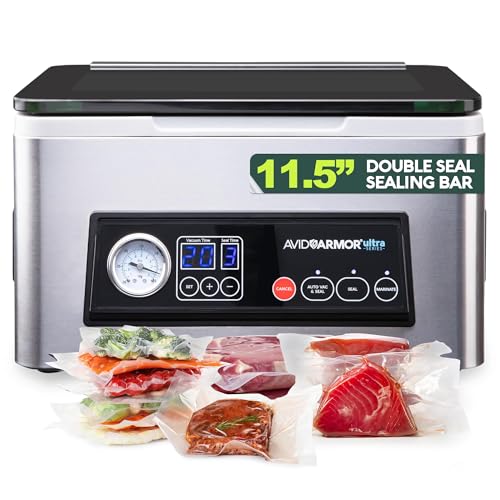
Avid Armor USV20 Chamber Vacuum Sealer
A chamber sealer handles liquid-heavy packages that a standard suction sealer struggles with, sealing them flat without drawing liquid into the seal.
$349.00 from AmazonFrequently Asked Questions
Can herbs be frozen in oil?
Yes — chopped herbs mixed at 1/3 to 1/2 cup oil to 2 cups chopped herbs, frozen in ice cube trays or small jars. The condition is absolute: oil is only added if the mixture will be frozen. Do not store herbs in oil at room temperature.
Do I thaw frozen herbs before using them?
No. Do not thaw herbs before adding them to cooked dishes — drop the frozen cube or chopped frozen herbs straight into the pot.
Why can’t I use frozen herbs as a garnish?
Because they go limp when they thaw. The National Center states they usually are not suitable for garnish, and directs them to cooked dishes instead.
How much frozen herb equals fresh?
The same proportion — frozen herbs are used in the same proportion as fresh herbs, which is why portioning cubes at about 1 tablespoon makes them easy to cook with.
Procedure and amounts: National Center for Home Food Preservation, “Freezing Fresh Herbs,” and Penn State Extension, “Freezing Herbs” (ice-cube and oil methods and the room-temperature oil warning), via the: National Center for Home Food Preservation; the Penn State Extension page is at extension.psu.edu/freezing-herbs.
Prices shown on this page were last checked November 26, 2026 — prices change; check before you buy.
Talk it over with other readers
The Truly Preserved Community on Facebook is where readers compare notes on food storage, water, and backup power — and where your questions help decide what we research next.