
Truly Preserved is reader-supported. If you buy through a link on this page we may earn a commission at no extra cost to you. Nobody pays for placement or scores.
THE SHORT ANSWER
Shell fresh green peas, wash them, and water blanch them for 1 1/2 minutes in 1 gallon of boiling water per pound. Cool them promptly in water at 60°F or below for the same time, drain, and pack with 1/2 inch of headspace. Seal, label, and freeze at 0°F or below. It is the shortest blanch in this set of guides — set a timer, because 1 1/2 minutes is easy to overshoot. Every figure on this page comes from the tested source credited at the bottom.
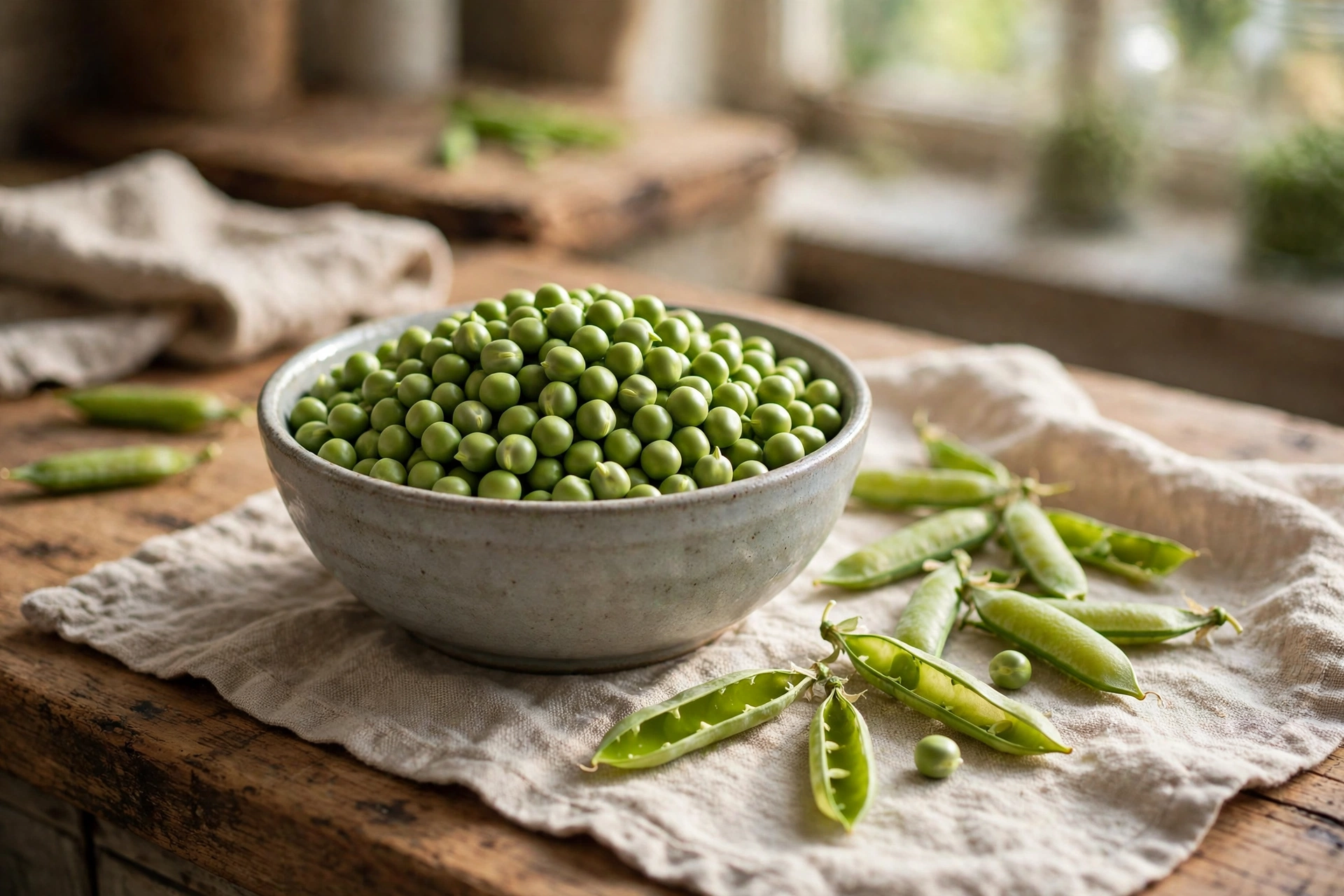
Peas are the race of the preserving year. The sugar in a picked pea starts turning to starch right away, which is why every tested procedure for peas reads like it was written in a hurry — shell, blanch for a minute and a half, cool, pack, freeze, all as close to the picking as the day allows. Done at that pace, frozen peas are startlingly good, sweet and green in the middle of winter. Done leisurely, with the shelled peas sitting in a bowl while other jobs get finished, they freeze as starchy peas, and no cooking brings the sweetness back.
This guide follows the tested procedure for freezing green peas exactly — its 1 1/2-minute blanch and its headspace — drawn from the National Center for Home Food Preservation’s blanching table and the extension procedures that republish it. It is part of our preservation guides. Peas’ closest relative in the set is how to freeze green beans, and the flagship is how to freeze sweet corn — corn runs on the same pick-it-and-freeze-it clock.
What You Need
Select pods filled with young, tender peas that have not become starchy, and discard diseased pods. The yield planning figure from the extension procedure is 2 to 2 1/2 pounds of peas in the pod for each frozen pint — shelling shrinks a pile fast, and knowing that before you pick saves a second trip to the row. For blanching, 1 gallon of boiling water per pound of shelled peas, a basket, a timer you trust at 90 seconds, and a bowl of water at 60°F or below. Peas also tray-freeze beautifully after blanching — spread on a shallow tray, frozen, then packed — which keeps them loose and pourable.

Ziploc Freezer Quart Bags
Quart freezer bags portion the finished peas flat, so packages freeze fast, stack tight, and thaw one meal at a time instead of in one solid block.
$26.48 from Amazon
Etekcity Digital Kitchen Scale
A kitchen scale turns a garden pile into known pounds, which is what the per-pound ratios and yield figures in this guide are planned from.
$9.99 from Amazon
FoodSaver Elite Vacuum Sealer
A vacuum sealer pulls the air that causes freezer burn off every package, which is how this batch keeps its quality through the full storage window this page gives.
$218.56 from AmazonBefore You Start
Speed and the timer are the whole safety-and-quality story here. Shell the peas as close to blanching as you can; a bowl of shelled peas waiting an hour is losing sweetness the whole hour. The blanch is 1 1/2 minutes — half the time green beans get — because a pea is small and heats through fast, and the same smallness means over-blanching arrives fast too. Start timing when the water returns to the boil, keep batches at 1 pound per gallon of water so the boil comes back within 1 minute, and have the cooling water ready before the peas go in.
The hurry in this procedure has a second benefit that is easy to miss: peas are at their best in a short season, and a fast method is one that actually gets used every picking day. Shelling is the slow part, and it is the part the whole household can do at a table while the water heats. Once the peas are shelled, the rest of the job — a 90-second blanch, a 90-second cool, a drain, and a pack — takes less time than washing up afterward. That pace is what fills a freezer over a three-week pea season instead of producing one heroic batch and a row of pods that went starchy waiting for a free afternoon. Small batches, done the day of picking, beat large batches done late, every single time. If the row gives you more than you can shell in a sitting, leave the rest in the pod in the refrigerator and shell them the next day — peas keep their sweetness longer in the pod than out of it, and tomorrow’s batch will taste like it.
How to Freeze Peas, Step by Step
- Pick and shell. Harvest pods filled with young, tender peas that have not become starchy. Shell them and rinse the peas — and keep moving; shelled peas should be blanched promptly.
- Set up both stations. Bring 1 gallon of water per pound of peas to a vigorous boil in a lidded pot with a basket. Fill a bowl with cold water at 60°F or below, with ice.
- Blanch for 1 1/2 minutes. Lower the basket into the boiling water, cover, and start timing when the water returns to the boil. Blanch the shelled peas for 1 1/2 minutes.
- Cool for 1 1/2 minutes. Move the basket straight into the cold water and cool the peas for the same 1 1/2 minutes. Drain them well.
- Tray freeze if you want them loose (optional). Spread the blanched, drained peas in a single layer on a shallow tray and freeze them, then pack the frozen peas into containers — they pour loose instead of freezing in a block.
- Pack with 1/2 inch of headspace. Pack the peas into bags or containers, leaving 1/2-inch headspace. Press out the air or vacuum seal.
- Seal, label, and freeze. Seal, label with the date, and freeze at 0°F or below.
The Numbers: Blanching Time and Headspace
Peas have the shortest blanching time in the blanching table, and the edible-pod variation is included because the two get confused in the garden — pods are not shelled peas, and their times differ.
| Form | Water blanching time | Headspace |
|---|---|---|
| Green peas, shelled | 1 1/2 minutes | 1/2 inch |
| Edible pea pods, small | 1 1/2 minutes | 1/2 inch |
| Edible pea pods, large | 2 minutes | 1/2 inch |
The planning figure behind the table: 2 to 2 1/2 pounds of peas in the pod yield 1 frozen pint. If the peas inside a pod have already developed and filled out, the source’s note for pods applies in reverse — shell them and follow the green pea directions, which is the 1 1/2-minute row above.
Peas are a high-turnover freezer food — they go into everything — so packaging in the sizes a week of cooking uses beats one giant bag. The two products below split that difference: one for loose-pour family bags, one for sealing small portions flat.

Ball Half-Pint Mason Jars, 12-Pack
Half-pint jars portion small amounts — a single serving, a single recipe's worth — so nothing large has to be thawed to get a little.
Check AvailabilityCommon Mistakes
Letting shelled peas sit. The sugar-to-starch clock is the reason pea procedures hurry. Shell a batch, blanch a batch; do not shell the whole harvest and blanch it at the end of the afternoon.
Overshooting the blanch. 1 1/2 minutes goes past while you are reaching for the colander. Over-blanched peas cook soft and lose their green; under-blanched peas keep their enzymes. Timer on, stations ready, then peas in.
Blanching pods on the shelled-pea time — or peas on the pod time. Large edible pods take 2 minutes; shelled peas take 1 1/2. They are different foods in the same row of the garden, and the table separates them for a reason.
Freezing starchy peas and blaming the freezer. Pods picked late, with peas already starchy, freeze starchy. The selection rule — young, tender, not yet starchy — is a quality rule the freezer cannot fix after the fact.
Storage and Shelf Life
Keep the freezer at 0°F or below the whole time. The National Center lists fruits and vegetables at 8 to 12 months of approximate storage at 0°F when the food has been prepared and packaged correctly, and those times are about quality — properly frozen food held at 0°F does not become unsafe at the end of them, it simply tastes less like the day it was picked. Label every package with the contents and the date, keep a simple list of what went in, and arrange the freezer so the oldest packages get used first. A package that warms up, loses its seal, or comes back from a long power cut with ice crystals melted away should move to the front of the meal plan rather than back into long storage — and if the power question is the one you are planning around, how to keep food safe if the power goes out covers what stays safe and for how long. Pack peas in meal-size portions: they cook from frozen in minutes, and a portion-size bag means the big bag is not opened, warmed, and resealed every time peas are on the menu.
Frozen peas need almost no cooking — they were blanched before freezing, so they are heated through in the time it takes to warm them in a soup, a sauce, or a pan of butter. Add them near the end of a dish rather than the beginning, and they keep the green color the blanch protected.
Viewers also searched for these items.

Nesco VS-12 Vacuum Sealer
A second vacuum sealer sized for steady harvest-day work — sealing package after package without a cool-down pause while the produce is at its freshest.
$108.18 from Amazon
ThermoPro Instant-Read Thermometer
An instant-read thermometer confirms the cooling and reheating temperatures this procedure depends on, instead of guessing from steam and habit.
$8.99 from Amazon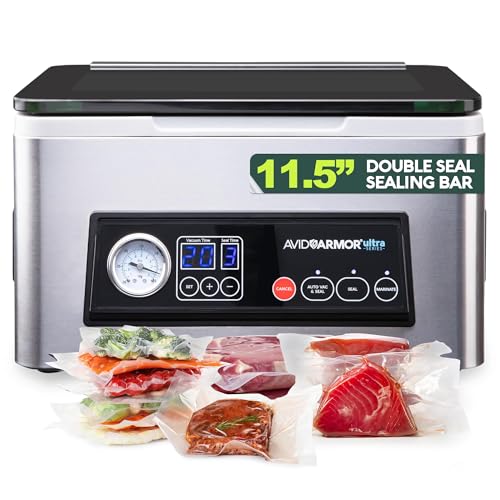
Avid Armor USV20 Chamber Vacuum Sealer
A chamber sealer handles liquid-heavy packages that a standard suction sealer struggles with, sealing them flat without drawing liquid into the seal.
$349.00 from AmazonFrequently Asked Questions
How long do I blanch shelled peas?
1 1/2 minutes in boiling water, timed from when the water returns to the boil, then cooled promptly for the same time in water at 60°F or below.
How many peas do I need for a pint?
2 to 2 1/2 pounds of peas in the pod yield 1 frozen pint.
Are pea pods blanched the same way?
Almost — edible pods are left whole, with stems, blossom ends, and strings removed, and blanch 1 1/2 minutes for small pods and 2 minutes for large pods, with 1/2-inch headspace.
How much headspace do peas need?
1/2 inch, in bags or rigid containers.
Procedure and blanching time: National Center for Home Food Preservation, “Blanching Times” and “Freezing Edible Pea Pods,” and the Kansas State University Extension procedure republishing the National Center’s green pea directions, via the: National Center for Home Food Preservation.
Prices shown on this page were last checked November 26, 2026 — prices change; check before you buy.
Talk it over with other readers
The Truly Preserved Community on Facebook is where readers compare notes on food storage, water, and backup power — and where your questions help decide what we research next.