
Truly Preserved is reader-supported. If you buy through a link on this page we may earn a commission at no extra cost to you. Nobody pays for placement or scores.
THE SHORT ANSWER
Peppers are the exception to the blanching rule: chopped or cut sweet peppers can be frozen raw, with no blanching at all. Wash crisp, tender pods, cut out the stems, halve them and remove the seeds, then leave them in halves or cut them into 1/2-inch strips or rings and package them raw, leaving no headspace. If the peppers are headed for cooking, the heated pack blanches halves for 3 minutes and strips or rings for 2 minutes, with 1/2-inch headspace. Every figure on this page comes from the tested source credited at the bottom.
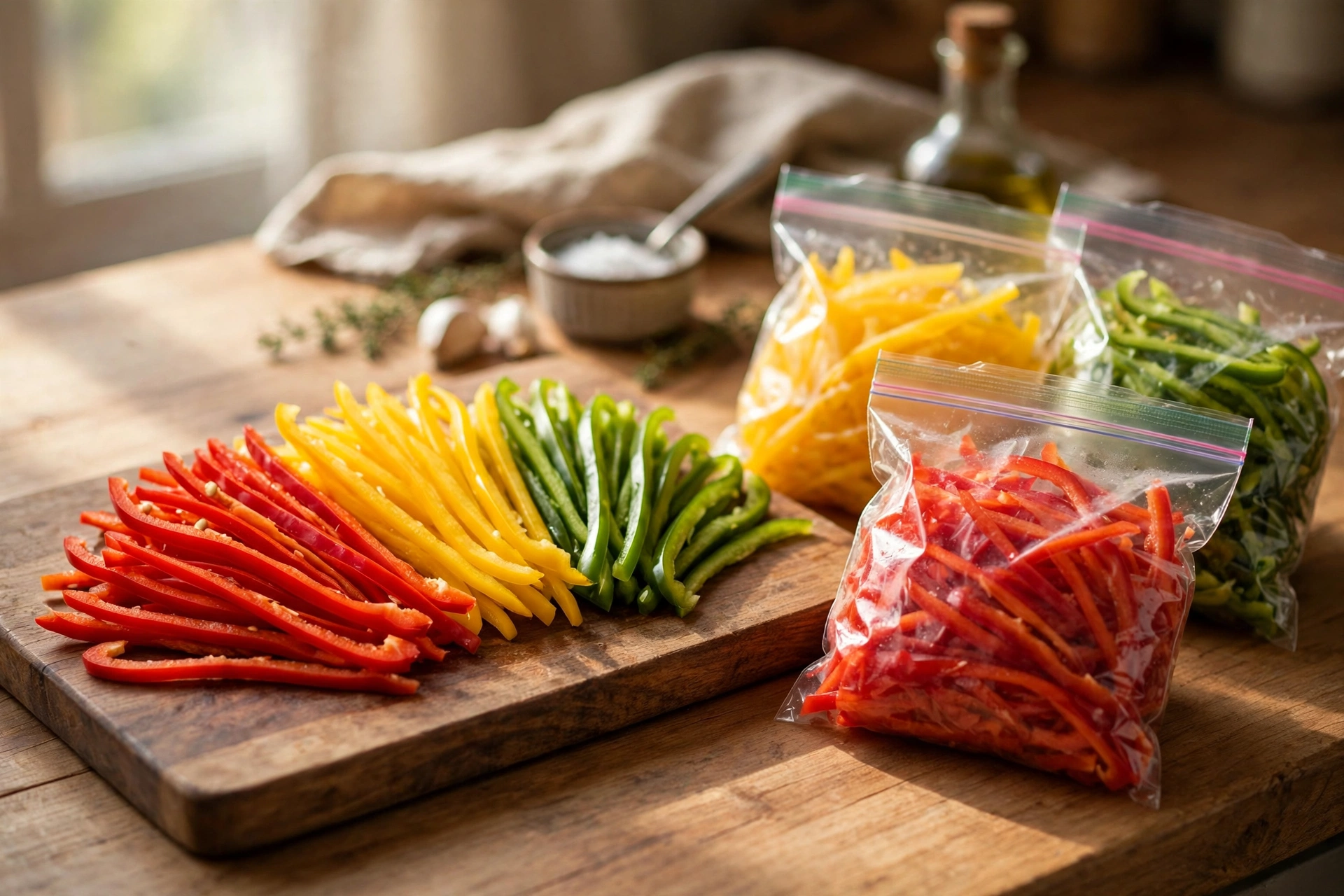
Every other vegetable in this set of guides starts with the same warning: blanch, or the enzymes win. Peppers break the pattern, and it is worth saying plainly because so much advice gets it wrong — the National Center for Home Food Preservation gives sweet peppers an unheated pack. Cut them, package them raw, freeze them. The unheated peppers keep a crisper texture, and the source lists them as good for uncooked foods as well as cooked ones. For a gardener staring at a counter full of peppers in September, that makes this the fastest freezing job in the whole harvest.
This guide follows the National Center’s tested procedure for bell or sweet peppers exactly, both packs — unheated and heated — with its times for the heated pack. It is part of our preservation guides. Peppers’ blanched neighbors follow the standard pattern: how to freeze green beans for the 3-minute blanch, and how to freeze sweet corn for the flagship of the category.
What You Need
Select crisp, tender, green or bright red pods — soft or tired peppers freeze soft and tired. You need a knife and cutting board, freezer bags or containers, and that is nearly the whole list for the unheated pack. For the heated pack, add a pot of boiling water at the blanching ratio of 1 gallon of water per pound of prepared vegetables and a bowl of cold water at 60°F or below for prompt cooling. Cut the peppers into 1/2-inch strips or rings if you want pieces, or leave them in halves — the form decides the blanching time in the heated pack, so choose before the water boils.

Ziploc Freezer Quart Bags
Quart freezer bags portion the finished peppers flat, so packages freeze fast, stack tight, and thaw one meal at a time instead of in one solid block.
$26.48 from Amazon
Nesco VS-12 Vacuum Sealer
A second vacuum sealer sized for steady harvest-day work — sealing package after package without a cool-down pause while the produce is at its freshest.
$108.18 from Amazon
FoodSaver Elite Vacuum Sealer
A vacuum sealer pulls the air that causes freezer burn off every package, which is how this batch keeps its quality through the full storage window this page gives.
$218.56 from AmazonBefore You Start
Decide the pack by the plate, not by habit. Unheated peppers are the source’s choice for uncooked foods because they have a crisper texture, and they work in cooked foods too — for most home freezers, raw is the pack to default to. The heated pack is good for use in cooking, and it costs a blanch, a cool, and a drain. One more plain point: frozen peppers, either way, are not fresh peppers. Freezing softens the walls of the pod, so plan these for cooking and for dishes where a little give is fine, and keep fresh peppers for the crudité plate.
There is one more reason the unheated pack matters, and it is about how a harvest actually goes. Peppers ripen in waves, not all at once, so the freezer fills a few peppers at a time across several weeks. A method that needs a pot of boiling water, a cooling bath, and a draining rack for six peppers is a method that quietly stops happening by the third picking. The raw pack asks for a knife, a bag, and five minutes, which means the last wave of peppers in October gets frozen with the same care as the first wave in August. Consistency across a whole season is worth more than any single perfect batch, and peppers are the one vegetable where the tested procedure itself is built for that pace. Label each small addition with its date rather than topping up an old bag, so the oldest peppers get cooked first and no bag becomes a layered mystery of the whole season.
How to Freeze Peppers, Step by Step
- Select and wash. Select crisp, tender, green or bright red pods. Wash them.
- Stem, halve, and seed. Cut out the stems, cut the peppers in half, and remove the seeds. If desired, cut the halves into 1/2-inch strips or rings — or dice them for the freezer; chopped peppers are frozen raw the same way.
- For the unheated pack, stop here and package. Package the raw peppers, leaving no headspace. Seal and freeze. No blanching — that is the source’s procedure, not a shortcut.
- For the heated pack, blanch by form. Water blanch halves for 3 minutes, or strips or rings for 2 minutes, in boiling water at 1 gallon per pound of prepared peppers, timing from when the water returns to the boil.
- Cool promptly and drain (heated pack). Cool the blanched peppers promptly in cold water at 60°F or below, drain them well, and package, leaving 1/2-inch headspace.
- Seal, label, and freeze. Seal every package, label it with the form and the pack — raw or blanched — and freeze at 0°F or below. The label matters: raw and blanched peppers behave differently in a pan.
The Numbers: Blanching Times by Form
The table is short because peppers are simple: two forms, two times, and only for the heated pack. The unheated pack has no blanching time at all, which is the point of it.
| Pack and form | Blanching time | Headspace |
|---|---|---|
| Unheated (raw) — halves, strips, rings, or chopped | None — do not blanch | No headspace |
| Heated — halves | 3 minutes | 1/2 inch |
| Heated — strips or rings | 2 minutes | 1/2 inch |
Strip and ring pieces are cut 1/2 inch wide, and that size is what the 2-minute time is written for. Bigger chunks of pepper are halves for timing purposes — when a piece does not match the table, use the longer time for its form rather than the shorter one.
Raw peppers freeze loose and pour loose, especially sealed flat in meal-size portions. The two products below are the portioning side of this job — one for sealing raw strips so they stay separate, one for the cooked-pepper batches that start in a skillet.

Ball Half-Pint Mason Jars, 12-Pack
Half-pint jars portion chopped peppers for the freezer in recipe amounts — one jar is what a skillet of fajitas calls for.
Check Availability
Etekcity Digital Kitchen Scale
A kitchen scale turns a garden pile into known pounds, which is what the per-pound ratios and yield figures in this guide are planned from.
$9.99 from AmazonCommon Mistakes
Blanching peppers out of habit. For peppers headed for salads, salsas, and general use, blanching spends the crisp texture the unheated pack exists to keep. The source gives raw as a full, tested pack — use it on purpose, not as a shortcut you apologize for.
Freezing whole, unseeded pods. The procedure stems, halves, and seeds the peppers before freezing. A whole pod freezes its seeds and stem into the middle of the package and has to be thawed and cleaned later, when it is soft and harder to work with.
Leaving headspace in a raw pack — or none in a blanched one. The two packs are opposites: raw peppers are packaged leaving no headspace; blanched peppers get 1/2-inch headspace. Swapping them wastes freezer room on one and risks a pushed lid on the other.
Expecting fresh crunch in January. Frozen peppers soften. The unheated pack is crisper than the heated one, and the source recommends it for uncooked foods — but no frozen pepper snaps like a fresh one, and planning dishes around that saves disappointment.
Storage and Shelf Life
Keep the freezer at 0°F or below the whole time. The National Center lists fruits and vegetables at 8 to 12 months of approximate storage at 0°F when the food has been prepared and packaged correctly, and those times are about quality — properly frozen food held at 0°F does not become unsafe at the end of them, it simply tastes less like the day it was picked. Label every package with the contents and the date, keep a simple list of what went in, and arrange the freezer so the oldest packages get used first. A package that warms up, loses its seal, or comes back from a long power cut with ice crystals melted away should move to the front of the meal plan rather than back into long storage — and if the power question is the one you are planning around, how to keep food safe if the power goes out covers what stays safe and for how long. Label raw and blanched packages differently and store them in different corners if you can — reaching for raw peppers for a salsa and getting blanched ones is a small, avoidable kitchen surprise.
One last storage habit: keep a running note on the freezer door of how many bags went in and when. Peppers disappear into dishes a handful at a time, and the note is what tells you in March whether the freezer still holds September’s last picking or whether it is time to ration what is left.
Viewers also searched for these items.

ThermoPro Instant-Read Thermometer
An instant-read thermometer confirms the cooling and reheating temperatures this procedure depends on, instead of guessing from steam and habit.
$8.99 from Amazon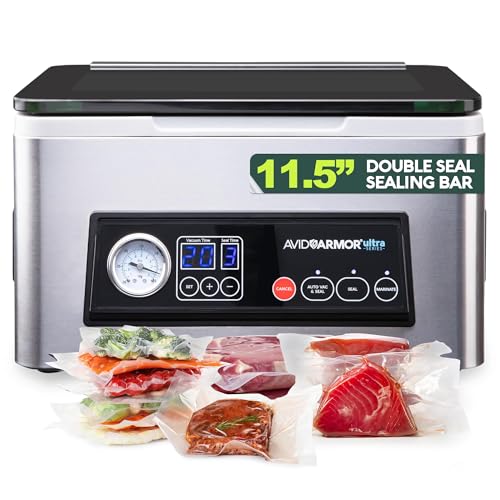
Avid Armor USV20 Chamber Vacuum Sealer
A chamber sealer handles liquid-heavy packages that a standard suction sealer struggles with, sealing them flat without drawing liquid into the seal.
$349.00 from Amazon
IRIS USA Airtight Container, 30 lb, with Wheels
An airtight container keeps finished packages and dry goods sealed against freezer air and odors between the harvest and the meal.
$23.99 from AmazonFrequently Asked Questions
Do peppers need to be blanched before freezing?
No. The source gives an unheated pack for sweet peppers: package them raw, leaving no headspace, seal, and freeze. Blanching is only for the heated pack, which is good for use in cooking.
How long do I blanch peppers for the heated pack?
Halves for 3 minutes; strips or rings for 2 minutes, in boiling water. Cool promptly, drain, and package with 1/2-inch headspace.
Can I freeze chopped peppers?
Yes — chopped peppers are cut sweet peppers, and they freeze raw by the same unheated pack: wash, stem, seed, cut, package with no headspace, seal, and freeze.
Which pack is better for uncooked dishes?
The unheated pack. The source states it is good for use in uncooked foods because the peppers have a crisper texture, and that it can also be used in cooked foods.
Procedure and blanching times: National Center for Home Food Preservation, “Freezing Bell or Sweet Peppers,” from So Easy to Preserve, 6th ed., University of Georgia Cooperative Extension, via the: National Center for Home Food Preservation.
Prices shown on this page were last checked November 26, 2026 — prices change; check before you buy.
Talk it over with other readers
The Truly Preserved Community on Facebook is where readers compare notes on food storage, water, and backup power — and where your questions help decide what we research next.