
Truly Preserved is reader-supported. If you buy through a link on this page we may earn a commission at no extra cost to you. Nobody pays for placement or scores.
THE SHORT ANSWER
Store thoroughly dried beans in a sealed container with the oxygen removed — Utah State University Extension names #10 cans and Mylar-type bags as the best packaging, with canning jars fine for smaller quantities kept in the dark. Beans sealed that way, with oxygen absorbers, keep 10 years or more; for the best nutritional quality, color, and flavor, use them within 12 months. Keep the containers at a steady 40 to 60°F, and use absorbers only with food at about 10 percent moisture or less. Every figure on this page comes from the credited extension source at the bottom.
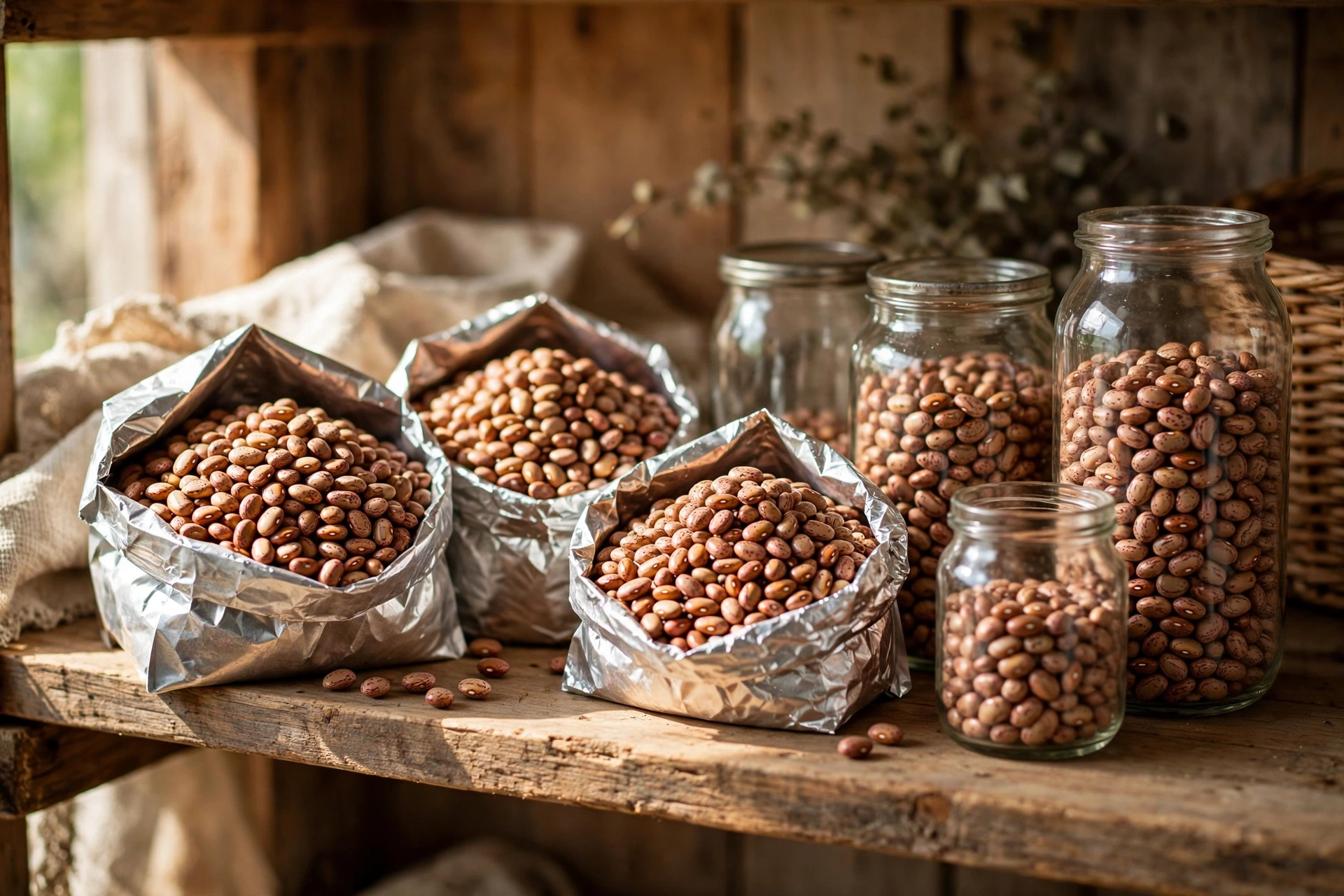
Dried beans are the backbone of a stored pantry: cheap, filling, and forgiving — up to a point. Left in the thin bag they came home in, they fade in color, lose vitamins, and slowly turn so hard that no amount of simmering fully softens them. Packed properly, the same beans are a different food entirely. Utah State University Extension puts it plainly: beans sealed in #10 cans or Mylar bags with the oxygen removed last 10 years or more, and a Brigham Young University study found pinto beans stored up to 30 years were still rated acceptable for emergency use by more than 80 percent of a consumer taste panel.
This guide follows Utah State’s method exactly: its packaging, its moisture ceiling, its temperatures, and its storage times. The same method runs through our category flagship, how to store flour long-term, and the pasta and oat guides in this set work the same way. This guide is part of our preservation guides covering the whole dry shelf.
What You Need
Dried beans, sorted first — Utah State’s cooking guidance starts with picking out rocks, broken beans, and debris. For packaging you need #10 cans or Mylar-type bags for bulk amounts, or canning jars for smaller quantities, plus oxygen absorbers and a way to seal the pouches. The extension reason for the packaging choice is specific: beans are best stored in the absence of oxygen and light, because oxygen leads to rancidity of bean oils and light quickly fades bean color. Jars work only if they are stored in a dark place.
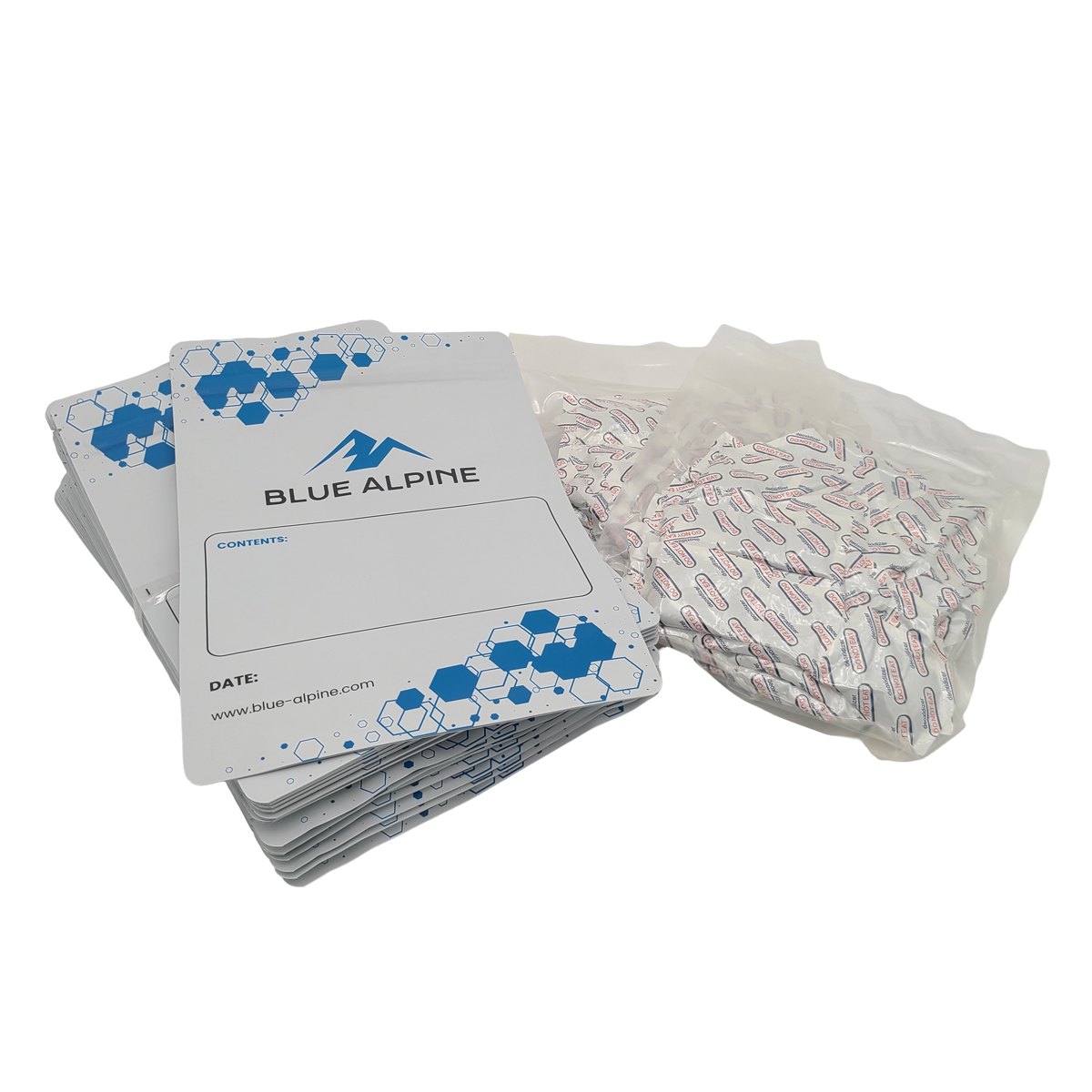
Blue Alpine Mylar Bags with Oxygen Absorbers
Mylar-type bags are one of the two packages Utah State names for beans at 10 years or more, and this set includes the absorbers the method seals in.
Check the price
PackFreshUSA 300cc Oxygen Absorbers
Oxygen absorbers are what remove the oxygen from each sealed pouch or can, the step that protects bean oils from rancidity and holds off off-flavors.
Check Availability
Metronic 8-Inch Impulse Sealer
A pouch only keeps its low-oxygen seal if the seam is fused across its full width, and an impulse sealer is the tool that makes that seam.
$39.99 from AmazonBefore You Start
Moisture is the gate, and it is a safety gate, not a quality preference. Utah State’s rule: use oxygen absorbers only with very dry food — about 10 percent moisture or less — because low-oxygen packaging with damp food can lead to botulism. Store-bought dried beans meet that bar as they come. Home-dried beans must be hard and fully dry first. One more distinction the extension source insists on: this is dry storage, not canning. Vacuum sealing removes air, but it does not sterilize the food, and dried beans are never soaked before they are sealed — soaking is a cooking and pressure-canning step, and wet beans in a sealed container can grow mold or bacteria.
How to Store Dried Beans Long-Term, Step by Step
- Sort the beans. Pick out any rocks, broken beans, or other bits, exactly as you would before cooking them.
- Freeze home-dried beans first. If you grew and dried your own, make sure they are hard and fully dry, then freeze them at 0°F for 3 to 4 days to help control insects before storing. Store-bought beans skip this step.
- Choose the container. #10 cans or Mylar-type bags for the long-term supply; canning jars for smaller quantities, kept in the dark.
- Add the oxygen absorber to each container just before sealing. Absorbers start working right away once their packaging is opened, so seal the container quickly.
- Seal it shut. Heat-seal pouches across the full width, or close cans and jars tight. A long-term package is only as good as its seal.
- Label and store cool. Date every container and keep it somewhere cool, dark, and dry — Utah State aims for a steady 40 to 60°F. A hot garage or attic shortens the beans’ life.
- Rotate. New containers go behind old ones, and the oldest beans get cooked first — that is how the 12-month best-quality window stays honest.
The Numbers: Storage Method and Storage Life
Utah State gives a different clock for each way of packing the same beans. The method is the variable; the beans are not.
| Storage method | Expected storage life |
|---|---|
| Food-grade plastic (polyethylene) bags | About 1 year or more |
| #10 cans or Mylar-type bags, oxygen removed | 10 years or more |
| Any method, for best nutritional quality, color, and flavor | Use within 12 months |
| Pinto beans in the BYU study, properly stored | Up to 30 years, rated acceptable for emergency use by more than 80% of the taste panel |
Two working figures sit behind the table: the moisture ceiling for absorber-packed food is about 10 percent or less, and the storage target is a steady 40 to 60°F.
Beans are rarely the only dry good going into storage. The same pouches and absorbers pack the rest of the grain shelf, and these are the sizes that side of the job runs on.

Wallaby 1-Gallon Mylar Bags, 10-Pack
One-gallon pouches suit the smaller bean lots you rotate through the working pantry while the bulk supply sits sealed in larger bags.
Check Availability
Ball Half-Pint Mason Jars, 12-Pack
Utah State allows canning jars for smaller quantities of beans kept in the dark, and half-pint jars portion out a single soup pot at a time.
Check AvailabilityCommon Mistakes
Leaving beans in the store bag. Beans in food-grade plastic bags last about a year or more — fine for a working pantry, not for long-term storage. The decade figure belongs to cans and foil pouches with the oxygen removed.
Sealing damp beans with an absorber. The 10-percent moisture ceiling is the safety line. Damp food in low-oxygen packaging can lead to botulism; dry is the whole condition.
Storing jars on a bright shelf. Light quickly fades bean color, which is why Utah State allows jars for smaller quantities only when they are kept in a dark place.
Soaking beans before sealing them. Soaking belongs to cooking. Wet beans sealed away can grow mold or bacteria, and vacuum sealing does not sterilize anything.
Storing the containers somewhere hot. Oxygen, light, moisture, and high temperatures are the four factors Utah State names in bean deterioration. A hot garage spends the shelf life the packaging bought.
Tasting old beans to check them. Utah State is direct: do not taste beans to check them. A bulging, leaking, or rusted-through can, an off or musty smell, or any sign of mold, bugs, or damp spots means the beans are thrown out.
Storage and Shelf Life
Keep sealed containers cool, dark, and dry, dated, and rotated oldest-first. Expect old beans to behave differently in the pot even when they were stored perfectly: they get harder with age, soak up water more slowly, and take longer to cook — a quality problem, not a safety one, in Utah State’s telling. To help old beans cook up, soak them overnight in about 3 cups of water for each cup of beans, add 1 teaspoon of baking soda to the soaking water, rinse, then boil until tender. Lentils and split peas are the exception in the family — they do not need to be soaked. Beans that will not soften at all can still be ground into bean flour. And one safety figure worth keeping with the storage notes: kidney beans are boiled in water for at least 30 minutes to destroy naturally occurring toxins.
Viewers also searched for these items.

ePackageSupply 5-Gallon Buckets, 3-Pack
Sealed pouches need protection from punctures and rodents, and a food-grade bucket keeps a set of bean bags together, dated, and off the floor.
$73.99 from Amazon
IRIS USA Airtight Container, 30 lb, with Wheels
An airtight container holds the beans you have opened and are cooking from now, keeping kitchen moisture out between uses.
$23.99 from Amazon
Sukerle 5-Gallon Mylar Bags with Absorbers
Five-gallon Mylar bags line buckets for the biggest bean lots, giving one sealed unit per variety instead of many small pouches.
$42.99 from AmazonFrequently Asked Questions
Can you eat 20-year-old dried beans?
Utah State says yes, if they were properly dried and stored, the container is still sealed, and the beans look and smell normal. Quality decreases slowly over time — vitamins may decrease, while protein and minerals mostly stay.
Do dried beans need oxygen absorbers?
For long-term storage, they are how the 10-years-or-more figure is reached: absorbers help beans last longer and reduce quality changes. They are only for very dry food, at about 10 percent moisture or less.
How do I use stored beans?
All dried beans except lentils and split peas need soaking first — typically 3 cups of water for every 1 cup of dried beans, soaked overnight and rinsed. Cover the rehydrated beans with water and simmer for 2 to 4 hours until tender.
Is vacuum sealing dried beans the same as canning them?
No. Utah State draws the line clearly: vacuum sealing removes air but does not sterilize the food. Sealed dry beans are a storage method; canned beans are a separate, pressure-canned product with its own tested procedure.
Storage guidance, packaging, and storage times: Utah State University Extension, “How Long Do Dried Beans Last?”, adapted from USU Extension’s Guide to Food Storage for Emergencies and Food Storage Packaging, via Utah State University Extension.
Prices shown on this page were last checked November 26, 2026 — prices change; check before you buy.
Talk it over with other readers
The Truly Preserved Community on Facebook is where readers compare notes on food storage, water, and backup power — and where your questions help decide what we research next.