
Truly Preserved is reader-supported. If you buy through a link on this page we may earn a commission at no extra cost to you. Nobody pays for placement or scores.
THE SHORT ANSWER
Plain dried pasta is a dry, low-oil food, and it stores the extension way: sealed away from oxygen, moisture, and light, in a cool place. Colorado State University Extension’s food storage chart, sourced to Utah State University Extension, gives dried pasta an optimum storage length of 24 months for quality and nutrition. Packed well and kept at 75°F or cooler, pasta is one of the long-term staples rated at about 30 years in the emergency-preparedness guidance Utah State and the Church home storage program publish. Either way, the rules are the same ones Utah State sets for all dry goods: food at about 10 percent moisture or less, an airtight container, and steady cool storage. Every figure on this page comes from the credited sources at the bottom.
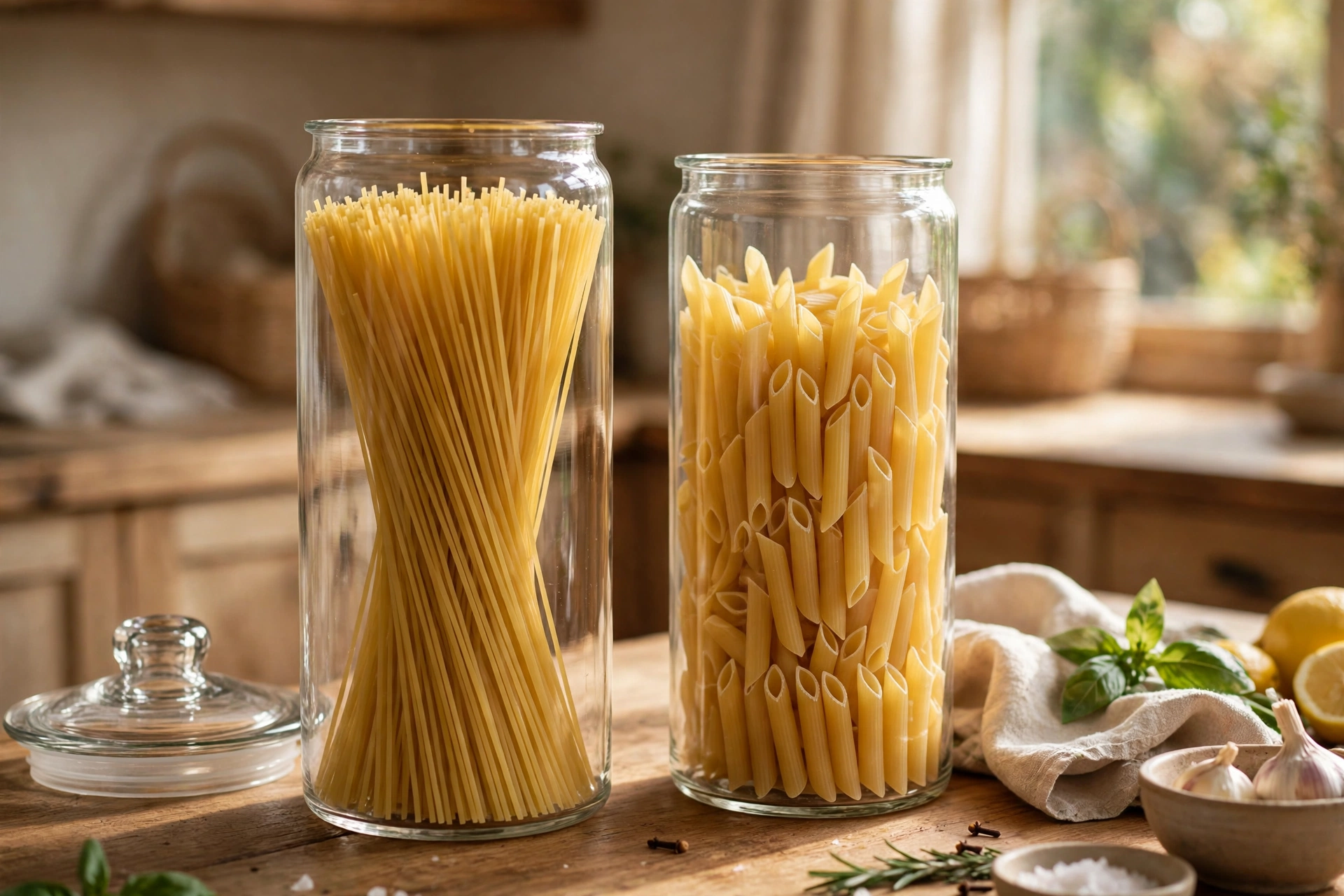
Pasta is the easiest long-term food to like. It is cheap, it stacks, everybody eats it, and plain dried pasta — flour and water, dried hard — has almost nothing in it that spoils quickly. What it does have is surface: boxes breathe, bags tear, and an open box on a warm shelf slowly takes on moisture and pantry odors while insects find their way in. Storage is what turns a two-year shelf food into a genuine reserve, and the step that does it is the same one that works for beans, oats, and flour: get the air out, seal it in a real barrier container, and keep it cool.
This guide follows the extension dry-storage method exactly, the same one behind our category flagship, how to store flour long-term, and the companion guide to storing dried beans long-term. This guide is part of our preservation guides for the whole dry shelf.
What You Need
Plain dried pasta — spaghetti, penne, macaroni, and the other hard, dry shapes. You also need barrier packaging: Utah State’s packaging guidance names the container family for dry goods — #10 cans, sealable food storage buckets, foil pouches, and PETE bottles — what they share is an airtight, moisture-proof seal. For foil pouches you need oxygen absorbers and a heat sealer. The original box is a shipping container, not a storage container: Colorado State’s guidance is to package dried foods in airtight, moisture-proof, insect-proof containers, in small amounts, because once a package is open the food absorbs moisture from the air and quality deteriorates.
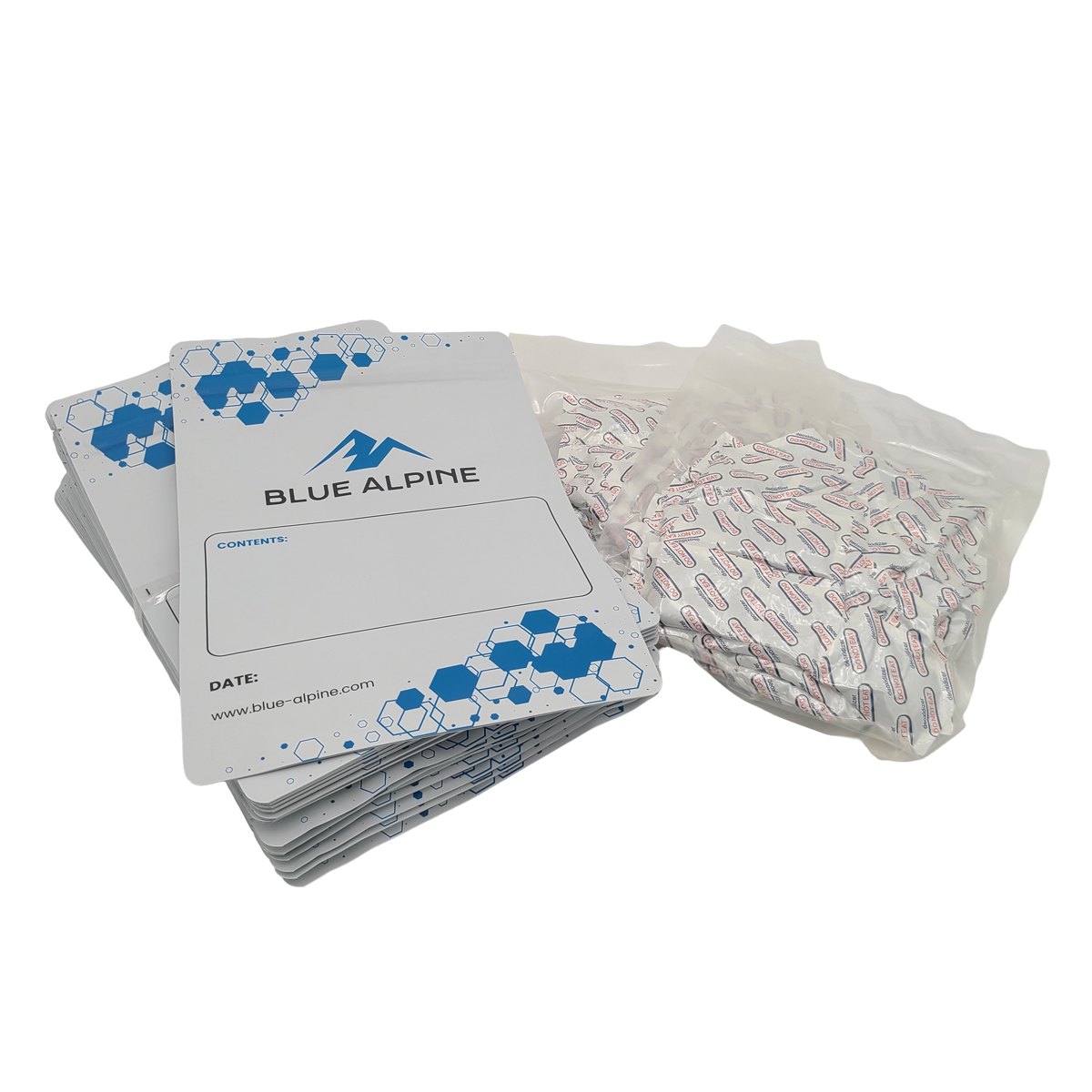
Blue Alpine Mylar Bags with Oxygen Absorbers
Mylar-type foil pouches are the barrier package the extension method seals pasta in, and this set includes the absorbers that go in before the seal.
Check the price
PackFreshUSA 500cc Oxygen Absorbers
Oxygen absorbers remove the air sealed inside each pouch, protecting the pasta from the oxidation and insects that end its storage life early.
Check Availability
Metronic 8-Inch Impulse Sealer
The pouch only holds its seal if the seam is fused across its full width, and an impulse sealer makes that seam the same way every time.
$39.99 from AmazonBefore You Start
Two gates, both from the extension sources. First, moisture: Utah State’s rule for foods sealed with oxygen absorbers is that they must be dry — about 10 percent moisture or less — because moist food in a reduced-oxygen package is a botulism risk. Plain dried pasta as it comes from the store meets that bar. Second, know what you are storing: the long figures belong to plain dried pasta. The preparedness guidance that rates pasta among the decades-long staples builds its longer-term list on plain staples, and fresh pasta, refrigerated pasta, and anything that needed the fridge before sealing still needs it after — Utah State is explicit that vacuum packaging is not a preservation method by itself, and food that required refrigeration or freezing before sealing must still be kept refrigerated or frozen.
How to Store Pasta Long-Term, Step by Step
- Start with plain, dry pasta. Hard dried shapes in unopened boxes or bags, checked for tears and pantry insects before anything gets sealed.
- Portion it. Colorado State’s guidance is to package dried foods in small amounts, so one opened container is one you will finish without repacking the rest.
- Fill the pouches. Pour the pasta into foil pouches, leaving room at the top for the absorber and the seal. Long shapes lie flatter in gallon-size pouches; short shapes pack denser.
- Add the oxygen absorber to each pouch just before sealing — absorbers start working on exposure to air, so the pouch closes within moments of the absorber going in.
- Seal hermetically. Heat-seal the pouch across its full width and check the seam end to end.
- Protect and label. Tuck the sealed pouches into a food-grade bucket or bin — the foil layer blocks oxygen and moisture, but rodents can chew into it — and date every container.
- Store cool and rotate. Colorado State puts the storage area above 32°F and below 70°F, dry and ventilated, with food off the floor, and says to date and rotate food every 6 to 12 months.
The Numbers: Storage Method and Storage Life
Two published clocks cover pasta, and they answer different questions: the extension chart rates ordinary storage for quality and nutrition, and the preparedness chart rates properly packed food kept cool.
| Storage method | Expected storage life |
|---|---|
| Dried pasta, ordinary storage (optimum length for quality and nutrition) | 24 months |
| Dried pasta, packed well and kept at 75°F or cooler | About 30 years |
| Storage area temperature range | Above 32°F and below 70°F |
| Storage area humidity | Less than 15 percent |
| Rotation check | Date and rotate every 6 to 12 months |
The moisture ceiling behind every sealed row is Utah State’s: about 10 percent moisture or less for any food packed with an oxygen absorber.
Short shapes and long shapes pack differently, and the working pantry needs its own containers too. These are the other sizes the pasta shelf runs on.

Wallaby 1-Gallon Mylar Bags, 10-Pack
One-gallon pouches are the right size for a few boxes of spaghetti or penne — the portion-size packaging the extension guidance calls for.
Check Availability
IRIS USA Airtight Container, 30 lb, with Wheels
An airtight container holds the opened pasta in the working pantry, keeping moisture and odors out of the shapes you cook from weekly.
$23.99 from AmazonCommon Mistakes
Storing pasta in its box. Cardboard is not airtight, moisture-proof, or insect-proof — the three properties Colorado State requires of a dried-food container. The box is how pasta travels, not how it keeps.
Sealing one huge bag. Every opening lets moisture back in and restarts the quality clock on the whole supply. Small amounts, opened one at a time, is the extension pattern.
Treating fresh pasta like dried pasta. The decades figure is for plain dried pasta. Fresh and refrigerated pasta are perishable foods, and sealing them does not change that.
Leaving pouches unprotected. Foil pouches block oxygen and moisture, but Utah State notes rodents can easily chew into the metallic layer. The bucket around the pouches is part of the package.
Storing somewhere warm and damp. The storage area in the extension guidance is dry — less than 15 percent humidity — ventilated, and below 70°F. A steamy kitchen cupboard over the stove fails on all three counts.
Storage and Shelf Life
Keep sealed containers in the cool, dry storage area, off the floor — Colorado State puts the lowest shelf 2 to 3 feet off the floor — dated, and rotated so the oldest pasta cooks first. If the food is packaged correctly, Colorado State notes, foods stored at temperatures below 60°F maintain good quality for about one year, and the cooler the storage area, the longer the retention of quality and nutrients. Once a container is opened, treat its contents as ordinary pantry pasta: reseal it airtight, keep it dry, and work through it rather than returning it to the long-term shelf.
Viewers also searched for these items.

ePackageSupply 5-Gallon Buckets, 3-Pack
Foil pouches alone can be chewed or punctured, so sealed pasta pouches go inside food-grade buckets that keep the set together and protected.
$73.99 from Amazon
Sukerle 5-Gallon Mylar Bags with Absorbers
Five-gallon Mylar bags swallow whole cases of boxed pasta for the deepest reserve, sealed once and left undisturbed in a bucket.
$42.99 from AmazonFrequently Asked Questions
Does pasta really keep for 30 years?
That figure comes from the preparedness guidance for dry foods packed well and kept at 75°F or cooler — pasta is listed at about 30 years alongside beans and rolled oats. The extension quality chart is more conservative: 24 months as the optimum length for quality and nutrition in ordinary storage. Packaging and temperature decide which clock your pasta is on.
Do I need oxygen absorbers for pasta?
They are part of the sealed-pouch method Utah State describes for dry goods, and pasta qualifies for it because it is dry — about 10 percent moisture or less. Absorbers protect quality and guard against insect infestation in the sealed container.
Can I vacuum seal pasta instead?
Vacuum sealing removes air, and Utah State lists it as a packaging step that can increase the shelf life of some foods — but it is not a preservation method by itself, and a plain vacuum bag is not the foil barrier a pouch is. For the long-term shelf, the foil pouch with an absorber is the package the guidance describes.
What about egg noodles and filled pasta?
The sources behind this guide rate plain dried pasta. Anything with more moisture or fat than plain dried pasta is a different storage problem, and no figure from these charts is printed for it here.
Storage chart figures: Colorado State University Extension, Fact Sheet 9.310, “Food Storage for Safety and Quality” (optimum storage lengths sourced to Utah State University Extension); long-term figures: emergency preparedness food storage guidance via Prepare Utah, and packaging guidance from Utah State University Extension.
Prices shown on this page were last checked November 26, 2026 — prices change; check before you buy.
Talk it over with other readers
The Truly Preserved Community on Facebook is where readers compare notes on food storage, water, and backup power — and where your questions help decide what we research next.