
Truly Preserved is reader-supported. If you buy through a link on this page we may earn a commission at no extra cost to you. Nobody pays for placement or scores.
THE SHORT ANSWER
Store plain rolled oats the way Utah State University Extension stores every dry staple: out of the cardboard canister they came in, into a barrier container — a foil Mylar pouch, a #10 can, or a sealed can with the oxygen removed — with an oxygen absorber, in a cool, dark, dry place. Packed well and kept at 75°F or cooler, rolled oats are rated at about 30 years in the preparedness guidance Utah State and the Church home storage program publish, and Brigham Young University research found little change in oats after 28 years in #10 cans. The gate is the same as for every dry good: about 10 percent moisture or less before an absorber goes in. Every figure on this page comes from the credited sources at the bottom.
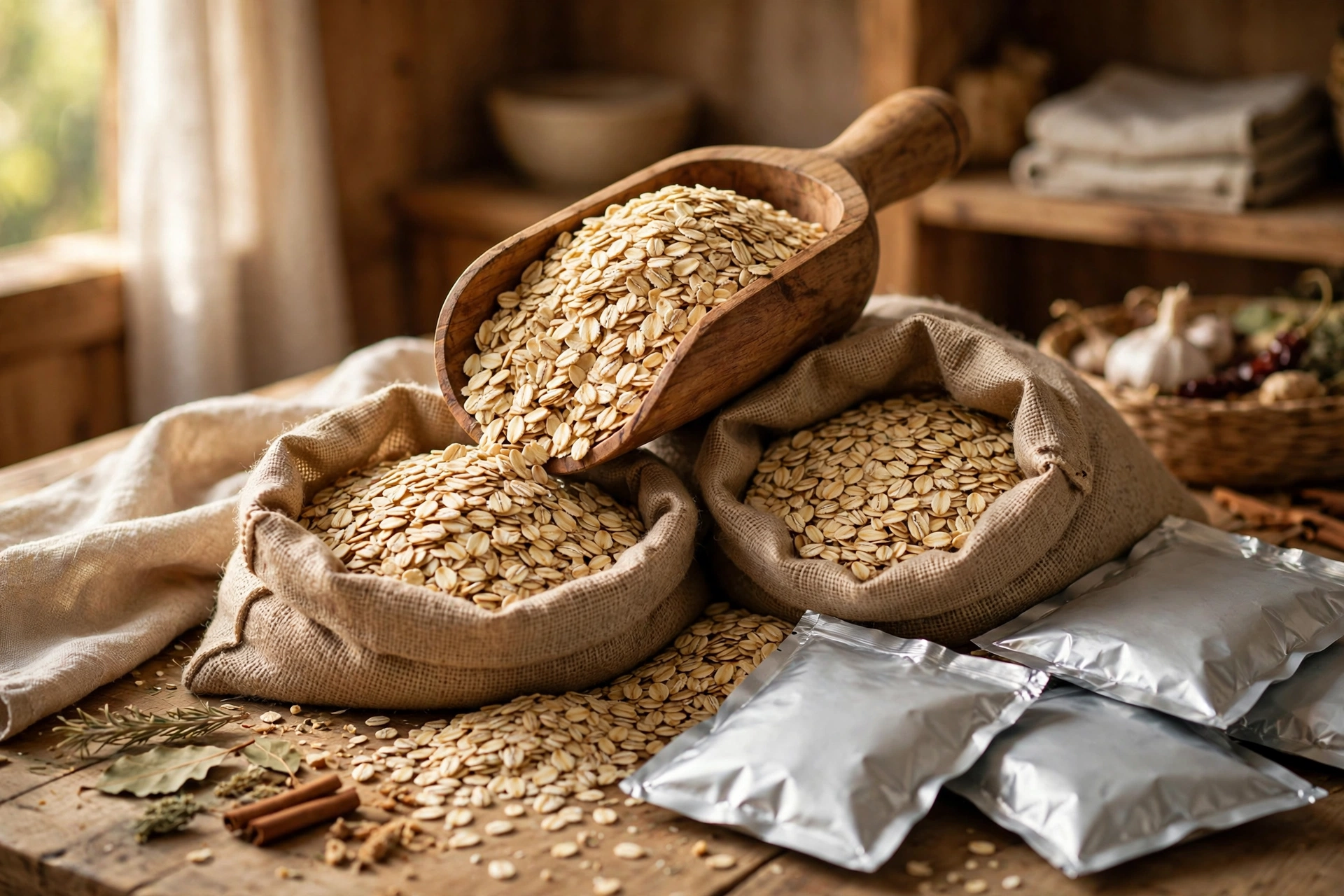
Oats are the breakfast of the stored pantry — the food most likely to actually get eaten in rotation, which is exactly what a stored food should be. They are also sold in packaging that was never meant to store them. Utah State’s packaging guidance says it directly: rolled oats, regular and quick-cooking, and steel-cut oats arrive in sturdy cardboard canisters, plastic bags, and heavy paper bags that are fine for transporting but are not intended to be sufficient protection from moisture, rodents, or other elements for long-term storage. The oats are a long-term food. The canister is not a long-term container. Moving one into the other is the whole job.
This guide follows the extension dry-storage method exactly, the same one behind our category flagship, how to store flour long-term, and it pairs with storing pasta long-term on the same shelf. This guide is part of our preservation guides for the whole dry pantry.
What You Need
Plain rolled oats — regular or quick-cooking — or steel-cut oats, with nothing added. For packaging, Utah State names the retail form that already does the job: sealed cans with the oxygen removed. At home, the equivalents are the barrier containers from the extension packaging list — #10 cans, foil pouches, sealable food storage buckets, and PETE bottles — plus oxygen absorbers and a heat sealer for the pouches. Flavored instant oatmeal packets are a different product, with sugar and flavorings stirred in; the long figures on this page belong to the plain oats.
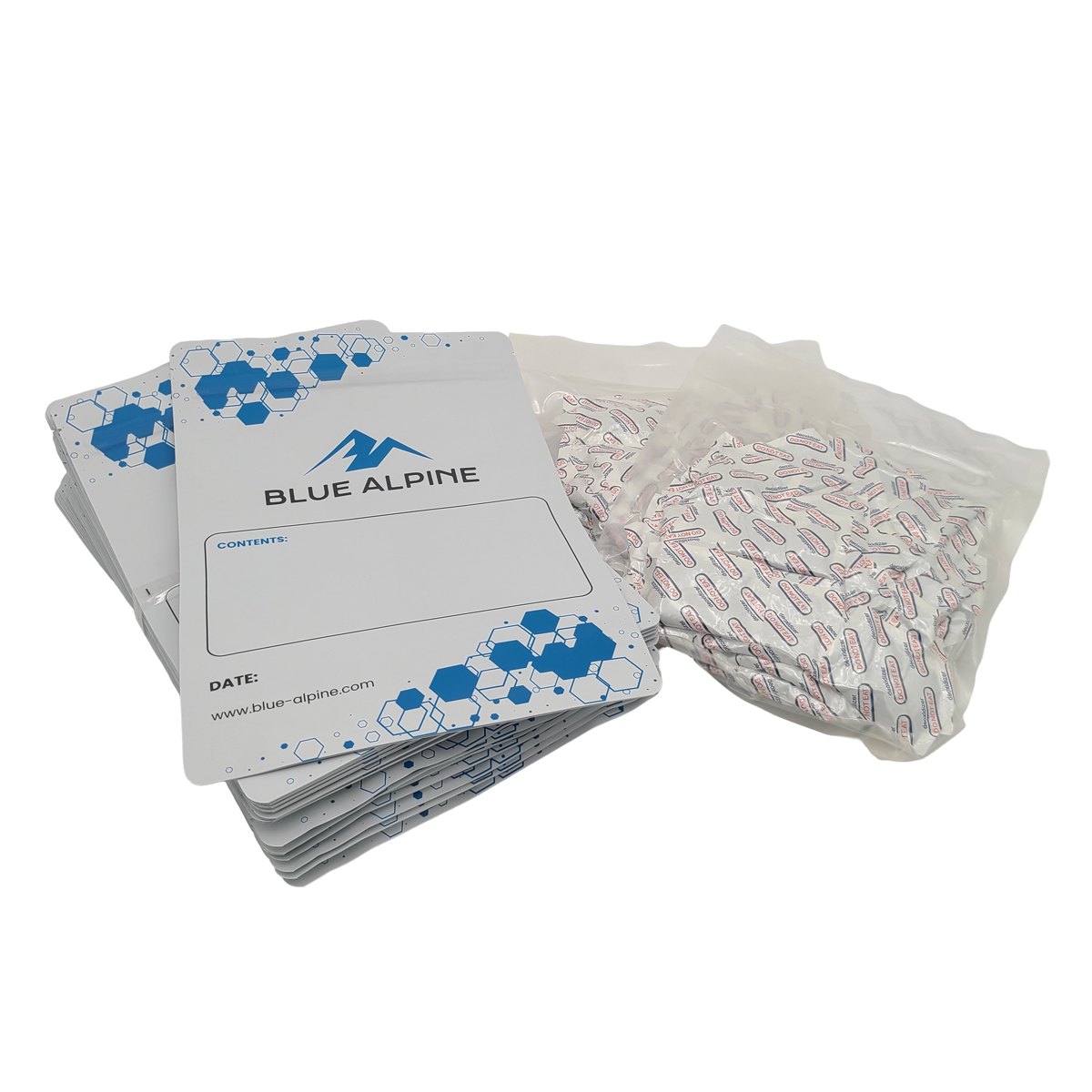
Blue Alpine Mylar Bags with Oxygen Absorbers
Foil pouches replace the cardboard canister Utah State calls transport packaging, giving oats a barrier that actually blocks oxygen and moisture.
Check the price
PackFreshUSA 300cc Oxygen Absorbers
Oxygen absorbers do at home what the sealed retail cans do commercially — remove the oxygen — extending shelf life and minimizing off-flavors.
Check Availability
Metronic 8-Inch Impulse Sealer
A pouch only keeps its low-oxygen seal if the seam is fused across its full width, and an impulse sealer is the tool that makes that seam.
$39.99 from AmazonBefore You Start
Moisture first, as always. Utah State’s rule for any food sealed with an oxygen absorber: it must be dry, about 10 percent moisture or less, because moist food in a reduced-oxygen package is a botulism risk. Plain dried oats from the store meet that bar. The second check is the package the oats are sitting in right now — if it is the cardboard canister or paper bag they were sold in, Utah State has already told you what it is worth for long-term storage: transport protection only. Do not seal the canister away and call it stored; move the oats into a real barrier container.
How to Store Oats Long-Term, Step by Step
- Start with plain oats. Rolled oats, regular or quick-cooking, or steel-cut oats — unflavored, with nothing mixed in.
- Check them over. Look for pantry insects, off smells, or any sign the bag took on moisture in the store or on your shelf. Food that starts stale does not improve in storage.
- Fill the pouches or cans. Pour the oats into foil pouches or cans, leaving room at the top for the absorber and the seal. Work in amounts you will use up once opened.
- Add the oxygen absorber to each container just before sealing — absorbers start working on exposure to air, so the container closes within moments of the absorber going in.
- Seal hermetically. Heat-seal pouches across the full width and check the seam. A long-term package is only as good as its seal.
- Protect the pouches. Tuck sealed pouches into a food-grade bucket or bin; the foil blocks oxygen and moisture, but rodents can chew into it.
- Label, store cool, and rotate. Date every container, keep the set somewhere cool, dark, and dry, and cook the oldest oats first.
The Numbers: Storage Method and Storage Life
The preparedness chart and the university research behind it give oats one of the longest clocks on the dry shelf — for plain oats, properly packed.
| Storage method | Expected storage life |
|---|---|
| Rolled oats, packed well and kept at 75°F or cooler | About 30 years |
| Rolled oats in #10 cans (BYU research) | Little change at 28 years |
| Cardboard canister, plastic bag, or paper bag as sold | Not intended for long-term storage — transport packaging only |
| Moisture ceiling for absorber-packed oats | About 10 percent or less |
Temperature is the lever behind every long figure on the dry shelf: Utah State quotes the USDA rule that every 10.8°F rise in storage temperature cuts shelf life roughly in half, and puts the best storage at a constant 40 to 60°F.
One container size does not fit a food you eat every week. These are the other packages the oat shelf runs on — smaller pouches for rotation, and a working container for the oats in use.

Sukerle 5-Gallon Mylar Bags with Absorbers
Five-gallon Mylar bags take a bulk sack of oats in one seal, the deepest-reserve form, stored inside a bucket and left undisturbed.
$42.99 from Amazon
Vittles Vault 35 lb Airtight Container
A 35-pound airtight vault is the right scale for a household that eats oatmeal daily and rotates its stored oats constantly.
Check AvailabilityCommon Mistakes
Storing oats in the canister they came in. Utah State names cardboard canisters, plastic bags, and paper bags as transport packaging that is not sufficient protection from moisture, rodents, or other elements for long-term storage. Leaving oats in them is the most common oat mistake there is.
Storing flavored instant packets as the long-term supply. The 30-year figure belongs to plain rolled oats. Packets with sugar and flavorings added are a different, shorter-lived product, and no figure from these sources covers them.
Sealing oats that have picked up moisture. The 10-percent ceiling is a safety line, not a quality tip. Oats that sat open in a humid kitchen belong in the working pantry, not in a sealed pouch.
Leaving foil pouches unprotected. The foil layer dramatically reduces oxygen and moisture transmission, but rodents can easily chew into it, in Utah State’s words. The bucket around the pouches is part of the system.
Storing the set somewhere warm. The USDA rule Utah State quotes — shelf life halving with every 10.8°F rise — means a hot garage spends the decades the packaging bought. Cool and constant is what the long figure assumes.
Storage and Shelf Life
Keep sealed containers cool, dark, and dry, dated, and rotated oldest-first. Oats earn their place in rotation more easily than most stored foods — they are breakfast — so the practical pattern is a sealed reserve behind a working container you refill from the oldest pouch. Once a pouch or can is opened, its contents are ordinary pantry oats from that day: reseal them airtight, keep them dry, and use them rather than returning them to the long-term shelf. Utah State’s general rule for stored food applies here too: the best storage temperature is a constant 40 to 60°F, and every degree of steady cool is shelf life kept.
Viewers also searched for these items.

ePackageSupply 5-Gallon Buckets, 3-Pack
Sealed oat pouches go inside food-grade buckets for protection from punctures and rodents, the step that makes foil storage last.
$73.99 from Amazon
IRIS USA Airtight Container, 30 lb, with Wheels
An airtight container is the working home for oats in daily use, keeping the opened supply dry while the sealed reserve stays shut.
$23.99 from AmazonFrequently Asked Questions
Which oats store best — rolled, quick, or steel-cut?
Utah State’s packaging guidance covers rolled oats, both regular and quick-cooking, and steel-cut oats together, and notes all of them arrive in packaging meant for transport rather than long-term storage. The method and the figures on this page apply to the plain forms of each.
Do oats need oxygen absorbers?
The retail form Utah State points to is sealed cans with the oxygen removed, and absorbers are the home version of that step — they remove oxygen from the sealed container to extend shelf life and minimize off-flavors. They are only for dry food, at about 10 percent moisture or less.
Can I store oat groats instead?
Utah State notes oat groats are sold too, in the same transport-style packaging. Whole kernels keep their quality well, but the storage figures published in these sources are for rolled oats, so that is the form this guide rates.
How long do oats keep once opened?
The sources behind this guide rate sealed storage, not opened containers. Once opened, treat the oats as a working pantry food: airtight, dry, and used in normal rotation.
Packaging guidance: Utah State University Extension, “Packaging Foods”; long-term figures: emergency preparedness food storage guidance via Prepare Utah, summarizing Utah State University Extension and Church home storage guidance, with Brigham Young University storage research.
Prices shown on this page were last checked November 26, 2026 — prices change; check before you buy.
Talk it over with other readers
The Truly Preserved Community on Facebook is where readers compare notes on food storage, water, and backup power — and where your questions help decide what we research next.