
Truly Preserved is reader-supported. If you buy through a link on this page we may earn a commission at no extra cost to you. Nobody pays for placement or scores.
THE SHORT ANSWER
Store nonfat dry milk only — Utah State University Extension is clear that dried whole milk and dried buttermilk are not suitable for long-term storage because of their milk fat. Keep it free of moisture, light, and oxygen, in a Mylar-type bag or a #10 can with an oxygen absorber; canning jars suit smaller quantities if light is kept from reaching the milk. Utah State’s honest clock is shorter than the other staples’: 3 to 5 years in cool storage, and as little as 3 months in heat. USDA FoodKeeper gives the same shape for the pantry: powdered milk 3 to 5 years unopened, and 3 months once opened. Every figure on this page comes from the credited sources at the bottom.
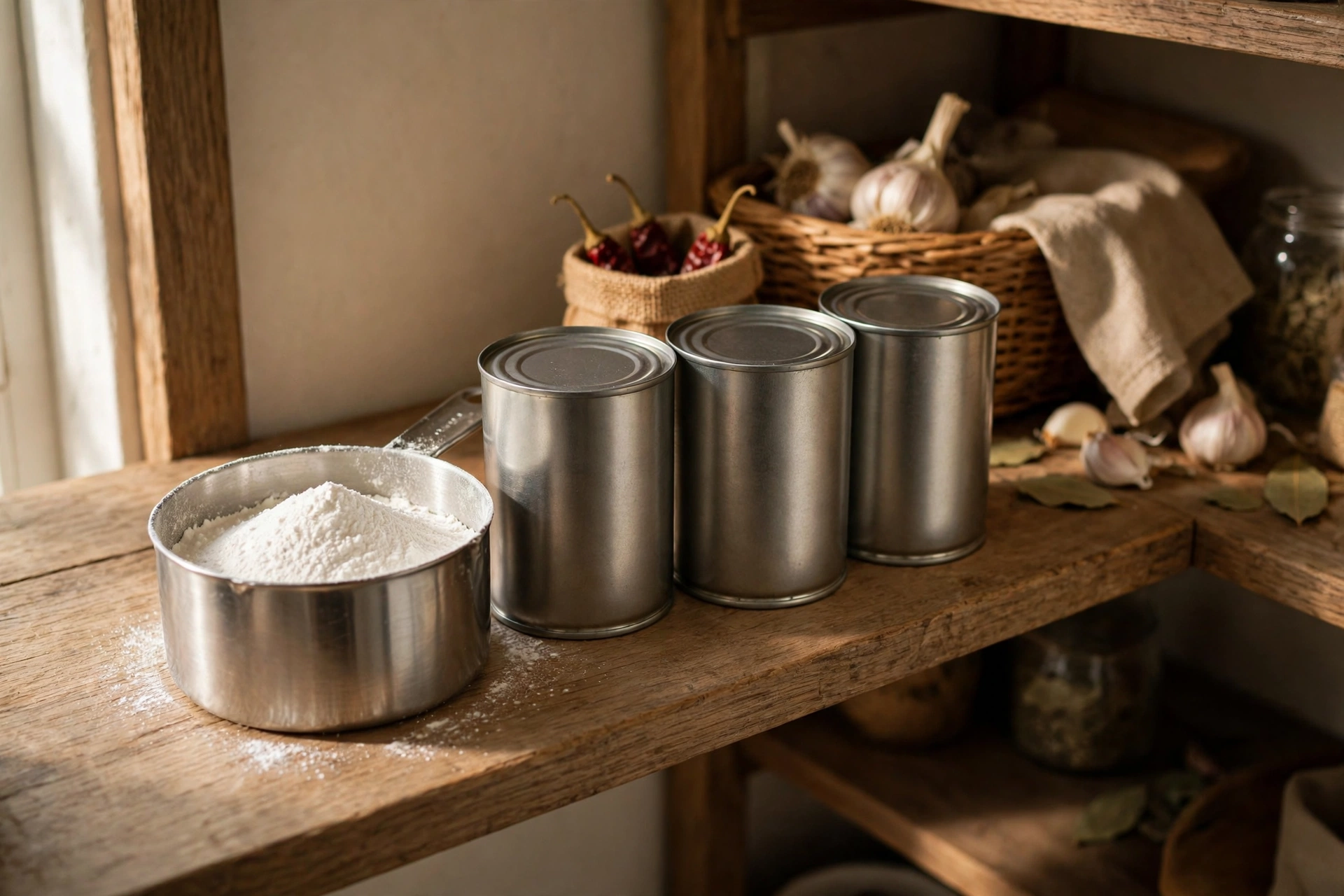
Powdered milk is the most argued-about number in food storage, and the argument exists because the honest answer is a range, not a slogan. Utah State’s own summary admits estimates vary, especially for powdered milk: 3 to 5 years in cool storage, as little as 3 months in heat. That is not a failure of the food — it is the fat rule showing. Milk powder keeps in proportion to how little fat it carries, which is why the storage form is nonfat dry milk and why whole-milk powder, however convenient, is not a storage item at all. Temperature then decides where in the range your cans land.
This guide follows Utah State’s packaging guidance and the USDA FoodKeeper chart exactly. It sits in the same category as our flagship, how to store flour long-term — another staple where the cool-storage figure and the pantry figure are honestly different numbers. This guide is part of our preservation guides for the whole dry shelf.
What You Need
Nonfat dry milk, instant or regular — a Utah State study found the form made no difference to how long it stored. For packaging, Utah State names Mylar-type bags and #10 cans as good containers for large quantities, canning jars for smaller quantities provided light is prevented from reaching the dried milk, and oxygen absorbers to remove oxygen from the containers. One warning from the same guidance: other plastic containers are less suitable — a USU study concluded that after 4 years, nonfat dry milk samples stored in plastic bags (not Mylar-type) were statistically less acceptable than samples stored in cans, and the unacceptability was due to an oxidized, stale flavor.
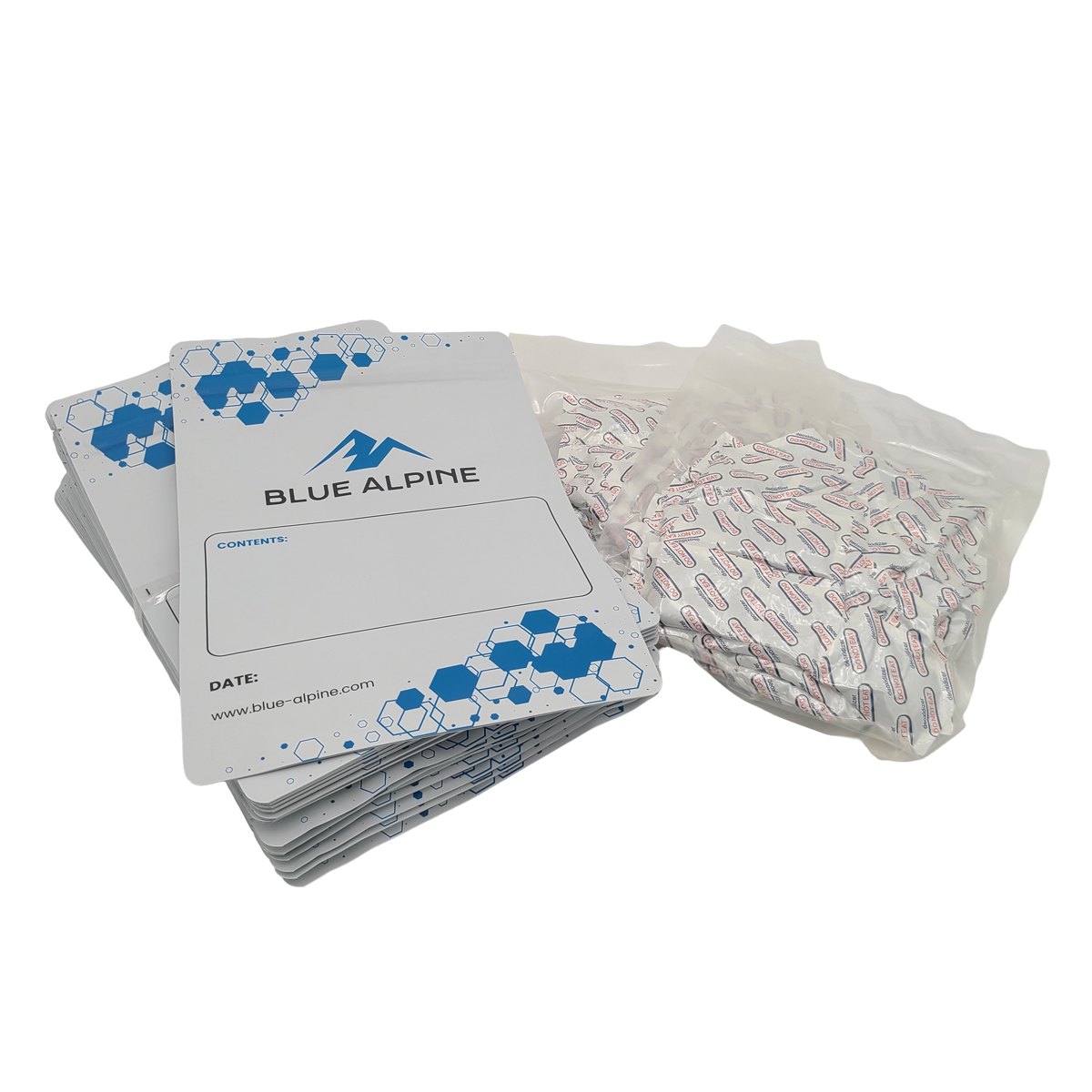
Blue Alpine Mylar Bags with Oxygen Absorbers
Mylar-type bags are one of the two containers Utah State names for large quantities of dried milk, with the light and oxygen protection plastic lacks.
Check the price
PackFreshUSA 300cc Oxygen Absorbers
Oxygen absorbers remove the oxygen that produces the oxidized, stale flavor Utah State's study blamed for stored milk going unacceptable.
Check Availability
Nutrient Survival Milk
A ready nonfat milk made for storage starts the shelf with the right product — nonfat is the only form the extension guidance rates for long-term storage.
Check AvailabilityBefore You Start
Check the fat first. Utah State’s line is plain: dried whole milk and dried buttermilk contain milk fat and are not suitable for long-term storage. If the powder in front of you is whole-milk powder, it is a use-it-soon food, not a candidate for the sealed shelf, and no packaging fixes that. Second, the dry rule that governs every absorber on this site applies here too: foods packed with oxygen absorbers must be dry — about 10 percent moisture or less — because moist food in a reduced-oxygen package is a botulism risk. Powdered milk as it comes from the store meets that bar; powder that has sat open in a humid kitchen may not.
How to Store Powdered Milk, Step by Step
- Buy nonfat dry milk. Instant or regular — the research Utah State cites found no significant difference in storage between the two forms.
- Keep it dry, dark, and oxygen-free. Those are Utah State’s three conditions for dried milk, and the packaging below is how each one is met.
- Fill cans or pouches. #10 cans or Mylar-type bags for large quantities; canning jars for smaller quantities, with light prevented from reaching the milk — a dark cupboard or an opaque cover does it.
- Add the oxygen absorber to each container just before sealing. Absorbers extend shelf life and minimize off-flavors, and they start working on exposure to air, so seal promptly.
- Seal hermetically. Heat-seal pouches across the full width and check the seam; close cans and jars tight.
- Label and store cool. Date every container. Cool storage is the difference between the top and the bottom of this food’s range — 3 to 5 years cool, as little as 3 months in heat.
- Rotate on the short clock. Of all the staples in this category, powdered milk is the one to rotate first and most honestly.
The Numbers: Storage Method and Storage Life
Two sources, one shape: years when it is cool and sealed, months when it is hot or opened.
| Storage method | Expected storage life |
|---|---|
| Nonfat dry milk, cool storage (Utah State Extension) | 3 to 5 years |
| Nonfat dry milk, stored in heat (Utah State Extension) | As little as 3 months |
| Powdered milk, pantry, unopened (USDA FoodKeeper) | 3 to 5 years |
| Powdered milk, pantry, opened (USDA FoodKeeper) | 3 months |
| Nonfat dry milk in plastic bags vs. cans (USU study) | Less acceptable than cans after 4 years |
Note what is not in the table: whole-milk powder. Utah State does not rate it for long-term storage at all, because of its milk fat.
Once a can is opened, the clock drops to months, so the working supply wants its own small containers. These are the packages that side of the job runs on.

Wallaby 1-Gallon Mylar Bags, 10-Pack
One-gallon pouches portion milk powder into amounts a household finishes inside the opened window, instead of one can that outlives it.
Check Availability
Ball Half-Pint Mason Jars, 12-Pack
Utah State allows canning jars for smaller quantities of dried milk kept out of the light, and half-pint jars hold a week's worth for daily use.
Check AvailabilityCommon Mistakes
Storing whole-milk powder for the long term. It tastes richer fresh and stores worse — the milk fat is exactly what goes stale. Utah State does not consider dried whole milk or dried buttermilk suitable for long-term storage, full stop.
Trusting a plain plastic bag or bucket. Utah State calls other plastic containers less suitable for dried milk, and its own study found powder in plastic bags statistically less acceptable than canned powder after 4 years, from an oxidized, stale flavor. Cans and foil pouches are the package.
Storing jars of milk powder in the light. Jars are approved for smaller quantities only provided light is prevented from reaching the dried milk. A clear jar on a bright shelf fails the condition it was allowed under.
Storing it hot and believing the long figure. The same guidance that gives 3 to 5 years in cool storage gives as little as 3 months in heat. A garage in summer is the 3-month column.
Buying a can too big to finish. FoodKeeper puts opened powdered milk at 3 months in the pantry. Utah State makes the same point about dried goods generally: do not buy a container so large it cannot be consumed within a reasonable time once opened.
Storage and Shelf Life
Keep containers cool, dark, dry, and dated, and rotate oldest-first — with this food, rotation is not housekeeping, it is the storage plan. Utah State’s balanced verdict is worth keeping whole: though there is some decline in quality and nutrition over time, it appears possible to retain palatability and nutritional value in nonfat dry milk during long-term storage by using adequate packaging and storage conditions. Adequate packaging and cool conditions are doing all the work in that sentence. Once opened, move the powder to a small airtight container, keep light off it, and plan to use it within FoodKeeper’s 3-month opened window.
Viewers also searched for these items.

Metronic 8-Inch Impulse Sealer
Milk pouches only hold their low-oxygen seal if the seam is fused across its full width, and an impulse sealer makes that seam reliably.
$39.99 from Amazon
Sukerle 5-Gallon Mylar Bags with Absorbers
Five-gallon Mylar bags hold a case of milk powder as one sealed unit for households storing for a large family, protected inside a bucket.
$42.99 from Amazon
ePackageSupply 5-Gallon Buckets, 3-Pack
Food-grade buckets protect sealed milk pouches from punctures and keep the dated set together in the coolest part of the house.
$73.99 from AmazonFrequently Asked Questions
Instant or regular nonfat dry milk — which stores better?
Neither, on the research Utah State cites: a BYU comparison of instant and regular nonfat dry milk showed no significant differences in storage, and both types were suitable for storage. Buy the form your household will actually drink.
Why do some charts give powdered milk 20 years?
Longer figures circulate for sealed, oxygen-free packaging, but the sources this guide is built on are more conservative: Utah State gives 3 to 5 years in cool storage and warns estimates vary, and USDA FoodKeeper gives 3 to 5 years unopened. This page prints the conservative, credited figures.
Can I store powdered milk in a food-grade bucket?
Utah State says other plastic containers are less suitable for dried milk, and its study found bag-stored powder less acceptable than canned after 4 years. If a bucket is used at all, the milk belongs in a sealed Mylar-type bag inside it — the foil is the barrier, not the bucket wall.
How do I know stored milk powder has gone off?
The failure the USU study found was an oxidized, stale flavor — a quality failure. Powder that smells or tastes stale, or that was stored hot or damp, should be replaced rather than rationed out; rotate on the cool-storage clock so the question rarely comes up.
Packaging and storage guidance: Utah State University Extension, “Packaging Foods” and USU food storage guidance; pantry times: USDA Food Safety and Inspection Service, FoodKeeper storage chart, via Utah State University Extension.
Prices shown on this page were last checked November 26, 2026 — prices change; check before you buy.
Talk it over with other readers
The Truly Preserved Community on Facebook is where readers compare notes on food storage, water, and backup power — and where your questions help decide what we research next.