
Truly Preserved is reader-supported. If you buy through a link on this page we may earn a commission at no extra cost to you. Nobody pays for placement or scores.
THE SHORT ANSWER
“Inadequate vacuum” is the mid-batch version of the vacuum problem: your freeze dryer pulled down fine at the start, then hours into drying the pressure stalled or started climbing and the machine gave up. That pattern points away from the start-up checks and toward three things, in this order: a load giving off more vapor than the pump can clear (too wet, too much, or still off-gassing on a new machine), ice and meltwater working against the seal, and a small leak that only opens up once the chamber warms. The empty-chamber vacuum test at the bottom of this page splits the list in half — if the machine holds under 500 mTorr empty and dry, the machine is fine and the load is the problem.
This page is the companion to our start-up page. If your screen says “Unable to achieve vacuum” in the first half hour, that is a different fault with different deadlines — under 2,500 mTorr within 15 minutes, under 1,000 mTorr within 30 — and it is covered step by step in why your freeze dryer says “Unable to achieve Vacuum”. Inadequate vacuum is what owners report when the batch was already drying: the number fell, the heaters came on, and then somewhere around hour eight, ten, or eleven the pressure stopped falling, crept back up, and the error stopped the run. Everything below is built from Harvest Right’s own Use & Care manual and Troubleshooting Guide, the maker’s published setup tests, and the patterns owners report in the freeze-drying groups. We work from research, not a repair bench: these are the checks the maker publishes for owners, and the page stops where those stop.

JB Black Gold Pump Oil
The second named oil on both makers' lists: ISO 46, non-detergent. A gallon covers years of standard-pump filter cycles and Premier changes alike.
$54.50 from AmazonHow is inadequate vacuum different from “unable to achieve vacuum”?
The two errors are timed differently, and the timing is the diagnosis. “Unable to achieve vacuum” fires at the start of the drying phase, against two hard deadlines. Inadequate vacuum fires later — the machine achieved vacuum, held it well enough to start drying, and then lost the fight. Harvest Right’s manual describes the drying-phase fail-safe the same way it describes the start: the pump has to keep the chamber down while water vapor pours off the food, and the shelf heaters cycle on at 500 mTorr and off at 600. A healthy batch lives in that band for hours. A batch heading for this error drifts up through it and does not come back.
| What you see | When | What it usually means |
|---|---|---|
| Stuck above 2,500 mTorr | First 15 minutes | Start-up fault — see the companion page |
| Falls, then stalls around 600–1,000 mTorr | Hours into drying | Vapor load beating the pump, or a heat-opened leak |
| Falls below 500, then climbs steadily | Mid-batch | Air or vapor entering faster than the pump removes it |
| Fine empty, fails loaded | Vacuum test vs. batch | The load, not the machine |
That last row is the one owners skip, and it is the cheapest information in this whole page. Run the split test before you order parts.
Why does the pressure stall hours into a batch?
The most common cause is the food itself. A freeze dryer does not just pump air out once; it pumps water vapor out continuously, for the whole run, and the pump’s capacity is fixed. A load that went in wetter than it looked — sauces, soups, fruit that was not pre-frozen solid, trays filled past the maker’s load line — releases vapor faster than the pump can clear it, and the pressure parks above the working band until the machine calls it. Owners see this most on first runs of high-moisture food and on overloaded trays. The fix is unglamorous: pre-freeze everything solid, keep loads at or under the tray weights in the manual, and give wet foods more freeze time before the vacuum phase starts.
On a new machine there is a second, specific version of this: the off-gas cycle. The maker’s setup sequence includes an off-gassing run — a heat-and-vacuum cycle on an empty, dry chamber — because new shelving and chamber materials release gases under heat and vacuum. Skip it, and the machine can dry bread and early batches happily, then throw the inadequate vacuum error ten or eleven hours into a later run when a long, hot cycle finally pulls those gases out. Owners who skipped the setup steps and hit the error mid-batch are a recurring thread in the groups, and the maker-side remedy is the boring one: go back and run the off-gas cycle properly, door fully latched, until the empty chamber holds under 500 mTorr.

Nesco VS-12
A 130-watt double pump, a double-seal setting, and an 11.8-inch bar for $134.
$108.18 from Amazon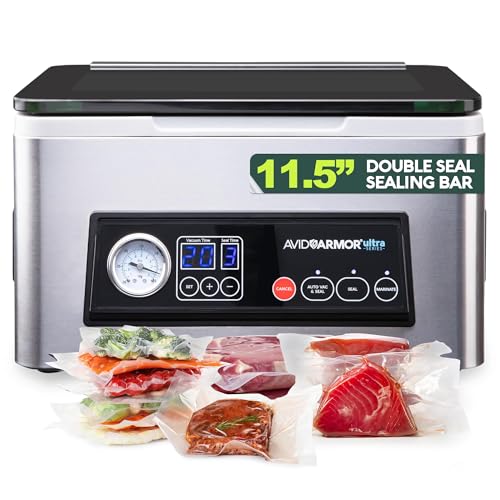
Avid Armor USV20
The chamber machine: soups, marinades and smooth cheap pouches — if it fits in an 11 x 10 pouch.
$349.00 from Amazon
FoodSaver Elite Liquid Plus
The all-in-one countertop sealer — it senses bags and moisture for you, and seals liquids without the pre-freeze dance.
$218.56 from AmazonWhat does ice have to do with a vacuum error?
More than owners expect. Between batches the chamber has to be fully defrosted and dry — the maker’s care guidance is explicit that every new batch starts with a chamber free of ice and water. Ice left on the walls melts unevenly once the heaters run, and meltwater around the door rim and drain path gives vapor a head start the pump did not budget for. A batch started on a chamber that was “mostly defrosted” can pull down fine while everything is still frozen, then stall as the leftover ice turns to vapor mid-run. If your error shows up on the second or third back-to-back batch and never on the first, defrost debt is the first suspect, ahead of any part.
Which leaks only show up when the chamber is warm?
The start-up leaks — drain valve cracked open, pump plugged into the wall, debris on the gasket — fail in the first minutes, and the companion page covers them. The mid-batch leak is subtler: the seal holds cold, then heat and hours of vibration open it. The places to check, in order:
- The door gasket seating. A gasket pushed too far onto its seat can seal at the start and creep as the door warms. Pulling it back out slightly — owners report about a quarter inch at the top restoring the contact line — is the same fix as on the start-up page, but here the tell is timing: fine at hour one, leaking at hour nine.
- The vacuum hose and its O-rings. Hose connections at the dryer and the pump, both snug, O-rings unseated or nicked. A fitting that was hand-tight cold can weep under a warm pump’s vibration.
- The drain valve. Still worth the ten seconds. A valve that was barely seated can pass the start deadlines and leak at drying pressures.
- The feedthrough and epoxy seals. Where the shelf-unit wiring enters the chamber, the seal is epoxy. Owner troubleshooting guides flag this as a real, if less common, leak point — and it is the one that characteristically passes an empty cold test and leaks on a long hot run. This is also where owner-level checks end: a feedthrough leak is a support call, not a kitchen-table repair, and opening the machine can void the warranty.
Can the pump itself be the problem?
Yes — and mid-batch is when a tired pump shows it. A pump with clean oil pulls deep and keeps pulling; a pump whose oil has gone cloudy with water from batch after batch loses depth slowly, over hours, exactly the shape of this error. Read the sight glass: oil should sit at the middle of the glass and look like oil, not milk. The intervals matter here — Harvest Right’s Premier pump wants an oil change every 20 to 30 batches, the older Standard pump every 4 to 5 — and our freeze dryer maintenance schedule lays out every maker’s interval in one table. If the oil is waterlogged, change it before you diagnose anything else; the oil is also the pump’s sealant, not just its lubricant, which is why tired oil reads as a vacuum problem. Whether you have to buy that oil from Harvest Right is its own question, answered in do you have to buy oil from Harvest Right?

COOQUI 12-Inch Tortilla Warmer
An insulated fabric warmer sized for full-size flour tortillas. Thirty to forty-five seconds in the microwave and it holds the stack warm and soft for up to an hour at the table.
$19.99 from Amazon
Sour Patch Kids (5 lb)
The bulk bag is the economical way to feed a freeze dryer — one bag fills several tray loads, and the pieces are the standard size every candy-mode timing is written for.
$20.99 from Amazon
Thrive Life: Freeze-Dried Blueberries - Pantry Can Size
Freeze-dried food by the can, no machine: the same long-life ingredients the kits are built from, bought a can at a time.
$60.00 from AmazonThe split test: how do you tell a machine problem from a load problem?
Run the maker’s vacuum test on an empty, clean, completely dry chamber — shelving unit in, door fully latched, drain valve closed. The published standard: the reading should fall below 500 mTorr within about 10 to 20 minutes, and a full test holds it there. Then read the result like a fork in the road:
- Empty test passes, batches fail: the machine seals and the pump pulls. The problem is the load — too wet, too heavy, not pre-frozen, or a new machine that never got its off-gas cycle. Fix the loading, not the machine.
- Empty test fails cold: that is the start-up fault wearing a different label. Work the five checks on the unable-to-achieve-vacuum page.
- Empty test passes cold but a long heat-and-vacuum run drifts up: suspect the heat-opened leaks above — gasket seating first, feedthrough last — and talk to support with your log files before ordering parts. The machine can save its run logs to a USB drive, and Harvest Right support will ask for them; send data, not guesses.
Should you just press Continue?
The manual’s own flow says that once the leak is found and sealed, you press Continue and the batch resumes where it stopped — Continue is the right button after a fix. Pressing it on an unchanged machine buys a little time while the same vapor load or the same leak is still there, and owners do report finishing batches that way when the cause was a borderline-wet load that dried enough to stop overwhelming the pump. Read it honestly: if Continue gets you through once, the batch was marginal, not cured. If the error returns in the same run, stop and run the split test instead of riding the button — a pump run for hours against a leak is a pump wearing itself out, and the fail-safes exist to protect it.
Viewers also searched for these items.

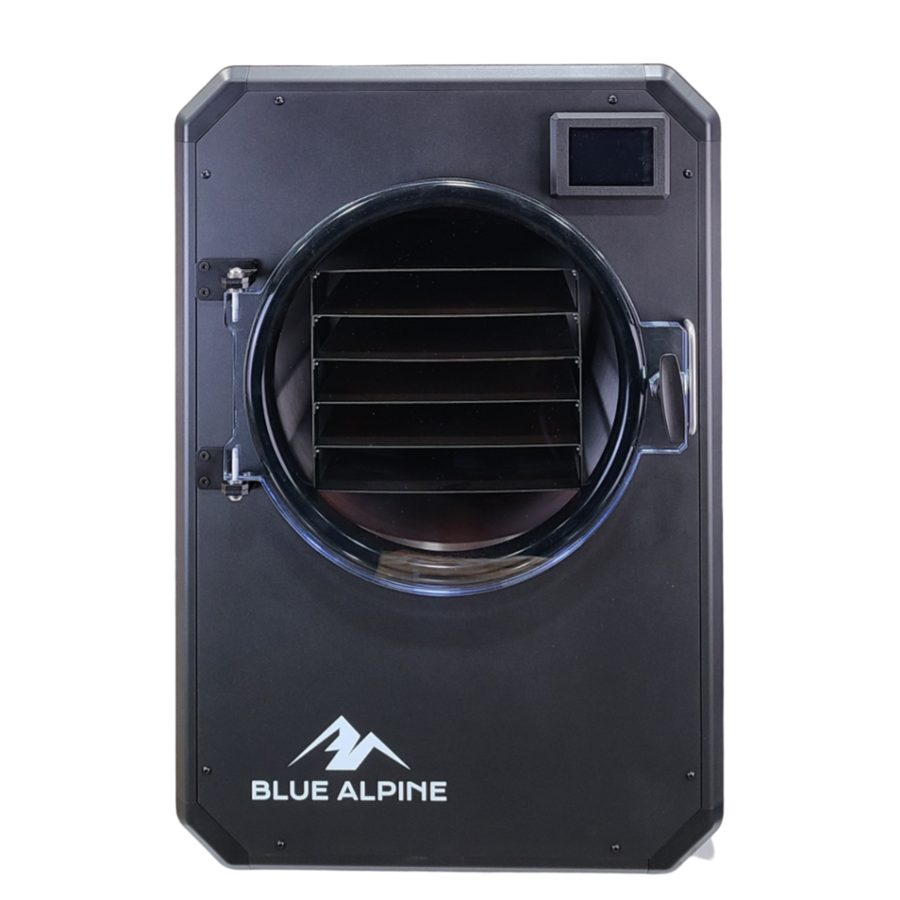
Blue Alpine Medium Select
The alternative brand owners cross-shop at replacement time. Use code TRULYPRESERVED at checkout for 3% off.
Check the price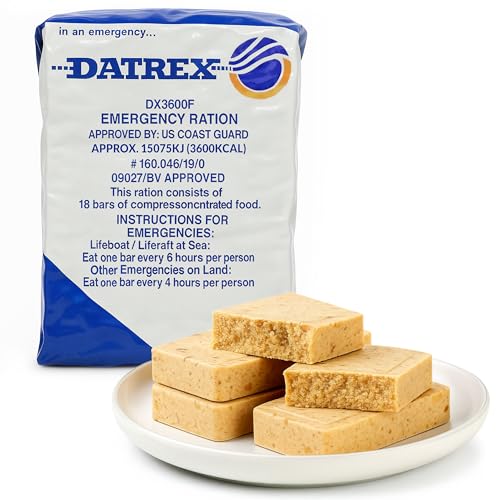
Datrex 3600
Eighteen individually wrapped 200-calorie bars and a six-ingredient label — the pack that stays fresh after you open it.
$24.99 from AmazonFrequently asked questions
Why does my freeze dryer say inadequate vacuum after running fine for hours?
Because the failure is about rate, not about the start. The pump has to remove water vapor as fast as the food releases it, for the whole run. A wet or overloaded batch, a chamber carrying leftover ice, or a seal that opens as it warms can all beat the pump hours in even though the start was clean.
What mTorr should a freeze dryer hold while drying?
Harvest Right’s manuals put the working band at 500 mTorr and below: the setup test treats 500 mTorr or lower as adequate vacuum, and in a running batch the shelf heaters switch on at 500 mTorr and off at 600. A batch parked above that band is a batch the machine is about to question.
Can overloaded trays cause inadequate vacuum?
Yes. More food means more water, and more water means more vapor for a fixed-capacity pump to clear. Trays loaded past the manual’s weights, or food that went in without being frozen solid first, are the most common load-side cause owners find.
Do I need to run the off-gas cycle on a new freeze dryer?
Harvest Right’s setup sequence includes it, and skipping it is a documented pattern behind mid-batch inadequate vacuum errors on newer machines — batches run fine at first, then a long hot cycle pulls out the gases the off-gas run was meant to clear. Run it empty and dry, door fully latched, until the chamber holds under 500 mTorr.
When is a vacuum problem a warranty call instead of a home fix?
When the empty, dry vacuum test fails after the published owner checks — gasket, drain valve, hose and O-rings, pump plugged into the dryer and switched on, clean oil at the right level — or when the leak points at the chamber feedthrough seals. Download the machine’s log files to a USB drive first; support diagnoses from those.
If you are still deciding whether a freeze dryer earns its counter space at all, our home freeze dryer comparison prices the three makers against each other, and what freeze-drying actually costs per pound counts the oil changes and electricity honestly. Owners living with one already will get more from the Harvest Right sizes comparison when the real question turns out to be load size.
Sources & freshness: Harvest Right Use & Care manual and Troubleshooting Guide (vacuum fail-safes, setup vacuum test, oil intervals), Harvest Right FAQ (defrost and oil guidance), Freeze Drying Cookbook vacuum-error troubleshooting tree, and owner reports in the freeze-drying groups, all consulted November 12, 2026.
Talk it over with other readers. The Truly Preserved Community on Facebook is where readers compare notes on food storage, water, and backup power — and where your questions help decide what we research next. Join the group →
Prices shown on this page were last checked November 26, 2026 — prices change; check before you buy.