
Truly Preserved is reader-supported. If you buy through a link on this page we may earn a commission at no extra cost to you. Nobody pays for placement or scores.
Short answer first: almost any panel with MC4 plugs will charge an EcoFlow station, as long as the panel’s open-circuit voltage stays inside the station’s solar input window and you have the MC4-to-XT60 cable every EcoFlow station uses. EcoFlow’s own panels ship with that cable. Third-party panels need it bought separately — a small cable, not a reason to overpay for a logo. The traps are at the edges: the little RIVER stations cap out at 30V, which quietly disqualifies some popular panels on cold mornings, and two 220W panels in series is the most a DELTA 2 can take, not a starting point for three.
Plug straight in (with the MC4-to-XT60 cable): EcoFlow 110W, EcoFlow NextGen 220W, EcoFlow 400W, Renogy 100W rigid, and Bluetti PV200 — all electrically fit the DELTA line. RIVER 2 and RIVER 3 owners (30V ceiling): the EcoFlow 110W and NextGen 220W are the safe fits; the Renogy 100W and Jackery SolarSaga 200 pencil out over 30V once the cold-weather allowance is applied. Adapter warning: Jackery’s SolarSaga panels end in a DC8020 plug, so an EcoFlow station needs a DC8020-to-XT60 adapter before voltage even enters the conversation.
The ceilings: what each EcoFlow station can take
These are EcoFlow’s own figures, from the product pages and manuals we checked on November 12, 2026. Every EcoFlow station takes solar through an XT60 port, and every one clips extra current without complaint — it is voltage that can lock you out or do damage, so voltage is the column to read first.
| Station | Max solar input | Voltage window | Current cap |
|---|---|---|---|
| RIVER 2 | 110W | 11–30V | 8A |
| RIVER 3 | 110W | 11–30V | 8A |
| RIVER 2 Pro | 220W | 11–50V | 13A |
| RIVER 2 Max | 220W | 11–50V | 13A |
| DELTA 2 | 500W | 11–60V | 15A |
| DELTA 3 | 500W | 11–60V | 15A |
| DELTA 2 Max | 1,000W (2 ports) | 11–60V per port | 15A per port |
| DELTA Pro | 1,600W | 11–150V | 15A |
Two things stand out. First, the RIVER 2 and RIVER 3 are the picky eaters of the line: a 30V ceiling and an 110W cap mean one small panel, chosen carefully. Second, the DELTA 2’s 60V ceiling is generous for single panels and pairs, and a hard wall for triples — two NextGen 220W panels in series total 42.8V of Voc, three total 64.2V, and 64.2 is over. The DELTA Pro, with 150V to work with, is the only station here where series strings stop being a math problem.
Which panels fit, and what do they cost per watt?
Panel voltages below are the makers’ published spec-sheet figures — the same dataset behind our 200W panel comparison and the Bluetti compatibility guide. Prices were verified on November 12, 2026; the dollars-per-watt column is our math on those verified prices, and it is where the brand premium shows itself.
| Panel | Voc / Vmp | Connector | Price · $/W |
|---|---|---|---|
| EcoFlow 110W | 21.7V / 18.5V | MC4 + XT60 cable in the box | $259 · $2.35/W |
| EcoFlow NextGen 220W Bifacial | 21.4V / 18.8V | Fixed XT60 cable | $449 · $2.04/W |
| Renogy 100W rigid | 24.3V / 20.4V | MC4 leads | $89.99 · $0.90/W |
| Jackery SolarSaga 200 | 24.8V / 20.0V | DC8020 (adapter needed) | $429 · $2.15/W |
| Bluetti PV200 | 26.1V / 20.5V | MC4 | See our 200W comparison |
| EcoFlow 400W | ~48V / — | MC4 + XT60 cable in the box | $699 at EcoFlow’s store · $1.75/W |
Read the Renogy row twice. At $89.99 — Amazon-direct, in stock on the day we checked, across roughly 7,021 ratings at 4.6 stars — a rigid 100W panel costs ninety cents a watt, less than half the per-watt price of every folding panel on this page. What you give up is the fold, the case, and the kickstand: a rigid panel is a roof or a ground mount, not a trunk item. Readers building a fixed setup for a DELTA that lives at home are overpaying for portability they will use twice. Readers who genuinely carry their panels should keep reading — just know what the fold costs.


Anker SOLIX PS200 Bifacial
The C1000 and F2000 default — 200W through the standard plug.
$499.99 from AmazonEcoFlow NextGen 220W Bifacial — the matched panel, at a matched-panel price
The NextGen 220W is the panel EcoFlow designed the DELTA 2’s input around, and it behaves like it. Our score: 9/10.

Its 21.4V open-circuit voltage is the lowest of any 200W-class panel we track, which makes wiring simple everywhere: one panel suits any station on this page including the 30V RIVERs, two in series (42.8V, about 53.5V with the cold allowance) sit comfortably under the DELTA 2’s 60V ceiling, and the fixed cable already ends in XT60, so there is nothing to adapt. The bifacial rear face and IP68 rating carried it to the top of our 200W comparison, and at about 11 pounds it is the lightest panel in its class. Owner feedback runs 4.5 stars across ~204 ratings on the current listing — a thin count next to the Renogy’s thousands, stated plainly.
The honest problem is buying one today. On November 12, 2026 the panel was $449 at both Amazon and EcoFlow’s own store — up from the $399 our October comparison printed — Amazon-direct was out of stock (the $449 offers are third-party sellers), and EcoFlow’s store showed it unavailable with a notify-me button. The referral link stays live under our publish-anyway practice, but a reader who can wait for EcoFlow’s own restock is likely to pay less than a reader who cannot.
- Pros: lowest Voc in its class — safe singly on every station, in pairs on every DELTA; XT60 cable built in; lightest 200W-class panel we track; IP68.
- Cons: $2.04 a watt; currently third-party-only on Amazon and out of stock at EcoFlow’s store; thin ratings count (~204).
Buy it if you own a DELTA 2 or DELTA 2 Max and want the pair-in-series setup with no adapters and no voltage homework. Skip it if your station lives at home and a rigid panel can do the same job for a fifth of the money.
Renogy 100W rigid — the ninety-cent watt
The Renogy 100W is the value answer for fixed EcoFlow setups, with one cold-weather catch. Our score: 8/10.

Score out of 10
- Weight208 oz (5897 g)
- Size (L × W × H)41.8 × 20.9 × 1.4 in
Electrically it is an easy panel: 24.3V Voc and standard MC4 leads, so an MC4-to-XT60 cable is the only adapter an EcoFlow owner needs. On a DELTA — any DELTA — it is a straightforward building block: two in parallel for 200W, or strings sized to the port. The owner record is the deepest on this page by an order of magnitude: 4.6 stars across ~7,021 ratings, with the recurring praise aimed at exactly what a rigid panel should do — arrive flat, mount easily, and produce near its rating in real sun.
The catch is the little RIVERs. Add the standard cold allowance — panel Voc rises as temperature falls, and the planning figure the solar trade uses is about +25% for freezing weather — and the Renogy’s 24.3V becomes about 30.4V, a hair over the RIVER 2 and RIVER 3’s 30V ceiling. On a warm afternoon it would charge them. On a frosty morning, the morning you most want the charge, it can lock out or worse. RIVER owners should buy the EcoFlow 110W instead and pay the premium with their eyes open; DELTA owners should buy two of these and a cable.
- Pros: $0.90 a watt, Amazon-direct and in stock at our check; deepest owner record here (~7,021 ratings); standard MC4.
- Cons: rigid — no fold, no case, bring your own mount; cold-weather Voc pencils over the RIVER 2/3 ceiling; XT60 cable bought separately.
Buy it if your EcoFlow station stays home and the panels can live on a roof, a rack, or a ground frame. Skip it if you own a RIVER 2 or RIVER 3, or if the panels ride in a vehicle.
EcoFlow 110W — the safe RIVER panel, priced like it knows it
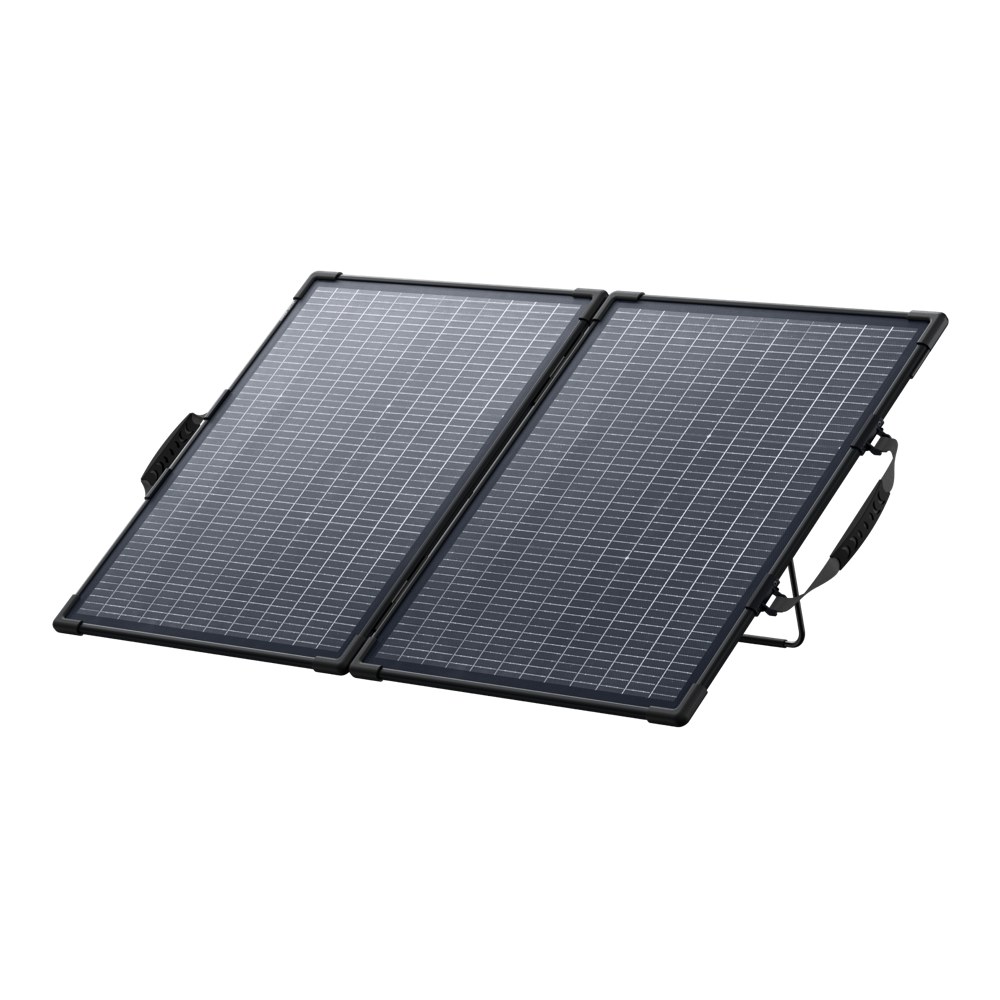
The EcoFlow 110W is the panel RIVER owners should buy and DELTA owners should not. Our score: 8/10.

Its numbers are tailored to the small stations: 21.7V Voc becomes about 27.1V cold, safely under the 30V ceiling, and its 110W rating is exactly the RIVER 2 and RIVER 3’s input cap — no clipped watts, no wasted panel. It folds, it ships with the XT60 cable, and it carries an IP68 rating. Owner feedback: 4.5 stars across ~424 ratings, with the recurring complaint being the one the spec sheet predicts — real-world output well under the 110W nameplate in anything but full midday sun.
What it is not is a DELTA panel. At $259 — verified the same at Amazon, where Amazon-direct had it in stock, and at EcoFlow’s store — it costs $2.35 a watt, the steepest figure on this page, for a panel a DELTA 2 would cap at a fifth of its input. DELTA owners buying 110W panels are buying the wrong size five times.
- Pros: the cold-safe fit for RIVER 2/3; exactly matches their 110W cap; cable included; IP68; folds flat.
- Cons: $2.35 a watt — the priciest power here; far too small for a DELTA; real output runs well under nameplate, as owners note.
Buy it if you own a RIVER 2, RIVER 3, or RIVER 2 Pro and want the panel that fits without homework. Skip it for any DELTA.
Jackery SolarSaga 200 — a fine panel wearing the wrong plug
The SolarSaga 200 is a good panel that asks EcoFlow owners to pay a brand premium and buy an adapter for the privilege. Our score: 7/10.
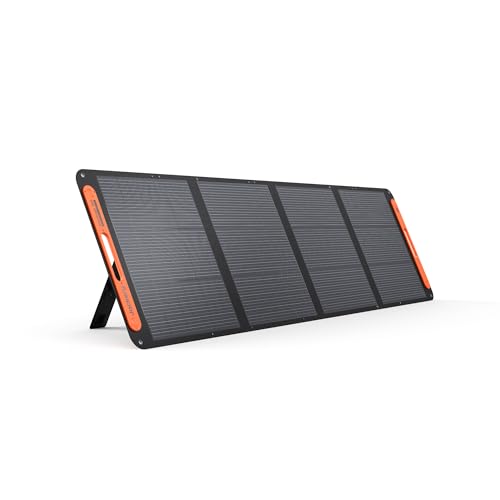
On specs it earns its place in our 200W comparison: bifacial, IP68, 24.8V Voc, about 13.7 pounds, 4.5 stars across ~291 ratings. On an EcoFlow station, though, its hardwired cable ends in Jackery’s DC8020 plug, so nothing happens until a DC8020-to-XT60 adapter joins the order. Its cold-weather math also shuts the small stations out — 24.8V becomes about 31V with the allowance, over the RIVER ceiling — leaving the DELTAs as its EcoFlow audience, where the NextGen 220W is lighter, lower-voltage, and needs no adapter.
Price makes it worse this month: $429 on November 12, 2026, up from the $379 our October comparison verified, with Amazon-direct out of stock and the live offers third-party. Jackery owners should absolutely buy it for Jackery stations. EcoFlow owners should not, unless it is the panel already in the garage — in which case, buy the adapter, wire it singly or in parallel, and it will charge a DELTA without drama.
- Pros: solid bifacial panel, IP68; works on any DELTA with an inexpensive adapter; the right buy for households that also own Jackery.
- Cons: DC8020 plug needs an adapter for EcoFlow; cold Voc over the RIVER ceiling; $429 this check, Amazon-direct out of stock.
Buy it if it is already in your garage or your household runs both brands. Skip it as a fresh EcoFlow purchase.

Honda EU2200i
The small-inverter benchmark: sips fuel at light loads, and the quietest name in the class.
$1,199.00 from Amazon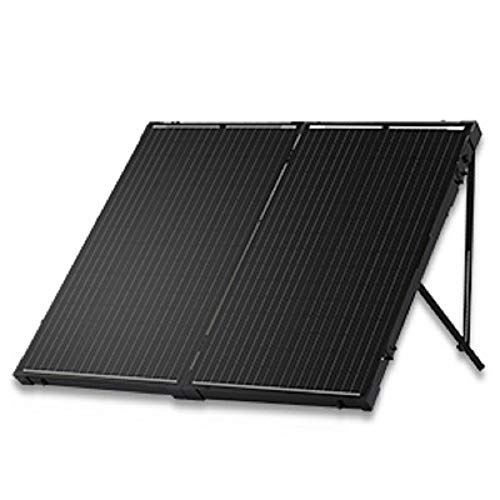
Renogy 200W Monocrystalline Panel
The rigid 200W (RSP200D) — same pairing rules, roof-mount money.
$271.99 from Amazon
Bluetti Elite 200 V2
The station our home-backup comparison leads with for fridge, lights and router duty: 2,073.6Wh of capacity and 2,600W of output, so a microwave and a fridge compressor can run at the same time.
Check the priceWhat about the EcoFlow 400W panel?
The EcoFlow 400W is the one-panel answer for a DELTA 2: roughly 48V of Voc from a single folding panel, under the 60V ceiling with the cold allowance applied (about 60V at the planning figure — close enough to the line that DELTA Pro owners, with 150V of headroom, are its most comfortable buyers), the XT60 cable in the box, and $699 at EcoFlow’s own store on November 12, 2026 — $1.75 a watt, undercutting both of EcoFlow’s smaller folding panels per watt. The catch is availability: EcoFlow listed it as a pre-order shipping in late December, so it is a December answer, not a this-weekend one. We carry no Amazon referral link for it, so it appears here as data, not as a pick.
Series or parallel: which wiring keeps an EcoFlow station happy?
Series adds voltages and keeps current; parallel keeps voltage and adds currents. On EcoFlow’s 60V DELTA inputs, series is right for pairs of low-voltage panels and wrong for triples: two NextGen 220W panels in series make 42.8V and about 440W, squarely in the DELTA 2’s window, while the same two in parallel would offer about 26A into a 15A cap and waste the difference. On the 30V RIVERs, the answer is simpler — one panel, no wiring choice to make. On the DELTA Pro’s 150V input, series strings of three or four panels stay legal and keep cable losses down, which is why the Pro is the station for a real roof array. Whichever way you wire, run the finished string’s Voc through the +25% cold allowance before you plug it in, and confirm it lands under your station’s ceiling. Our Solar Recharge-Time Calculator turns the array you settle on into an honest refill time for your battery.
Viewers also searched for these items.
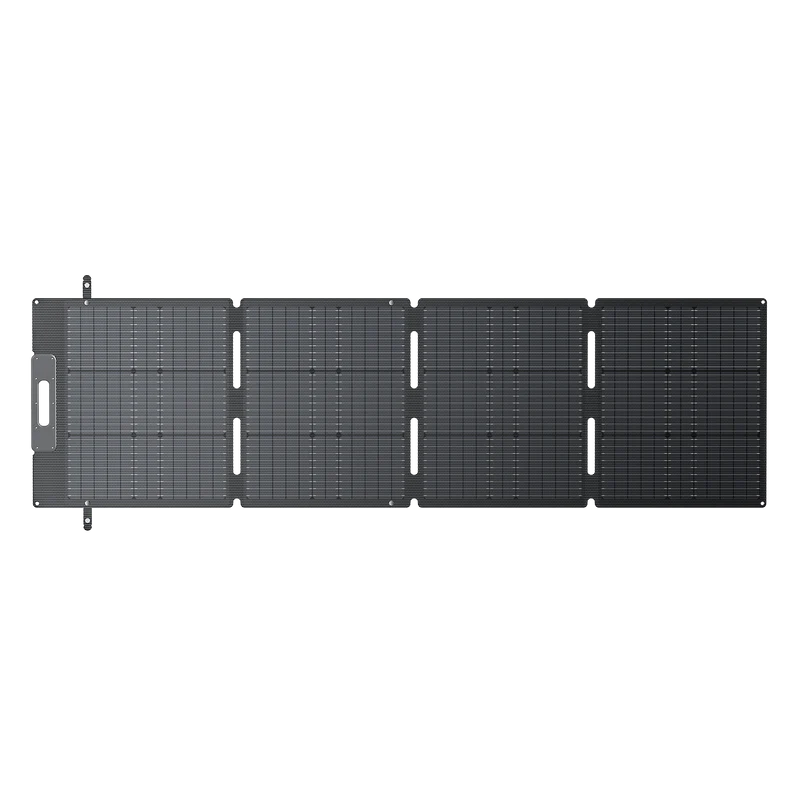
Bluetti PV200
The 200W folder — one panel covers most mid-size stations; two in parallel outrun a 10A input.
$329.99 from Bluetti
EcoFlow DELTA 2 Max
The bigger box in the same comparison, for households whose outage list runs past the basics and needs more stored energy before solar or a generator has to help.
$977.00 from AmazonFrequently asked questions
Can I use a non-EcoFlow solar panel with an EcoFlow power station?
Yes. Compatibility is voltage, current, and plug — not brand. Any panel whose Voc, with the cold allowance, sits inside your station’s window will charge it, as long as you have the MC4-to-XT60 cable EcoFlow stations use. The Renogy 100W at $89.99 is the standing example: ninety cents a watt, no EcoFlow logo anywhere.
How many solar panels can a DELTA 2 take?
Up to 500W inside an 11–60V, 15A window. The clean setups are two EcoFlow NextGen 220W panels in series (42.8V, 440W), one EcoFlow 400W panel, or rigid panels wired to stay under 60V cold — two Renogy 100W panels in parallel, for instance, at 200W. Three 220W panels in series total 64.2V and are over the ceiling.
Will a 220W panel overpower a RIVER 2?
It will not hurt it — the station clips input at its 110W cap — but the NextGen 220W’s 21.4V Voc is one of the few 220W-class voltages that stays legal on the RIVER 2’s 30V ceiling even in the cold. You pay for 220W and harvest at most 110W, which is why the 110W panel is the honest match.
Why does my EcoFlow show 0W from a panel that works on another station?
Usually voltage, in one of two directions: a string whose cold Voc crossed the station’s ceiling, so protection locked the input out, or a single small panel whose working voltage sagged under the 11V floor in weak light. Check the string math first — it is the cause far more often than a dead panel.
Do EcoFlow stations charge from solar while powering appliances?
Yes, pass-through charging is standard across the DELTA and RIVER lines we cover in our solar generator comparison — solar input simply offsets what the loads draw, and refill times stretch accordingly.
Once the panels are chosen, the sizing question moves up a level: our best power station for CPAP guide and the Power page’s station comparisons work out which EcoFlow box deserves the array in the first place.
Sources & freshness: EcoFlow product pages and user manuals (station input windows), panel makers’ published spec sheets (Voc/Vmp/connectors), Keepa and camelcamelcamel listing records and EcoFlow’s US store, all checked November 12, 2026. Prices last checked: November 12, 2026.
Talk it over with other readers. The Truly Preserved Community on Facebook is where readers compare notes on food storage, water, and backup power — and where your questions help decide what we research next. Join the group →
Prices shown on this page were last checked November 26, 2026 — prices change; check before you buy.
How we researched this guide. We lined up the EcoFlow stations our readers own most against EcoFlow’s own panels and the third-party panels that actually fit them, using only published numbers: EcoFlow’s product pages and manuals for each station’s solar input window, and each panel maker’s spec sheet for open-circuit voltage (Voc), working voltage (Vmp), and connectors. Prices were checked on November 12, 2026 against Amazon listings and EcoFlow’s own store. No panel was bought or tested — we work from research, not hands-on testing. Where two sources disagreed, the station’s manual won. How we research and score →