
Truly Preserved is reader-supported. If you buy through a link on this page we may earn a commission at no extra cost to you. Nobody pays for placement or scores.
THE SHORT ANSWER
Very likely yes for the dry staples, if they were packed dry, sealed against oxygen, and kept cool — white rice, wheat, beans, and oats in mylar with oxygen absorbers are 25-to-30-year foods at 70°F, so year ten is mid-life, not end of life. What decides it isn’t the calendar: it’s the seal, the storage temperature the food actually lived at, and a hands-on inspection. Heat is the silent variable — food that spent its decade in a 90°F garage has lived a much longer ten years than the same food in a 60°F closet.
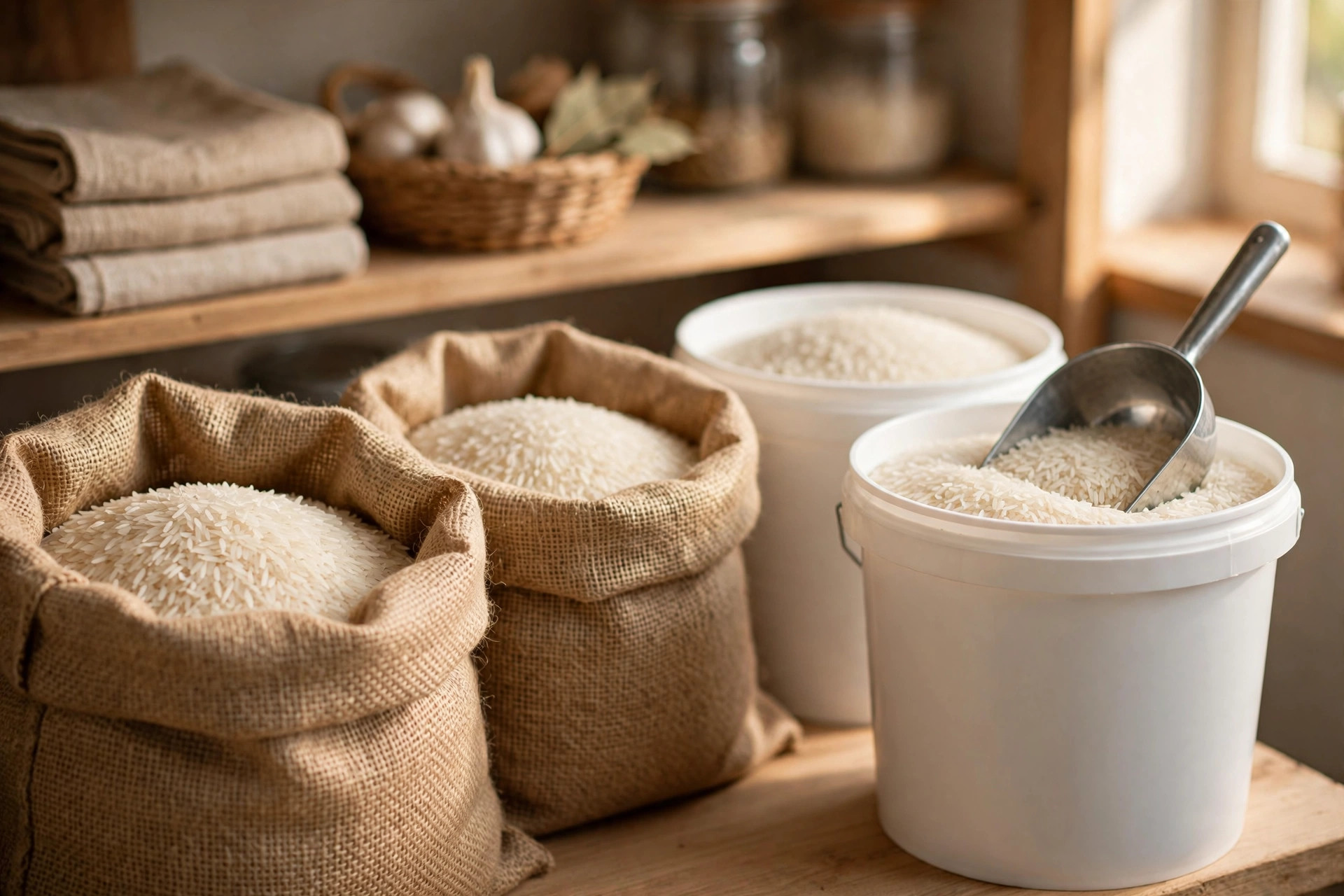
Ten years is the age where stored food stops being theoretical. The buckets went in during some earlier version of your life, the labels are in a handwriting you barely recognize, and the question is suddenly practical: is this still food?
The research answer is encouraging and specific. Brigham Young University’s long-term storage studies — the deepest published work on decades-old food — found staples stored 25 years and more remained edible and life-sustaining, with quality and vitamins faded but calories and protein largely intact. Our vitamin-loss answer covers that fade in detail. Ten years, in a well-packed bucket, is not the edge of the map. It’s the middle of it.
The Temperature Your Food Actually Lived At
Utah State Extension publishes the USDA rule of thumb: every 10.8°F rise in storage temperature halves shelf life. Run your decade through it. Rice rated 30 years at about 60°F is a 15-year food at 70°F and a seven-to-eight-year food at 80°F. So the first question about a ten-year-old bucket isn’t “how old?” — it’s “where has it been?” The companion answer on what a hot garage costs runs the same math room by room, and the shelf-life lookup gives the per-food numbers to check your shelf against.

ThermoPro TP49 Hygrometer
The ten-year verdict depends on the temperature the food actually lived at — a min/max hygrometer in the storage room replaces guessing with the number.
$8.54 from Amazon
Wallaby 1-Gallon Mylar Bags
A batch that passes inspection but lost its seal gets repacked in the bags our mylar guide scores highest, with a fresh absorber — smaller bags, so the next decade opens one at a time.
Check AvailabilityThe same staple, three storage temperatures
USDA’s rule via Utah State Extension — shelf life halves with every 10.8°F rise — applied to a staple rated 30 years at 60°F.
The Ten-Year Inspection, in Order
1. The container first. A mylar bag should still be drawn down tight against the food — a puffy or loose bag means the seal failed or the absorber died years ago. Buckets should be sealed, lids ungnawed, no water damage.
2. Open one bag per batch, not all of them. Look for insects or webbing, smell for rancidity or mustiness, check for any sign moisture got in — clumping in food that should pour, spots, off colors.
3. Apply the standing rules. The full walk-through lives in our how to tell if stored food has gone bad answer: bulging or leaking cans are discarded unopened, mold ends the discussion, and when in doubt, throw it out. Staples that pass get cooked and tasted in a small test portion, like any food.
4. Re-date and re-plan. Whatever passes goes back with a new label — what it is, when it was packed, when you checked it — logged the way our tracking answer sets out, and moved to the front of the rotation. Food at year ten that passes inspection is food to start eating, not food to admire for another decade.
Follow-Up Questions
What about ten-year-old canned goods?
Commercially canned food in a sound can stays safe well past its date — best quality runs 2–5 years for low-acid foods and 12–18 months for acidic ones, and the can’s condition decides from there. At ten years, expect texture and flavor to have faded even when the food is safe.
And ten-year-old freeze-dried food?
Sealed cans and pouches are rated 25–30 years, so a decade is early middle age. Our 25-year freeze-dried answer covers what holds that claim up — and where the fade shows first.
What usually fails first in a ten-year pantry?
The foods with fat in them: brown rice, whole-wheat flour, nuts, and anything with oils go rancid years before the lean staples notice the decade. They’re rotation foods wearing storage costumes.
Viewers also searched for these items.


Millennium Energy Bars (SOS Food Lab)
Nine real flavors and the only bar here people call genuinely good. Single 400-calorie bars made for go-bags and school kits.
$19.99 from AmazonFrequently Asked Questions
Does the printed date on the bucket mean anything?
It’s a quality date, not a safety deadline — for shelf-stable food, the date marks when the maker stops promising peak flavor. The seal and the storage history are the safety evidence.
Should I just throw out anything over ten years old?
No — that’s discarding good food by calendar. Inspect by batch, discard what fails, rotate what passes to the front. The decade is a prompt to check, not a verdict.
How do I keep the next ten years simpler?
Pack in smaller units, label with dates, store cool, and run the twice-a-year check. A pantry inspected on a rhythm never produces a ten-year mystery.
Shelf-life temperature rule per Utah State University Extension food storage guidance (PDF), citing USDA; long-term edibility per Brigham Young University storage research.
This question came from our harvest of what readers ask in the forums. See the rest of the list: What People Are Asking About Food Storage.
Prices shown on this page were last checked November 26, 2026 — prices change; check before you buy.
Talk it over with other readers
The Truly Preserved Community on Facebook is where readers compare notes on food storage, water, and backup power — and where your questions help decide what we research next.