
Truly Preserved is reader-supported. If you buy through a link on this page we may earn a commission at no extra cost to you. Nobody pays for placement or scores.
A survival seed vault gets bought for the worst year, not the best one — and that changes what “best” means. Our sister guide to the best heirloom seed vault for long-term storage judged these same three vaults on storage life and the recount behind their headline numbers. This page asks the prepper’s version of the question: if you had to plant the best survival seed vault in a hard season, how many of its seeds are food, and how many would actually sprout? The answer starts with an uncomfortable fact — not one of these three makers publishes a germination percentage. Everything below is built from the makers’ own per-packet counts, their storage guides and FAQs, and aggregated owner feedback. We don’t own these vaults; we did the homework, and on this page the homework is weighted toward germination honesty and calorie crops.
The Short Version
How we chose: we scored these vaults on the food-seed count behind the headline number, on germination evidence — maker testing, dated lots, and what owners report when they plant — and on whether the crop mix could feed people, not just fill a garden. Prices on this page are the verified figures from our October 25, 2026 comparison dataset, labeled with that date wherever they appear; scores match that comparison, because the products have not changed. Read our full methodology.

Score out of 10
Gardeners Basics Survival Seed Vault Kit, 35 Varieties
Best overall for a first survival garden: the only vault here that prints an exact count for every variety, so you can see the thin bean packet before you buy instead of after.
$23.95 from Amazon
Score out of 10
Survival Garden Seeds Home Garden Collection, 30 Pack
Best germination paperwork: every lot germination-tested with a packed-for date on the packet, and the straightest shelf-life answer in the business: 3 to 5 years, not forever.
$29.97 from Amazon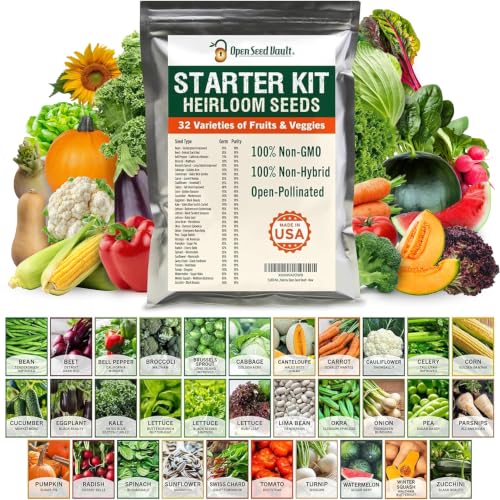
Score out of 10
Open Seed Vault 15,000, 32 Variety Pack
Cheapest way in: the deepest owner record of the three at the lowest price.
$28.99 from AmazonHead-to-Head Specs
| Product | Price | Varieties | Best for |
|---|---|---|---|
| Gardeners Basics Vault Kit | $29.95 | 35 | First vault, exact counts |
| Survival Garden Seeds Home Garden | $29.99 | 30 | Seed savers, dated lots |
| Open Seed Vault 15,000 | $24.99 | 32 | Proven seller, big review base |
Prices last verified October 25, 2026, in the dataset behind our long-term-storage comparison. The Preserve the Seed page is where this guide lives, alongside the storage protocol every vault on this page depends on.
Gardeners Basics Survival Seed Vault Kit, 35 Varieties — Our score: 8/10
The Gardeners Basics kit is the vault we’d hand a first-time survival gardener, for one reason: it is the only one of the three that prints an exact seed count for every variety on its listing — celery 3,200, corn 40, bush beans 20, sugar snap peas 25 — so the survival math can be done before the money moves.
The 35 packets ride in a resealable mylar bag with 35 plant markers in the box, and the mix is a working garden: three lettuces, two tomatoes, two radishes, beans, peas, limas, corn, squash, zucchini, peppers, and herbs. Owners rate it 4.7 stars across about 9,300 Amazon ratings. On germination — the metric this page cares about most — Amazon’s own review summary shows germination as the most-mentioned topic, leaning positive roughly two to one: 120 positive mentions against 69 negative out of 189. That is owner evidence, not a lab rate, and the 69 negatives are why the score stops at 8.
Pros
- Exact per-variety counts on the listing — no ranges, no guessing what “16,000+” is made of.
- The brand’s own storage guide gives a paper-towel germination test and a refresh schedule instead of a forever promise.
- Resealable mylar outer bag, labeled packets, and plant markers included.
Cons
- Its Amazon page claims a “25-Year Shelf Life” that the company’s own storage guide does not support — the guide says most vegetable seed lasts two to five years. Believe the guide.
- Beans at 20 seeds and peas at 25 are one small planting, not a season’s worth with failures.
- A real minority of owners report poor germination or tired seed (69 negative germination mentions).
Buy it if this is your first vault and you want to see exactly what you are getting. Skip it if you need deep counts of beans, peas, and corn — buy those varieties separately in bulk packets.
Survival Garden Seeds Home Garden Collection, 30 Pack — Our score: 8/10
Survival Garden Seeds earns its score on the paperwork a survival buyer should want most: every seed lot is germination-tested before packaging, and every packet carries a packed-for date, so freshness can be checked instead of trusted.
The 30 paper packets — planting and seed-saving instructions printed on each — ship sealed in a waterproof zip bag. The mix leans kitchen garden: two carrots, two lettuces, two tomatoes, two peppers, kale, and chard, plus a perennial wildflower mix that accounts for roughly a quarter of the headline count and feeds pollinators, not people. Owners rate it 4.6 stars across about 2,900 Amazon ratings, and the reviews that name results describe quick, strong sprouting. The honest limits: per-variety counts are ranges (pumpkin 18–20, melon 21–36), the big-seed crops run thin, and for all its testing, the maker publishes no numeric germination rate. “Tested” is the claim; the percentage is not printed anywhere.
Pros
- Lot-by-lot germination testing and a packed-for date on every packet — the freshness paper trail the other two don’t match.
- The straightest storage-life answer of the three, from the maker itself: 3 to 5 years, longer refrigerated.
- Seed-saving instructions on every packet; the brand is built around replanting your own seed.
Cons
- Roughly a quarter of the headline count is a wildflower mix — pollinator food, not people food.
- Counts are ranges, not exact numbers, and big-seed crops run thin: pumpkin 18–20, zucchini 21–27.
- No numeric germination percentage is published anywhere.
Buy it if you plan to save seed year to year and want dated, tested lots. Skip it if every seed in the box has to be a food crop.
Open Seed Vault 15,000, 32 Variety Pack — Our score: 7/10
Open Seed Vault is the veteran — 4.6 stars across roughly 14,600 Amazon ratings, the deepest owner record in this comparison — and its full per-packet list is printed, which is how we know its shape: generous on greens, thin where a survival garden is decided.
The 32 packets cover the staples, and the 14-page growing and seed-saving guide in the box gets praised by owners. But read the maker’s own numbers: lima beans 15 seeds, sugar pie pumpkin 15, green beans about 20, peas about 25, corn about 45 — against about 2,280 seeds in each of three lettuce packets and about 3,000 of celery. Review roundups synthesizing owner reports put real-world germination around 80–85 percent for buyers who planted, and the recurring complaints are specific: an occasional mislabeled or substituted packet, and calorie-crop counts that feel small next to the 15,000 on the box. At $24.99 when last verified, it is the cheapest of the three per variety at $0.78. The catch is where the seeds sit, not the sticker.
Pros
- The deepest owner record in the category — about 14,600 ratings at 4.6 stars.
- Full per-packet counts published, and a growing and seed-saving guide in the box.
- Variety list sticks to practical vegetables a family will actually eat.
Cons
- About two-thirds of the 15,000 are lettuce and celery; beans, limas, peas, and pumpkin run 15–25 seeds each.
- Occasional mislabeled or substituted packets in owner reports.
- A seller Q&A answer claims 20+ years of storage life; the maker publishes no storage guide to back it.
Buy it if you want the most-reviewed vault and will top up beans and corn separately. Skip it if you are paying for the headline count — you are mostly buying lettuce seed.
What germination rate will you actually get?
No maker on this page publishes one, and that absence is the honest headline of this guide. Survival Garden Seeds tests every lot but prints no percentage. Gardeners Basics prints no rate either; its storage guide instead hands you the paper-towel test — wet a towel, roll ten seeds in it, count sprouts in a week — which is an admission that the only rate that matters is the one your own packet produces in your own storage conditions. Open Seed Vault prints nothing at all, and the 80–85 percent figure attached to it comes from roundups of owners who planted, not from the maker.
So plan like a skeptic. Assume roughly 80 percent sprouting from a fresh, well-stored lot, sow about a quarter more than the garden needs, and test every vault you own once a year with the paper-towel method — ten seeds, one week, a written count. A vault that tests at nine or ten out of ten is a garden. A vault that tests at five is a shopping list, and it is far better to learn that in a calm February than in the spring you needed it. Our seed storage guide covers the temperature and moisture rules that keep those test numbers high.


COSORI Dehydrator
A fruit roll sheet in the box, temperature set to the degree, and a 48-hour timer that ends the batch before it over-dries.
$135.99 from Amazon
Millennium Energy Bars (SOS Food Lab)
Nine real flavors and the only bar here people call genuinely good. Single 400-calorie bars made for go-bags and school kits.
$19.99 from AmazonHow many of these seeds will actually feed you?
Fewer than the box implies, in all three. Strip out the lettuce, celery, and — for Survival Garden Seeds — the wildflower mix, and the food-seed counts land near 5,200 for Open Seed Vault, about 6,800 for Gardeners Basics, and somewhere around 9,000–13,000 for Survival Garden Seeds depending on where its ranges fall. Priced against those working counts, a thousand food seeds cost about $4.84 in the Open Seed Vault, $4.40 in the Gardeners Basics kit, and roughly $2.30–$3.30 in the Survival Garden Seeds pack.
The survival-specific problem sits one layer down: the crops that carry calories — beans, peas, corn, squash — are the thinnest packets in every vault, at 15 to 50 seeds each. Twenty bean seeds, planted well, give you one short row and a meal or two of green beans, plus seed to save if the season cooperates. That is a start of a seed supply, not a food supply. The fix is cheap and unglamorous: whichever vault you buy, add bulk packets of bush beans, peas, and corn from the same order, and treat the vault as the variety library it actually is. A vault is not food stored; it is food that could exist after a season of work — our bulk staples guide is the shelf that feeds you while the garden grows.
How long will a survival seed vault really last?
Plan on 3 to 5 years, whatever the box says. That is Survival Garden Seeds’ own FAQ answer, and Gardeners Basics’ own storage guide lands in the same place: most vegetable seed lasts two to five years in good conditions, onion and parsnip can fade within a year, and cucumber, lettuce, and radish often go five or more. Against that, the “25-year” bullet on an Amazon listing and a “20+ years” seller answer are marketing. Store the vault cool, dry, and dark, and follow the full protocol in our seed storage guide — with one hard difference from food storage: never put an oxygen absorber in with seeds. Seeds are alive; absorbers are for food that is not.

AquaTru Classic
The most lab-certified contaminant removal of the group — but it needs electricity, so it's dead in a power outage.
$380.00 from Amazon
Blue Alpine Medium Select
Faster cycles — 12 to 20 hours on Blue Alpine's figures — quarter-sheet trays, and silicone mats in the box. More machine than a first month needs; the one to read about before you buy twice. Use code TRULYPRESERVED at checkout.
Check the price
LifeStraw Home
Certified for lead, mercury, chlorine, and PFAS/PFOA/PFOS — in a glass pitcher.
$51.99 from AmazonWhat else does a survival garden need that no vault includes?
Three things no box on this page ships: depth in the calorie crops (covered above), a second season’s worth of the fast-fading varieties — onion and parsnip seed fade within about a year, so those packets are annual purchases, not storage — and the skill of saving seed, which is the only mechanism that turns one vault into a permanent supply. Every variety in these three vaults is heirloom and open-pollinated, which is precisely why they were chosen: seed saved from this year’s plants grows true next year. A hybrid kit could not do that, and a vault you cannot replant from is a one-season answer to a multi-year problem.
Viewers also searched for these items.

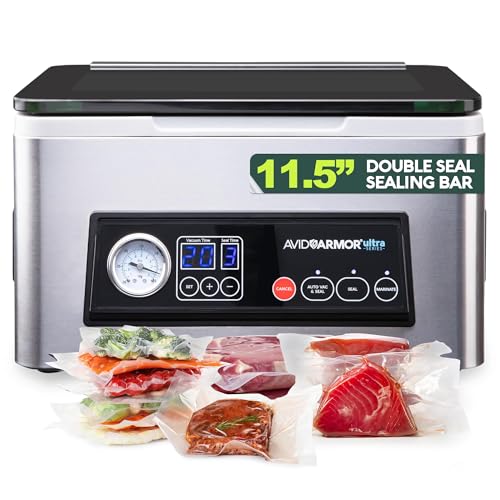
Avid Armor USV20
The chamber machine: soups, marinades and smooth cheap pouches — if it fits in an 11 x 10 pouch.
$349.00 from Amazon
Frequently asked questions
What is the best survival seed vault for preppers?
On germination evidence and count honesty, the Gardeners Basics kit (8/10) and the Survival Garden Seeds collection (8/10) tie at the top — the first for exact printed counts, the second for lot testing and packed-for dates. Open Seed Vault (7/10) is the budget veteran with the thinnest calorie crops.
What germination rate should I expect from a seed vault?
No maker here publishes a rate. Owner reports cluster around 80–85 percent for fresh lots planted promptly. Test your own vault yearly with the paper-towel method — ten seeds, a week, count the sprouts — and sow about 25 percent extra to cover the gap.
Is a seed vault the same as food storage?
No. A vault is a garden plan, not calories on a shelf: its food-seed count runs 5,200 to about 13,000 depending on the vault, and its calorie crops come in packets of 15 to 50 seeds. Stored food feeds you this year; the vault feeds you after a season of growing.
How is this guide different from your long-term storage seed guide?
That guide judges the same three vaults on storage life and packaging for keeping seed. This one judges them on planting under pressure: germination evidence, calorie-crop depth, and seed saving. The scores agree because the products are the same; the questions are not.
How long do survival seeds last?
Three to five years for most vegetables stored cool and dry, on the makers’ own guides — not the 20 to 25 years in marketplace bullets. Onion and parsnip fade in about a year; lettuce, cucumber, and radish often run five or more.
Sources & freshness: makers’ listings, storage guides, and FAQs for Gardeners Basics, Survival Garden Seeds, and Open Seed Vault; Amazon owner ratings and review summaries as aggregated October 25, 2026. Prices last checked: October 25, 2026.
Talk it over with other readers. The Truly Preserved Community on Facebook is where readers compare notes on food storage, water, and backup power — and where your questions help decide what we research next. Join the group →
Prices shown on this page were last checked November 26, 2026 — prices change; check before you buy.