
Truly Preserved is reader-supported. If you buy through a link on this page we may earn a commission at no extra cost to you. Nobody pays for placement or scores.
THE SHORT ANSWER
Yes — the battery box can. A solar generator is a portable power station, with or without panels bundled, and it burns nothing: no engine, no fuel, and no carbon monoxide, so the station itself can run in a living room, a bedroom, or an apartment during an outage. Only the solar panels need to be outside, in sunlight, with the cable run in to the station. A fuel generator is the opposite case and never comes indoors: the CDC’s rule is outdoors only, at least 20 feet from doors, windows, and vents, with no open-garage-door exception. Indoor use of a battery station still has conditions — keep it dry, keep its vents clear, keep it away from heat, and stop using a unit that is swollen, leaking, damaged, or smelling wrong.
If you are asking can I use a solar generator indoors, you are usually asking because the other kind of generator is famous for killing people in exactly that spot. That fear belongs to the fuel machine, not the battery box, and mixing the two up costs people both ways: some readers leave a safe station in the garage during an outage for no reason, and a few, worse, bring a gas generator onto a porch or into a garage thinking the battery rule covers it. It does not. The line is not “generator” versus “not generator” — it is burned fuel versus stored electricity. Everything below follows from that one split.
Why is a battery station different from a fuel generator indoors?
A battery station is different indoors because it makes no exhaust at all. A fuel generator burns gasoline or propane in an engine, and that exhaust carries carbon monoxide — a colorless, odorless gas the CDC says can build up and poison the people inside a home. A portable power station stores electricity that was made earlier, at a wall outlet or by a panel, and hands it back through an inverter. Nothing burns while it does that, so there is no carbon monoxide to vent, no exhaust to aim away, and no distance rule for the box itself.
| Machine | Indoors? | Why |
|---|---|---|
| Portable power station / solar generator (battery box) | Yes, with the care rules below | Burns nothing; no carbon monoxide |
| Solar panel (the refill) | No — it goes outside | It needs direct sunlight to make power |
| Gas or propane generator | Never | Engine exhaust carries carbon monoxide |
Read the last row as the hard line, because it is the one with no workaround. The CDC’s wording for fuel machines is: never inside your home or garage, even if doors and windows are open, and at least 20 feet from any window, door, or vent when it runs outside. An open garage door does not make it safe, a fan does not make it safe, and a carbon monoxide shutoff on a newer machine is a backstop, not permission. The battery box in our solar generators for outage backup comparison sits on the other side of that line — every station there can sit beside the fridge it is running, which is most of why people buy one.
What still needs care when a station runs indoors?
A station running indoors still needs a dry, ventilated spot, inside its rated load, and a quick stop if the battery looks or smells damaged. No exhaust does not mean no rules. The makers’ own safety guidance and the safety guides that collect it agree on the same short list, and none of it is hard: set the station on a hard, flat, dry surface; leave its cooling vents unblocked and do not run it buried under bedding, in a closed cabinet, or with gear piled on top; keep it away from heaters, direct sun, and anything flammable; use the cables the maker supplied, or ones the maker approves; and stay inside the continuous watts on the nameplate instead of treating the surge number as the working number.
The stop signs matter more than the setup, so learn them before an outage, not during one. Stop using a station — unplug it and call the maker — if the case swells, leaks, gives off an unusual smell, gets hot in a way it did not before, or takes physical damage like a hard drop onto concrete. A battery management system inside the station watches voltage and temperature while it runs, which is the quiet reason a name-brand station is a different indoor proposition from a no-name box with no listed certification. Readers in apartments, where there is no garage to exile a suspect unit to, get the most from our apartment backup comparison: it sizes three 1-kilowatt-hour stations for exactly the rooms this page is talking about.

Score out of 10
EcoFlow DELTA 2 Max
No fumes, no carbon monoxide — the highest-scored station in our home-backup comparison is the indoor answer this page works through.
$977.00 from AmazonWhere do the panels go while the station sits inside?
The panels go outside in direct sun while the station stays inside, joined by the maker’s solar cable through a window or door opening. That split is the whole arrangement in one sentence: the part that needs weather sits in the weather, and the part that runs your fridge, router, and CPAP sits next to them, quiet and fume-free. Bluetti, which sells the bundles this page is defining, states the indoor half plainly — its solar generator kits are silent and fume-free and safe for indoor use, unlike fuel generators — while the panel half needs sunlight to make anything at all.
Two practical catches ride on that cable. First, length: the panel has to reach a sunny patch, not just the nearest patch of outdoors, and a shaded balcony can starve a station that a sunny yard would refill by noon. Second, the refill is slow even when it works — a 200-watt panel in five good hours makes at most 1,000 watt-hours on paper, and real output lands below the label. Our 200W solar panels comparison works the panel-matching math, and our solar generator vs. power station explainer covers why the panel is a refill and not a second power source. Plan the indoor spot near the window the cable comes through, and the setup stops fighting you.
Can I run one in a garage, a tent, or a small apartment?
Yes — a battery station can run in a garage, a tent, or a small apartment, because the indoor rule follows the machine, not the building. The garage case is the one to say carefully: a station in a garage is fine; a fuel generator in that same garage is the deadly version, and the two are not interchangeable just because both get called generators. Keep the station dry in a garage — off a floor that puddles, away from stored gasoline and paint — and the same vent and heat rules from the section above apply unchanged.
A tent is a smaller version of the same answer. The station can sit inside with you — that is how people run a CPAP at a campsite without a gas engine outside the tent wall — but it should sit on a dry, flat spot with its vents clear, not under a sleeping bag, and charging it from a car or panels happens in daylight with the cable run out. In a small apartment the constraint is not safety, it is size and noise: the fans on a fast-charging station are audible in a studio at night, which is a comfort fact, not a danger, and it is one more reason the sizing question — our Power Station Size Calculator — is worth answering before you buy the biggest box the budget allows.

Jackery Explorer 1000 v2
The most capacity (1,070Wh) in the lightest box (23.8 lb), the longest fridge runtime here, and a 59-minute emergency fast-charge.
$559.00 from Amazon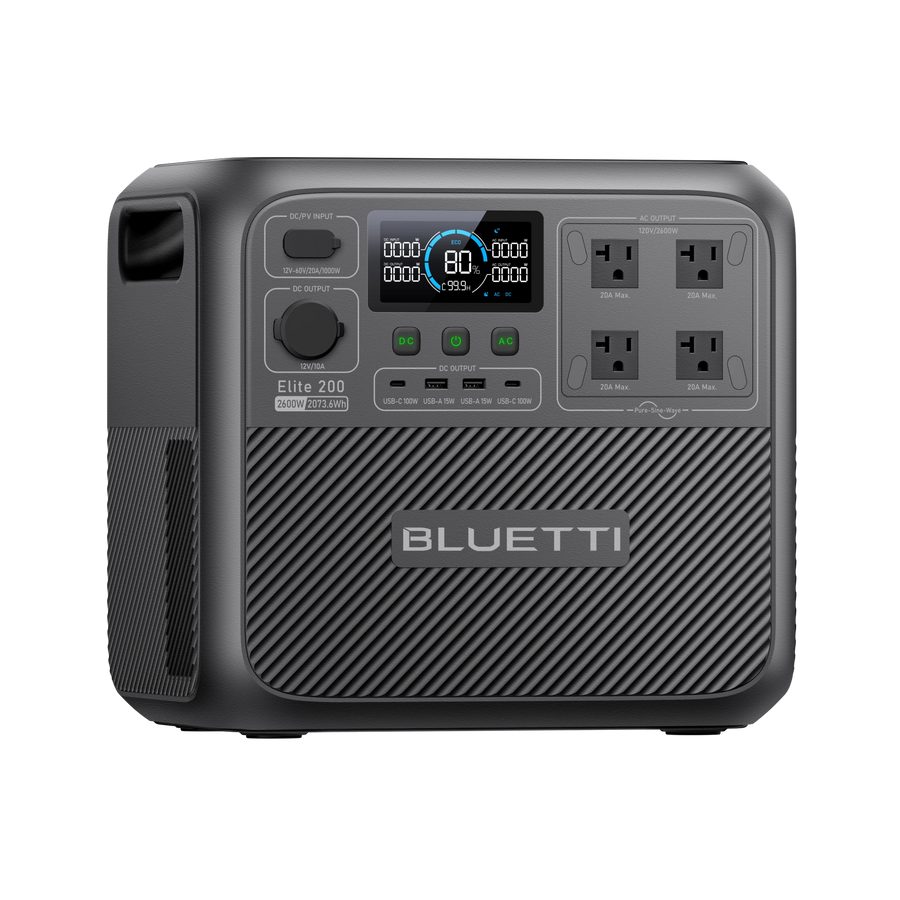
Bluetti Elite 200 V2
Score out of 10
The other indoor-safe pick our comparison scores — sized for a fridge, lights, and a CPAP through the night.
Check the priceQuestions people also ask
Does a solar generator give off any fumes at all?
No. A solar generator — the battery station — gives off no fumes in normal use, because nothing burns and there is no exhaust. A new unit can smell faintly of warm plastic the first time its fans run hard; that is not exhaust, but a strong, sweet, or chemical smell from the battery itself is one of the stop signs above, and that unit should be unplugged and the maker called.
Can I charge a power station indoors from the wall while it runs my fridge?
Yes. Charging a station from a wall outlet indoors while it powers devices is normal use — it is called pass-through charging, and the station, the outlet, and the fridge are all doing the indoor job they are built for. What you may not do is backfeed a wall outlet with the station’s output or plug the station into household wiring without a proper transfer switch installed for the purpose; the indoor permission covers the box and its cords, not improvised house wiring.
Is it safe to sleep in the room where a station is running a CPAP?
Yes, for a healthy, undamaged station — that pairing is one of the main reasons battery stations exist. The station makes no carbon monoxide, so sleeping beside it is not the fuel-generator risk at all. Our CPAP runtime page works the watt math by humidifier setting, which decides whether the station outlasts the night. Anyone whose medical device maker gives specific backup instructions should follow those instructions first; this page covers the station, not the prescription.
FAQ
Can I use a solar generator indoors?
Yes. The battery station can be used indoors — it burns nothing and produces no carbon monoxide. Keep it dry and ventilated, stay inside its rated load, and keep the solar panels outside in the sun. Only a fuel generator is banned indoors.
How far from the house does a generator have to be?
A fuel generator has to be outdoors, at least 20 feet from doors, windows, and vents, with its exhaust pointed away — that is the CDC and CPSC rule, and it applies to the fuel machine only. A battery power station has no distance rule; it can sit in the room it is powering.
Viewers also searched for these items.

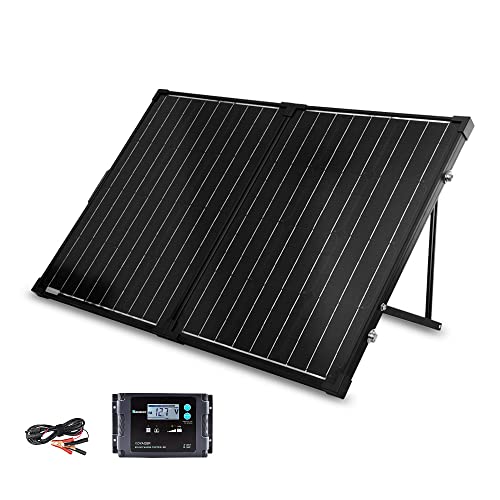
Renogy 100W Solar Suitcase
A folding suitcase panel from Renogy for the same job — easy to store with the station and quick to set out when the power goes.
$154.98 from Amazon
Honda EU2200i
48 dBA at light load and a 3-year warranty — you pay for the name, and owners say it earns it.
$1,199.00 from AmazonRelated questions
- What is the difference between a solar generator and a portable power station?
- Best solar generators for outage backup — the stations compared
- Best 1kWh station for apartment backup
- How long will a power station run my CPAP?
- Can it power devices while it’s being charged (pass-through)?
Sources: CDC, “Prevent Carbon Monoxide Poisoning” and its generator safety guidance (fuel generators and other gasoline-powered engines: outdoors only, at least 20 feet from doors, windows, and vents; never inside a home or garage even with doors and windows open; install a battery-operated CO detector); Bluetti solar generator kit pages (solar generator kits are silent and fume-free and described by the maker as safe for indoor use, unlike fuel generators); maker safety guidance collected in portable power station safety guides (dry, flat surface, vents unobstructed, approved cables, stop use if a unit swells, leaks, smells unusual, or is damaged). No prices are printed on this page — it answers a safety question, and current station prices live in the comparisons linked above.
This question sits under every power comparison we publish — the sizing, runtime and panel questions readers ask next are gathered here: What People Are Asking About Backup Power.
Talk it over with other readers. The Truly Preserved Community on Facebook is where readers compare notes on food storage, water, and backup power — and where your questions help decide what we research next. Join the group →
Prices shown on this page were last checked November 26, 2026 — prices change; check before you buy.