
Truly Preserved is reader-supported. If you buy through a link on this page we may earn a commission at no extra cost to you. Nobody pays for placement or scores.
THE SHORT ANSWER
Fermented green beans are whole beans held under a salt brine: University of Minnesota Extension’s wet-brine method for produce fermented whole or in large chunks uses 1 to 3 tablespoons of canning or pickling salt per quart of water, with 1 to 2 inches of brine over the beans the whole time. Ferment at 68 to 72 degrees F — the source’s general produce ferment runs 3 to 4 weeks, or 5 to 6 weeks below 68 degrees — and move the beans to the refrigerator when the pH reads 4.60 or lower and bubbling has stopped. Every figure on this page comes from the tested source credited at the bottom.
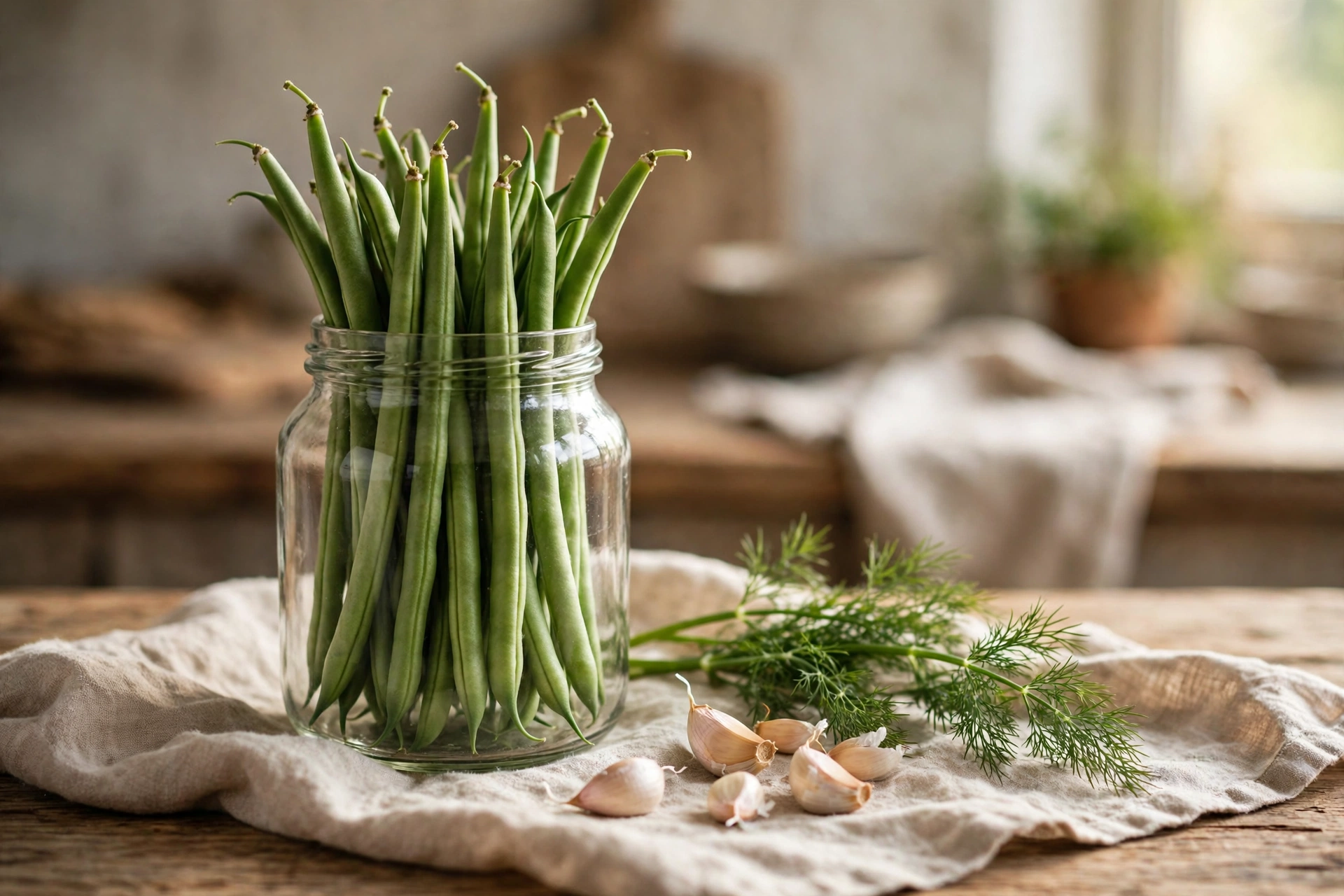
A fermented green bean is the garden bean with a tang: still snappy, still green, but soured by bacteria instead of vinegar. It uses the same tested brine framework the USDA publishes for fermented vegetables — salt, water, submersion, and a steady room — applied here through University of Minnesota Extension’s wet-brine method, which is written for produce fermented whole or in large chunks. Beans, packed whole, are exactly that case.
This guide is part of our preservation guides and follows the category flagship, how to make sauerkraut: the figures come from the source, and the finish is a pH reading, not a guess. The vinegar version of this jar lives at how to make pickled green beans if you want beans this week.
What You Need
Fresh green beans, lightly washed — the source directs you to select fresh produce and wash it lightly to remove visible dirt, without vigorous scrubbing, which can remove good bacteria needed for fermentation. For the brine: canning or pickling salt, iodine-free, and soft or distilled water, because minerals in hard water can discolor produce or cause texture changes. For the container: a fermentation crock, or food-grade plastic, ceramic, or glass, inspected for cracks before use — and not metal, because metal will react with the lactic acid the bacteria produce. Mason-style jars need an airlock system to control the oxygen and carbon dioxide levels inside.

Morton Canning and Pickling Salt, 4 lb
The wet brine is mixed at 1 to 3 tablespoons of iodine-free salt per quart of water, and this canning and pickling salt is the salt the method specifies for the job.
$2.68 from Amazon
SOLIGT Glass Fermentation Weights, 4-Pack
Glass weights hold whole beans below the brine's surface for the full ferment, keeping the 1 to 2 inches of cover the method requires over every bean.
$11.99 from Amazon
Ball Half-Pint Mason Jars, 12-Pack
Beans ferment and store in glass jars under airlocks or lids, and this half-pint case covers the small jars a bean harvest fills fast.
Check AvailabilityBefore You Start
Minnesota Extension’s safety frame for every produce ferment applies in full. Acidity: monitor the acidity throughout the process to ensure a safe pH is reached, and add no acidifying component such as vinegar or lemon juice — the bacteria make the acid. Oxygen: an anaerobic, low-oxygen environment is needed for the good bacteria to work, which is why the beans stay under brine. Temperature: between 68 and 72 degrees Fahrenheit is ideal, temperatures over 78 degrees can cause over-fermentation and spoilage, and temperatures below 60 degrees will inhibit fermentation. Time: allow enough time for the bacteria to produce enough acid to lower the pH.
How to Ferment Green Beans, Step by Step
- Prepare the beans. Wash the beans under cool running water. Do not scrub them, and avoid peeling or heavy trimming that strips the surface the bacteria live on. Cut or leave whole as your container suits — the wet brine covers either.
- Make the brine. Mix 1 to 3 tablespoons of salt per 1 quart (4 cups) of water — the source’s wet-brine range for most vegetables — and stir until dissolved. You will need enough brine to fully cover the beans and keep them submerged for the whole fermentation.
- Pack the container. Place the beans and brine in the container, wearing single-use disposable gloves when transferring the produce, as the source directs. Ensure the brine covers the beans, with 1 to 2 inches of brine above them. In a large container or crock, leave 4 to 5 inches of headspace; it should be about 75 percent full.
- Weight and seal. Weigh the beans down if needed, wipe the rim, and make the container airtight with its lid or airlock. A container without a lid gets a plate or tray weighed down with a bag of brine.
- Store dark and steady. Store the container in a dark place — the bacteria are sensitive to light — covered with a dark towel if needed, at 68 to 72 degrees Fahrenheit, measuring the air temperature with a thermometer.
- Monitor. Allow the beans to ferment for 3 to 4 weeks on the source’s general produce schedule, or 5 to 6 weeks if temperatures run below 68 degrees. Burp the container if needed, cracking the lid briefly to release built-up carbon dioxide while limiting the oxygen that enters. Test the pH of the brine throughout fermentation.
- Finish on the reading. When a pH of 4.60 or lower is reached and bubbling has stopped, the ferment is ready. If bubbling has stopped but the pH is still above 4.60, continue to ferment and check the pH every 1 to 2 days. Move the finished beans to the refrigerator.
The Numbers: Brine, Temperature, and Time
| Figure | Tested value |
|---|---|
| Brine strength (wet brine) | 1 to 3 tablespoons of salt per 1 quart (4 cups) of water |
| Brine cover | 1 to 2 inches of brine above the produce |
| Fermentation temperature | 68 to 72 degrees Fahrenheit ideal; over 78 degrees risks spoilage; below 60 degrees inhibits fermentation |
| Fermentation time | 3 to 4 weeks; 5 to 6 weeks below 68 degrees Fahrenheit |
| Finish test | pH of 4.60 or lower, and bubbling stopped |
| Refrigerated storage | Up to 9 months |
Stated plainly: the source publishes this method for brined vegetables as a class — whole or large-chunk produce — rather than a green-bean-only recipe, so no bean-specific day count exists to copy. The pH finish test above is the source’s own endpoint, and it governs this jar.
Beans that miss the fermenting crock freeze well for cooked dishes, and these are the two tools that side of the job runs on.

Ball Regular Mouth Lids (96)
Canning fully fermented pickles assumes fresh lids when the procedure says to adjust lids and process; a new flat on every jar is how the seal forms.
$36.99 from Amazon
Ziploc Freezer Quart Bags
Quart freezer bags are the simple backup for blanched overflow beans and opened-jar leftovers that need to move to the freezer quickly.
$26.48 from AmazonCommon Mistakes
Scrubbing the beans. The source says do not scrub, because you may remove the good bacteria needed for fermentation. A light wash is the whole instruction.
Too much salt. If there is too much salt in the brine, the source warns, fermentation will not occur and the pH will not drop to become more acidic. The 1 to 3 tablespoon range per quart is the recipe.
Beans at the surface. Anything above the brine meets oxygen, and the good bacteria need a low-oxygen environment. Keep 1 to 2 inches of brine over the beans and the weight in place.
A hot or cold room. Over 78 degrees Fahrenheit risks spoilage; below 60 degrees inhibits fermentation outright. The dark, steady 68 to 72 degree corner is part of the recipe.
Calling it done by the calendar. The finish is a pH of 4.60 or lower with bubbling stopped. Our troubleshooting ferments guide covers what to do when a ferment stalls short of that line.
Storage and Shelf Life
Refrigeration stops the fermentation process, and fermented produce keeps refrigerated for up to 9 months on the source’s guidance. Freezing also stops fermentation and holds fermented produce indefinitely in the freezer, though it may lose crisp texture on thawing — fermented beans headed for cooked dishes take that trade well. Keep the jar cold, covered, and dated.
Viewers also searched for these items.

ThermoPro TP49 Hygrometer
The ferment holds at 68 to 72 degrees Fahrenheit, and a room unit with a temperature readout is how you know the dark corner you picked stays in that band for weeks.
$8.54 from Amazon
Etekcity Digital Kitchen Scale
A kitchen scale weighs the bean harvest before brining, which is how you size the container and brine volume to the batch you actually picked.
$9.99 from Amazon
Mrs. Wages Pickling and Canning Salt
A second bag of pickling salt keeps the iodine-free salt the brine depends on in stock, so the next batch is not improvised with iodized table salt.
$19.32 from AmazonFrequently Asked Questions
How much salt goes in the brine for green beans?
The wet-brine range for most vegetables: 1 to 3 tablespoons of salt per 1 quart (4 cups) of water, using canning or pickling salt, iodine-free.
How long do fermented green beans take?
On the source’s general produce schedule, 3 to 4 weeks at the ideal temperature, or 5 to 6 weeks below 68 degrees Fahrenheit — and the batch is finished when the pH reaches 4.60 or lower and bubbling stops, whatever week that lands in.
Why did my brine stop bubbling but taste barely sour?
Keep fermenting. The source’s instruction for exactly that case: if bubbling has stopped but the pH is still above 4.60, continue to ferment and check the pH every 1 to 2 days.
Can I ferment beans in a metal pot?
No. The source says to avoid metal containers because the metal will react with the lactic acid the bacteria produce. Use a crock, or food-grade plastic, ceramic, or glass.
Procedure, brine strength, temperatures, times, and pH finish test: University of Minnesota Extension, “Preserving food at home: Fermentation” (brined-vegetable method, USDA Guide 6 framework), via UMN Extension.
Prices shown on this page were last checked November 26, 2026 — prices change; check before you buy.
Talk it over with other readers
The Truly Preserved Community on Facebook is where readers compare notes on food storage, water, and backup power — and where your questions help decide what we research next.