
Truly Preserved is reader-supported. If you buy through a link on this page we may earn a commission at no extra cost to you. Nobody pays for placement or scores.
THE SHORT ANSWER
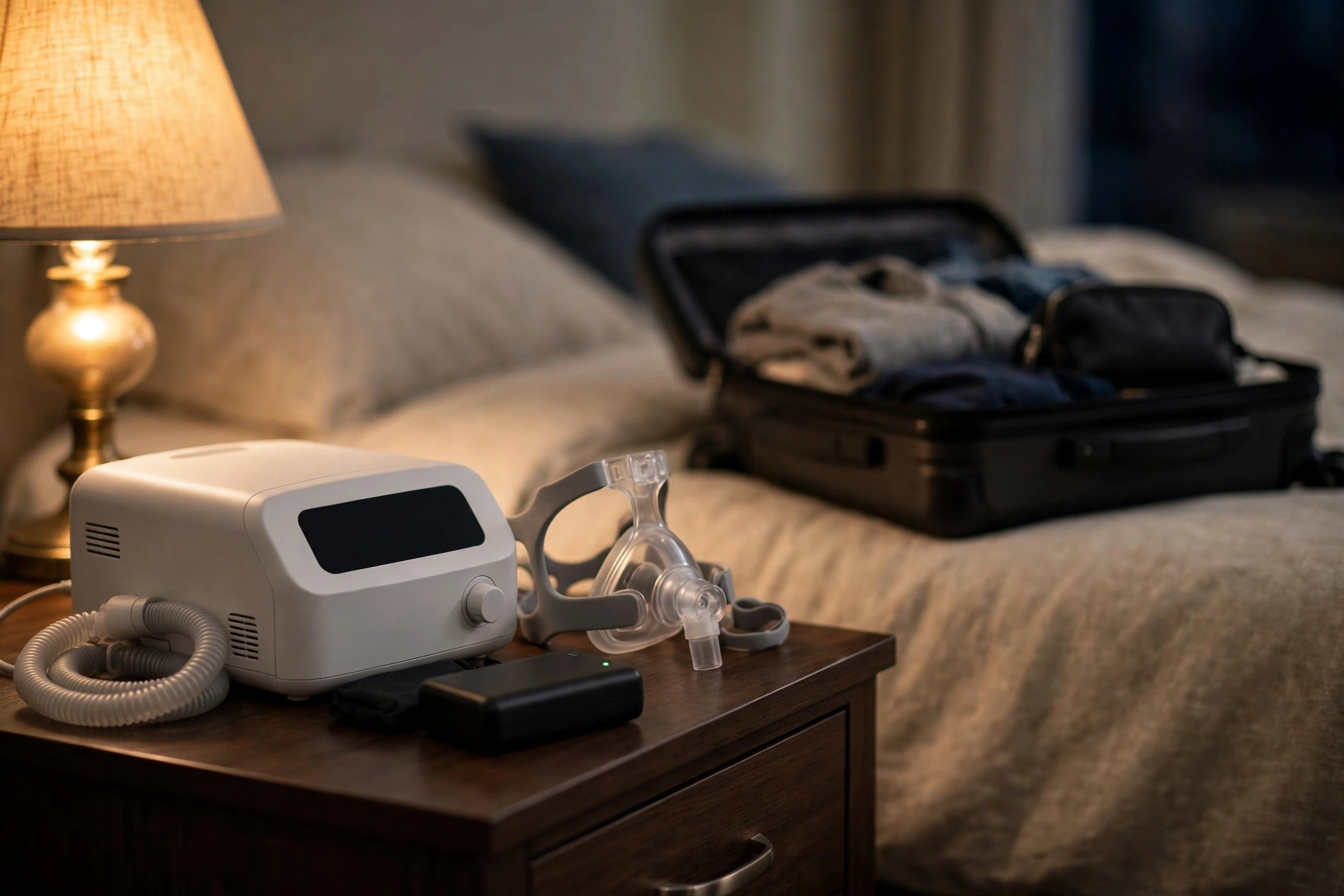
No — a home power station cannot fly, and it is not close. The FAA allows rechargeable lithium batteries up to 100 watt-hours in the cabin with no approval, 101 to 160 watt-hours with the airline’s approval (two spares at most, carry-on only), and forbids anything over 160 watt-hours on a passenger aircraft altogether. The FAA’s own passenger chart lists lithium battery powered generators — the category a power station sits in — as No in carry-on and No in checked baggage, because they exceed that 160 watt-hour limit. The stations in our CPAP runtime table run 500 to 2,000 watt-hours. What can fly is the CPAP itself, which travels as medical equipment, plus a purpose-built CPAP travel battery sized under the 100 watt-hour line.
This question usually arrives the week before a trip, from someone who sleeps fine at home because a station on the nightstand handles outages — our CPAP runtime page is built on exactly that setup. The home answer and the airplane answer are opposites, and the reason is a single number printed on the bottom of the unit. Here is the rule, where your station falls against it, and what to pack instead so the night still works at the other end.
What is the actual rule — TSA’s, or the FAA’s?
The size rule is the FAA’s, and it is a hazardous-materials rule, not an airline preference. Under the FAA’s passenger battery guidance, built on US DOT regulation 49 CFR 175.10: batteries of 0 to 100 watt-hours are allowed on passenger aircraft; 101 to 160 watt-hours require approval from the air carrier, with a limit of two spare batteries per person; batteries exceeding 160 watt-hours are forbidden. Spare lithium batteries — a category the FAA says includes power banks and portable chargers — must be carried on and cannot be checked, and they must be protected from damage and short circuit. The FAA also warns that many airlines set stricter limits than the federal floor, so the carrier’s own page is the last word for a specific flight.
The TSA’s part is the checkpoint itself: its “What Can I Bring?” list covers nebulizers, CPAPs, BiPAPs, and APAPs as allowed in both carry-on and checked bags, with special instructions — the machine comes out of its carrying case for X-ray screening in a standard lane, while the facemask and tubing may stay in the case. Two different agencies, two different questions: the TSA decides what gets screened and how, the FAA decides what size of battery may be on the aircraft at all. A station fails the second question before the first one matters.
Where does a power station fall against the 100 and 160 watt-hour lines?
A power station falls far past the top line. The FAA’s chart says it in one row: lithium battery powered generators — described as stand-alone generators, back-up generators, and part of a solar power system — “exceed the 160 watt hour (Wh) lithium battery limit and are forbidden on passenger aircraft,” No for carry-on, No for checked. There is no approval to request, because the approval tier ends at 160.
| Battery | Watt-hours | On a passenger flight |
|---|---|---|
| CPAP travel battery (purpose-built) | About 96–100 | Carry-on, no approval |
| Larger spare battery | 101–160 | Carry-on only, airline approval, max 2 |
| Smallest station class in our CPAP table | 500 | Forbidden |
| 1kWh / 2kWh home stations | 1,000–2,000 | Forbidden |
The watt-hour rating is printed on the battery or the unit — the FAA’s own method, if only volts and amp-hours are marked, is to multiply them (a 12-volt, 8 amp-hour battery is 96 watt-hours). Chemistry does not rescue a station here: the limits are stated for rechargeable lithium batteries generally, and a lithium iron phosphate station is still a lithium battery well over 160 watt-hours. Nor does splitting the difference work — a station is one battery system, not a set of small spares, and checking it is worse than carrying it on, since spare lithium batteries are barred from checked baggage at any size. If the station has to be where you are going, it travels by ground: shipped ahead, driven, or rented at the destination. It does not fly with you.

Medistrom Pilot-24 Lite
The class this page’s rule points to, in one unit: a purpose-built CPAP travel battery rated at 95 watt-hours — under the FAA’s 100 watt-hour line, so it rides in the cabin with no airline approval, carry-on only and never in a checked bag. It runs 24-volt ResMed machines (AirSense 10, AirMini, S9) through a DC cable instead of the wall brick — the connection the runtime section below counts on. It is a 24-volt battery, so check your machine’s voltage before ordering.
$339.00 from AmazonSo what part of the CPAP setup can fly?
The CPAP itself can fly, and it flies on better terms than ordinary baggage. The TSA allows the machine in carry-on and checked bags with the screening steps above — carry it on anyway, because a checked machine can be lost or knocked around and a spare is not waiting at the hotel. On US airlines, a CPAP is an assistive medical device: Department of Transportation rules (14 CFR 382.121) require airlines to let passengers bring assistive devices into the cabin and not count them against the carry-on limit, so the CPAP case rides in addition to your carry-on and personal item. Using the machine in flight is the airline’s call, not the TSA’s — carriers commonly ask for advance notice, and the device should carry its manufacturer’s label; check your carrier’s medical-device page before the trip, not at the gate.
The battery that can fly is the one built for this exact problem. Purpose-built CPAP travel batteries are sized to sit just under the 100 watt-hour line — about 96 to 100 watt-hours — precisely so they need no airline approval, and they ride in the cabin like any spare battery: carry-on only, terminals protected, never in a checked bag. A battery between 101 and 160 watt-hours can also fly, but only with the airline’s approval arranged ahead and a maximum of two spares. Read the rating printed on your battery’s case before you pack it; the number on the case is the number that decides.
How much of a night does a flight-legal battery actually buy?
A flight-legal battery buys hours, not the multiple nights a home station buys — plan the night around that. The arithmetic is the same one our CPAP runtime page uses: usable watt-hours (about 85% of the rating) divided by the machine’s draw. A CPAP with the heated humidifier off draws about 30 to 50 watts; a travel machine draws roughly half to a third of a home machine. At a travel machine’s draw, a battery just under 100 watt-hours works out to a few hours of sleep — enough for the dark stretch of a long flight or a short night with the humidifier off, not a like-for-like swap for the 1,000 watt-hour station that runs a home CPAP two to three nights.
Three habits stretch it. Run the humidifier off and use passover humidity — water in the tub, heat off — because heating water is the expensive part of the machine. Use the maker’s DC converter for your machine instead of the wall brick where one exists, since skipping the double conversion buys back roughly 10 to 20% of the night. And treat the battery as a flight tool: at the destination, ordinary wall power is the plan, and the battery is the reserve for the outage, the red-eye, and the room with one far outlet. Our solar generator vs power station page covers why the big box at home and the small pack in the cabin are different tools with confusingly similar names.

EcoFlow DELTA 2
Home backup only — 1,024Wh never gets on a plane. On the ground it is the size the runtime section above works with: about 85% of the rating is usable, and at a CPAP’s 30–50W draw with the humidifier off, that is two to three nights a charge.
Check Availability
Jackery Explorer 1000 V2
Also home-only — 1,070Wh is as far past the flight limit as anything in the class. The extra capacity stretches the same math to the top of the two-to-three-night range.
$559.00 from Amazon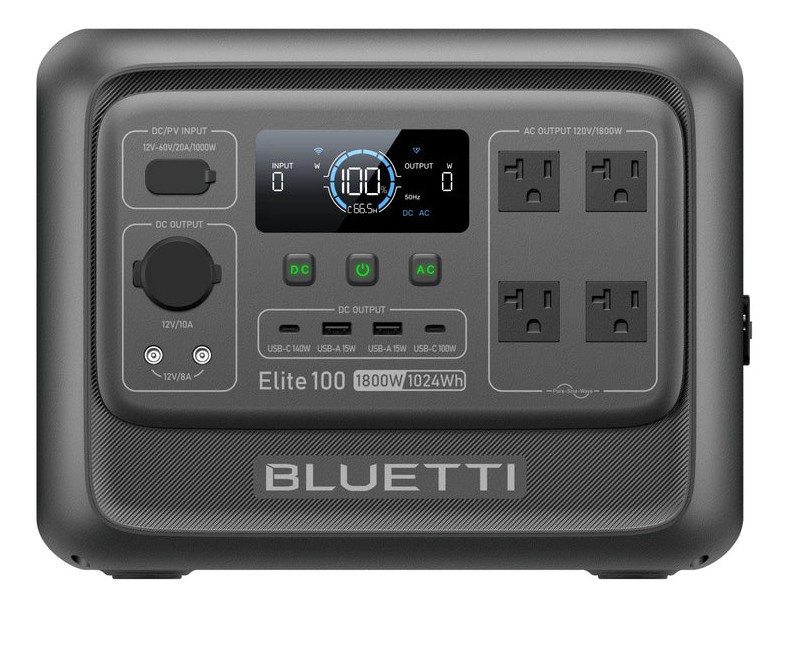
Bluetti Elite 100 V2
864Wh, so the same 85%-usable math lands nearer two nights a charge — and it is still hundreds of watt-hours past the flight limit, so it stays home like the rest of the class.
Check AvailabilityQuestions people also ask
Does a CPAP count as my carry-on?
No. On US airlines a CPAP is an assistive device under 14 CFR 382.121 and must not be counted toward your carry-on limit — it travels in addition to your carry-on bag and personal item. Pack it in its own case so the status is obvious at the checkpoint and the gate.
Can I put the power station in checked baggage instead?
No. The FAA’s chart gives lithium battery powered generators a No for checked baggage as well as carry-on, and spare lithium batteries of any size are prohibited in checked baggage — they must ride in the cabin, where the crew can reach a battery that overheats. Gate-checking a carry-on does not change this: spare batteries come out and stay with you in the cabin.
What about distilled water for the humidifier?
Plan to buy it at the destination. Ordinary liquids in the cabin follow the standard 3.4-ounce limit, and while medically necessary liquids can be declared for additional screening, a trip’s worth of distilled water is simpler in a checked bag or from a store on arrival — and most travelers run the humidifier off or on passover for flight nights anyway, which is also the battery-saving move.
FAQ
Can I take a CPAP power station on a plane?
No. A power station is a lithium battery powered generator in the FAA’s passenger chart, and that category is forbidden in both carry-on and checked baggage because it exceeds the 160 watt-hour limit. The stations in our CPAP runtime table are 500 to 2,000 watt-hours. Ship it by ground or leave it home.
What size battery can I take for my CPAP?
Up to 100 watt-hours flies in the cabin with no approval — the size purpose-built CPAP travel batteries are made to, at about 96 to 100 watt-hours. Between 101 and 160 watt-hours needs the airline’s approval in advance and is limited to two spares. Over 160 watt-hours does not fly at all.
Do I need a prescription or a doctor’s note for the CPAP itself?
The TSA does not require one to screen a CPAP, and the machine is allowed in carry-on and checked bags with special instructions. Airlines may ask for advance notice to use a CPAP in flight, and carrying the prescription or the maker’s compliance label is a cheap way to smooth that conversation — but the battery’s watt-hour rating, not paperwork, decides what power source flies.
Does the rule change outside the United States?
The watt-hour tiers are the international template as well, but the FAA itself notes that TSA, individual airline, and international rules can be more restrictive. Check every operating carrier on the itinerary, including connections — the strictest page in the chain is the one that governs your bag.
Viewers also searched for these items.


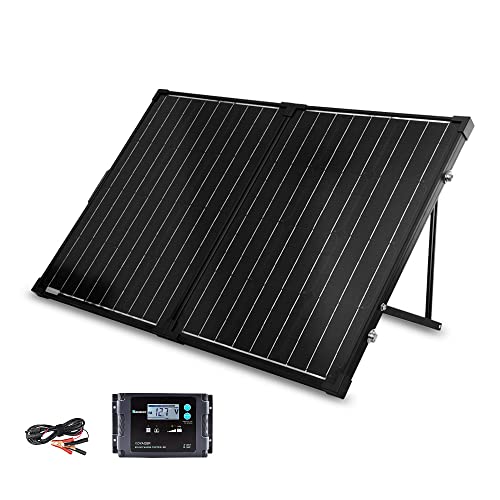
Renogy 100W Solar Suitcase
A folding suitcase panel from Renogy for the same job — easy to store with the station and quick to set out when the power goes.
$154.98 from AmazonRelated questions
- How long will a power station run my CPAP?
- Can it power devices while it’s being charged (pass-through)?
- Can I use a solar generator indoors?
Sources: Federal Aviation Administration, “Airline Passengers and Batteries” (PackSafe, updated October 2, 2026 — rechargeable batteries 0–100 Wh allowed, 101–160 Wh require air carrier approval with a limit of two spare batteries per person, over 160 Wh forbidden; spare lithium batteries including power banks must be carried on and cannot be checked; lithium battery powered generators listed as No / No, “these exceed the 160 watt hour (Wh) lithium battery limit and are forbidden on passenger aircraft”; watt-hours = volts × amp-hours; airlines may set stricter limits); TSA, “What Can I Bring?” — Nebulizers, CPAPs, BiPAPs and APAPs (carry-on Yes with special instructions, checked Yes with special instructions; device removed from its carrying case for X-ray screening, facemask and tubing may remain); US Department of Transportation rule 14 CFR 382.121 (assistive devices permitted in the cabin and not counted toward the carry-on limit); Truly Preserved CPAP runtime figures (CPAP draw about 30–50 W with humidifier off, travel machines roughly half to a third; 85%-usable method). No product prices are printed on this page.
Related reading: once the battery is home, two more questions decide how the nights go — does a CPAP need a pure sine wave inverter? and should you run a CPAP on DC or AC from a battery?
This question sits under the backup-power questions readers ask us most — the full set is gathered here: What People Are Asking About Backup Power.
Talk it over with other readers. The Truly Preserved Community on Facebook is where readers compare notes on food storage, water, and backup power — and where your questions help decide what we research next. Join the group →
Prices shown on this page were last checked November 26, 2026 — prices change; check before you buy.