
Truly Preserved is reader-supported. If you buy through a link on this page we may earn a commission at no extra cost to you. Nobody pays for placement or scores.
THE SHORT ANSWER
If you run a heated humidifier, yes — treat pure sine wave as required. ResMed’s battery guide puts its machines used with a heated humidifier on a pure sine wave inverter rated at least 300 watts continuous and 500 watts peak, while listing a modified sine wave inverter of 150 watts as enough for several of its machines used without a humidifier. The relief for power-station owners is that the AC outlets on the major stations we compare are already pure sine wave — this question mostly bites with a cheap standalone inverter bought on its own.
The question usually comes off a spec sheet. Someone is sizing outage backup for a CPAP — the setup our CPAP runtime page works through — and hits a line about waveform on an inverter or a station, with no plain statement of whether their machine cares. ResMed, the maker whose machines fill most nightstands, answers it in its own battery guide, and its answer is more specific than the yes-or-no most pages give: it splits on the humidifier, and it names watt ratings for each side of the split.
What does ResMed actually require for an inverter?
ResMed’s minimum inverter table splits its machines by whether a heated humidifier is in use. Without one, a modified sine wave inverter with a minimum rating of 150 watts is listed as enough for a named set of machines — the guide’s travel edition puts it this way: a device used without a humidifier, or an S9 combined with its H5i humidifier, needs “a modified sine wave inverter with a minimum power rating of 150w.” Add a heated humidifier of the older generations the table names — the HumidAire 2i, 3i, H4i and H5i lines on most series — and the requirement changes to a pure sine wave inverter of 300 watts continuous with a 500-watt peak or surge rating.
| Your setup | Inverter ResMed lists | Minimum rating |
|---|---|---|
| No heated humidifier | Modified sine wave allowed | 150W |
| S9 with its H5i humidifier | Modified sine wave allowed | 150W |
| Heated humidifier (most other series) | Pure sine wave required | 300W continuous / 500W peak |
| Original HumidAire humidifier | Do not use with an inverter | — |
The two waveforms, in ResMed’s own definition, are this: a pure sine wave inverter “produces an output waveform that is the same as a domestic power outlet,” while a modified sine wave inverter approximates that curve in steps. The guide is also honest about why modified exists at all — pure sine wave units are harder to manufacture and the most expensive, which is exactly why the cheap loose inverter at the auto-parts store is usually the modified kind.
One limit on the table deserves saying out loud. ResMed’s published inverter requirements name its older series — S7 through S9, VPAP, Stellar — and its battery guide’s converter tables run through the AirSense 10; there is no AirSense 11 line in the inverter table. For a current machine, your user guide and your equipment supplier are the final word. But note which way the table leans: every heated-humidifier row except the one S9 carve-out points at pure sine wave, so pure sine is the default that satisfies every row ResMed has published. Nobody has to guess in the other direction.
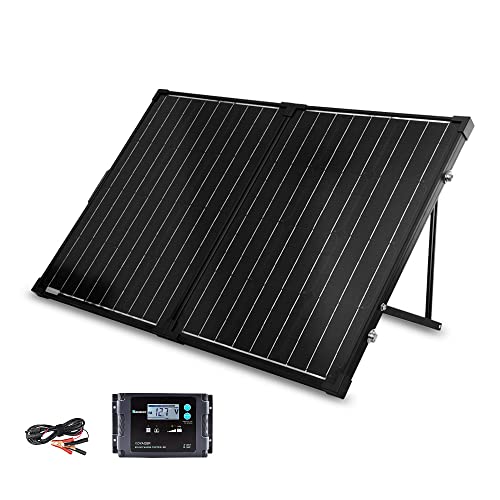
Renogy 100W Solar Suitcase
A folding suitcase panel from Renogy for the same job — easy to store with the station and quick to set out when the power goes.
$154.98 from Amazon
Generac GP3300i
The big-name alternative: 3,300 watts from the brand most people already know from whole-house standby units.
$719.00 from Amazon
Millennium Energy Bars (SOS Food Lab)
Nine real flavors and the only bar here people call genuinely good. Single 400-calorie bars made for go-bags and school kits.
$19.99 from AmazonWhere does this question actually bite — a station, a loose inverter, or a generator?
On a power station, the question is mostly already answered. The AC outlets on the current stations from the major brands in our power station comparison are specified as pure sine wave output — that is a selling point they print, not a detail they hide. The check is still worth ten seconds: find the words “pure sine wave” on the spec page or in the manual of the exact model you own or are buying. If a listing will not say it, treat that silence as your answer and look at a different unit.
The loose inverter is where the trap sits. A standalone inverter is bought on price and watts, and the low end of that market is modified sine wave — fine for a work light, outside ResMed’s table for a CPAP running its heated humidifier. The generator version of the same trap is the inverter that is not there: a CPAP plugged into a setup that was assembled for the fridge and the lights, with waveform never checked, is the outage-night version of this page. However the AC is being made — station, inverter, generator with an inverter stage — ResMed’s table applies to the waveform that reaches the machine’s power brick.
What happens if you use modified sine wave anyway?
ResMed does not frame this as a preference. Alongside the table, its guide states flatly that the original HumidAire “must not be used with inverters,” and carries a warning for the other heated humidifiers it names: used with inverters outside that table, damage to the unit or serious injury to the user may result. We are not going to soften the maker’s own warning into “it might buzz a little.”
The honest other half: a machine in the modified-allowed row — no heated humidifier, 150 watts or better — is not being abused. It is being run inside its maker’s published minimum, and owners do it every outage. The line is not “modified sine wave destroys CPAPs.” The line is the humidifier row. If your therapy setup heats water, the waveform stops being a detail, and “it ran fine last night” is not evidence the next hundred nights are inside spec — it is evidence about one night, offered to a supplier who will read the guide’s table, not your anecdote, if the machine fails.

Anker SOLIX PS100
6.2 lb of bifacial panel with a 5-year warranty — the one that lives in the car and actually gets used.
Check the price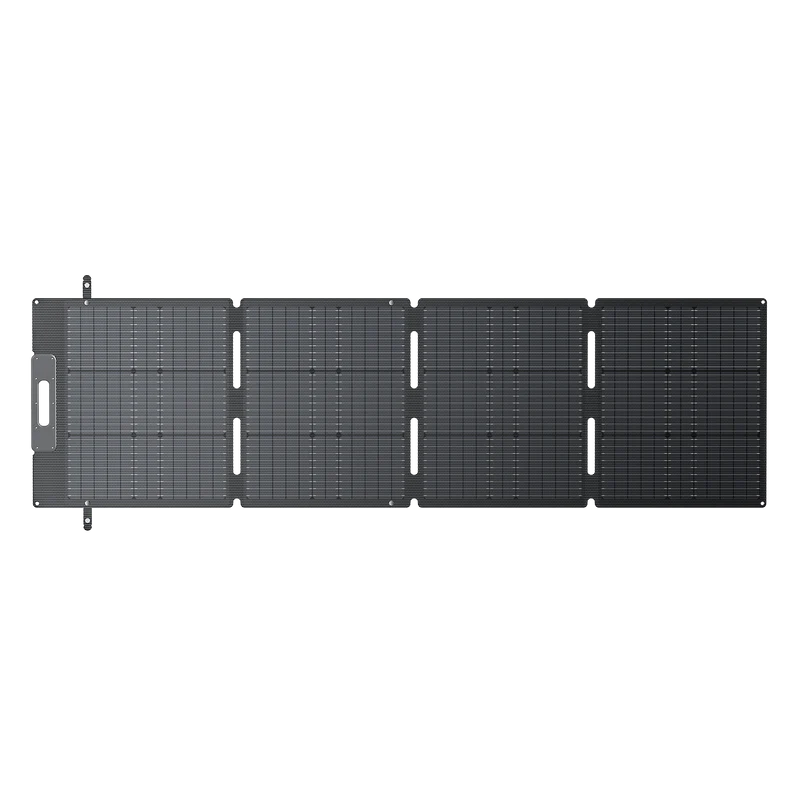
Bluetti PV200
A power station is a one-day answer on its own; a 200W folding panel matched to Bluetti stations is what turns stored power into a supply that renews itself each sunny day.
$329.99 from Bluetti
Honda EU3200i
The EU2200i's bigger brother: 3,200 watts of the same Honda quiet, for loads a step beyond a fridge and freezer — at Honda money.
$2,799.00 from AmazonDoes pure sine wave change how long the station runs your CPAP?
No — waveform is about the shape of the power, not the amount of it. A pure sine wave station and a modified one of the same watt-hour size hold the same charge; runtime is still the arithmetic from our CPAP runtime page, usable watt-hours divided by the machine’s watts, with the humidifier setting moving the answer far more than anything about the inverter. The choice that does change runtime is not sine versus modified — it is AC versus DC, because the DC path skips a conversion. That is the whole subject of running a CPAP on DC or AC from a battery.
Score out of 10
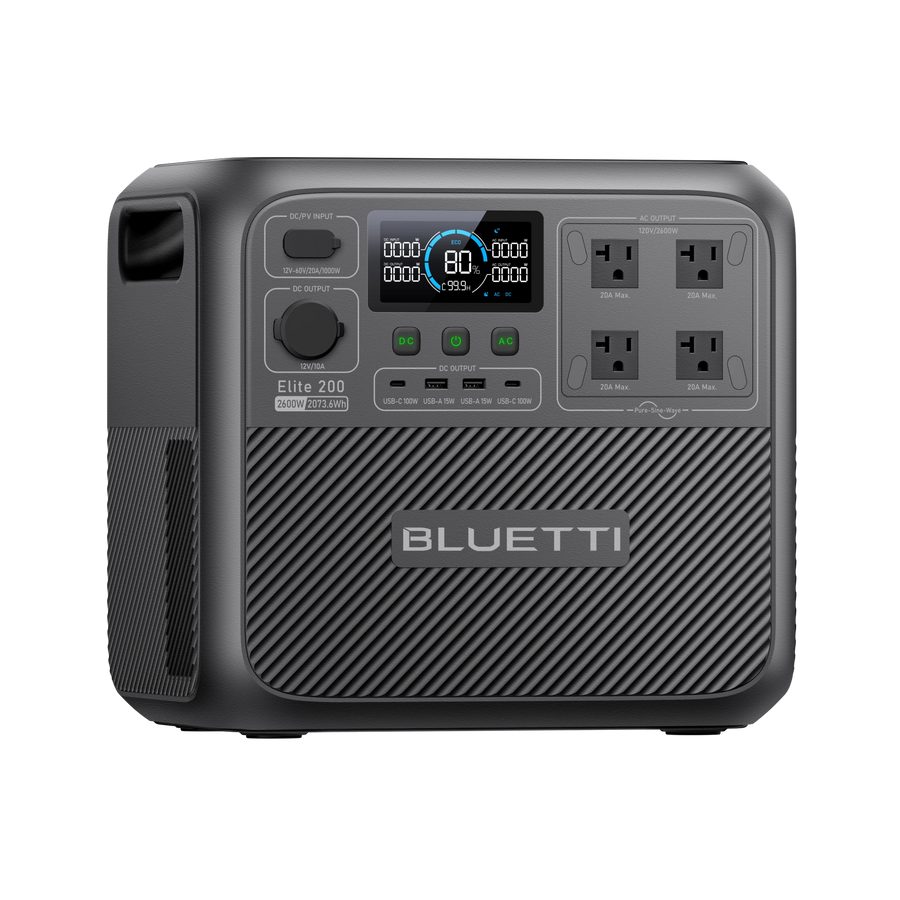
Bluetti Elite 200 V2
Pure sine wave output, and the station our CPAP comparison puts first — the safe answer to this page’s question in product form.
Check the price
Anker SOLIX C1000
Also pure sine wave, in a 1kWh body — the pick when the CPAP is all it has to run.
Check the priceFull home-backup comparison · Full CPAP power comparison
Questions people also ask
Can I use a modified sine wave inverter for just one night?
That depends on which row of ResMed’s table your setup sits in, not on the number of nights. Without a heated humidifier, a modified sine wave inverter of 150 watts or more is inside ResMed’s published minimum for the machines it names, for one night or a hundred. With a heated humidifier on a series the table puts on pure sine wave, one night is still outside the maker’s requirement — shorter exposure, same spec. If the humidifier is the problem, the honest workarounds are a pure sine wave source or running the humidifier off for the outage, a call to make with your supplier, not from a spec page.
How many watts should the inverter be?
ResMed’s table gives two numbers, and both are minimums, not targets. With a heated humidifier: 300 watts continuous and a 500-watt peak or surge rating, pure sine wave. Without one, for the machines named: 150 watts, modified sine wave allowed. A CPAP itself draws far less than either figure — our runtime page puts it at roughly 30 to 50 watts with the humidifier off and 70 to 90 with heat and a heated tube — so these ratings are about the inverter class ResMed wants feeding the machine, not about the machine’s appetite.
Is the UPS under my desk the same thing?
Not automatically. A desktop UPS is an inverter with a battery attached, and many of them output a stepped or simulated sine wave on battery power — the office world’s name for the modified side of this page. Some models are true pure sine wave and say so. The same check applies: find “pure sine wave” in that unit’s specifications, and find its watt rating against ResMed’s 300-watt humidifier row, before a CPAP spends a night on it.
FAQ
Does a CPAP need a pure sine wave inverter?
With a heated humidifier, treat it as yes: ResMed’s battery guide requires a pure sine wave inverter of at least 300 watts continuous and 500 watts peak for its machines used with the heated humidifiers it names, with one stated exception — an S9 with its H5i sits in the modified sine wave row at 150 watts. Without a humidifier, ResMed lists modified sine wave at 150 watts as enough for the machines in its table.
Are portable power stations pure sine wave?
The current stations from the major brands we compare specify pure sine wave AC output, and print it as a feature. Verify it on the exact model anyway — the words should appear on its spec page or in its manual. A unit whose listing never says “pure sine wave” should be assumed to be the other kind.
Can a modified sine wave inverter damage a CPAP?
ResMed’s guide warns that the heated humidifiers it names, used with inverters outside its minimum-requirements table, risk damage to the unit, and it bars the original HumidAire from inverter use entirely. For a machine run without a heated humidifier, the same guide lists modified sine wave as an accepted minimum — the risk statement and the permission are both the maker’s, and both turn on the humidifier.
What if my machine’s manual never mentions sine wave?
Ask your equipment supplier, and default to pure sine wave in the meantime. ResMed’s published inverter table names its older series and does not give a line for its newest machines, so silence in a current manual is a gap, not a permission. Pure sine wave output is the same waveform as a home outlet, so the default costs nothing in therapy terms — it is the modified side that needs the justification.
Viewers also searched for these items.


Related questions
- How long will a power station run my CPAP?
- Should you run a CPAP on DC or AC from a battery?
- Can I take a CPAP power station on a plane (TSA)?
- Can it power devices while it’s being charged (pass-through)?
Sources: ResMed, Battery Guide, document 198103/4 (2015-08) — the pure and modified sine wave definitions (“a pure sine wave inverter produces an output waveform that is the same as a domestic power outlet”), the Minimum Inverter Requirements table (modified sine wave, 150W, for the named products including the S9 series; pure sine wave, 300W continuous / 500W peak, for all products except S9 used with the HumidAire 2i, 3i, H4i, H5i and C-Series heated humidifiers; “the original HumidAire must not be used with inverters,” with the guide’s warning that other named heated humidifiers used with inverters risk damage to the unit or serious injury); ResMed, Your Guide to Travelling with CPAP (updated March 2019) — the same split stated as: no humidifier, or an S9 with an H5i, needs a modified sine wave inverter of at least 150W, while an older device with an H2i, H3i or H4i humidifier needs a pure sine wave inverter of 300W continuous and 500W peak; Truly Preserved CPAP runtime figures (about 30–50W with the humidifier off, 70–90W with heated humidifier and tube). No product prices are printed on this page.
This question sits under the backup-power questions readers ask us most — the full set is gathered here: What People Are Asking About Backup Power.
Talk it over with other readers. The Truly Preserved Community on Facebook is where readers compare notes on food storage, water, and backup power — and where your questions help decide what we research next. Join the group →
Prices shown on this page were last checked November 26, 2026 — prices change; check before you buy.