
Truly Preserved is reader-supported. If you buy through a link on this page we may earn a commission at no extra cost to you. Nobody pays for placement or scores.
THE SHORT ANSWER
Boil it first. Bring clear water to a rolling boil for 1 minute — 3 minutes at high elevation — and you have killed the bacteria, viruses, and parasites, including Cryptosporidium and Giardia, that make emergency water dangerous. If you cannot boil, disinfect it: 8 drops of plain, unscented household bleach (5% to 9% sodium hypochlorite) per gallon of clear water, stir, and wait at least 30 minutes. Double the bleach dose if the water is cloudy, murky, colored, or very cold, and strain cloudy water through a clean cloth or coffee filter before you treat it either way. No home method on this page makes water with fuel, toxic chemicals, or radioactive material in it safe — that water needs a different source, not a stronger dose.
The tap goes brown, or the city texts a boil notice, or the well pump stops with the power — and the question stops being theoretical. You have water in a creek, a rain barrel, a water heater, a jug you are not sure about. What you do in the next ten minutes is not complicated, but the order matters, and so does knowing which method actually covers which germ. Boiling, bleach, tablets, and a filter are not four ways of doing the same job. They cover different ground, and the gaps are exactly where people get sick.
What is the first thing to do before any method?
The first thing to do, before boiling, bleach, or a filter, is look at the water and clear it. If it is cloudy, let it settle, then pour it through a clean cloth, a paper towel, or a coffee filter, and treat the clearer water that comes through. The CDC and the EPA both put this step first for a plain reason: disinfectants and light work poorly in cloudy water, because the particles shelter germs and use up bleach before the bleach reaches them. Straining is not disinfection — it removes almost nothing you can get sick from — but every method below works better after it.
Source choice matters at this step too. Flowing water beats still, stagnant water. Water with floating material, a dark color, or a strange smell is water to walk past when anything else exists. And if you know or suspect fuel, chemicals, or radioactive material in the water, stop here: the CDC says boiling and disinfecting cannot make that water safe, full stop. Use bottled water or another source and call your health department.

Grayl GeoPress
The only portable here that handles viruses — built for travel, not daily home use.
$99.95 from Amazon
Why is boiling the method every agency puts first?
Boiling is first because it is the only kitchen method that kills all three classes of germ at once. The CDC’s wording is direct: boiling is the best way to kill germs in water, and it names viruses, bacteria, and parasites — including Cryptosporidium and Giardia, the two parasites that shrug off ordinary chemical doses. A rolling boil for 1 minute does it. Let the water cool on its own, then store it in a clean, sanitized container with a tight cover.
Elevation is the one place the agencies’ numbers split, and it is worth printing honestly. The CDC says to boil for 3 minutes above 6,500 feet. The EPA says 3 minutes above 5,000 feet. Those are not the same line, and this page will not average them into a number neither agency published. If you live above 5,000 feet, boiling for 3 minutes satisfies both agencies at once — that is the practical way to handle a disagreement between two sources you trust. Boiled water tastes flat because the air is out of it; pouring it back and forth between two clean containers, or adding a pinch of salt per quart, is the agencies’ own fix.
How much bleach does it take — by the gallon, the jug, and the drum?
Plain unscented household bleach takes 8 drops per gallon of clear water at the strength most US bottles are sold. Check the label’s active ingredient first: sodium hypochlorite, typically 5% to 9% in the United States. If the bottle’s own label prints drinking-water directions, those directions win. If it prints none, the CDC table for that 5% to 9% range is:
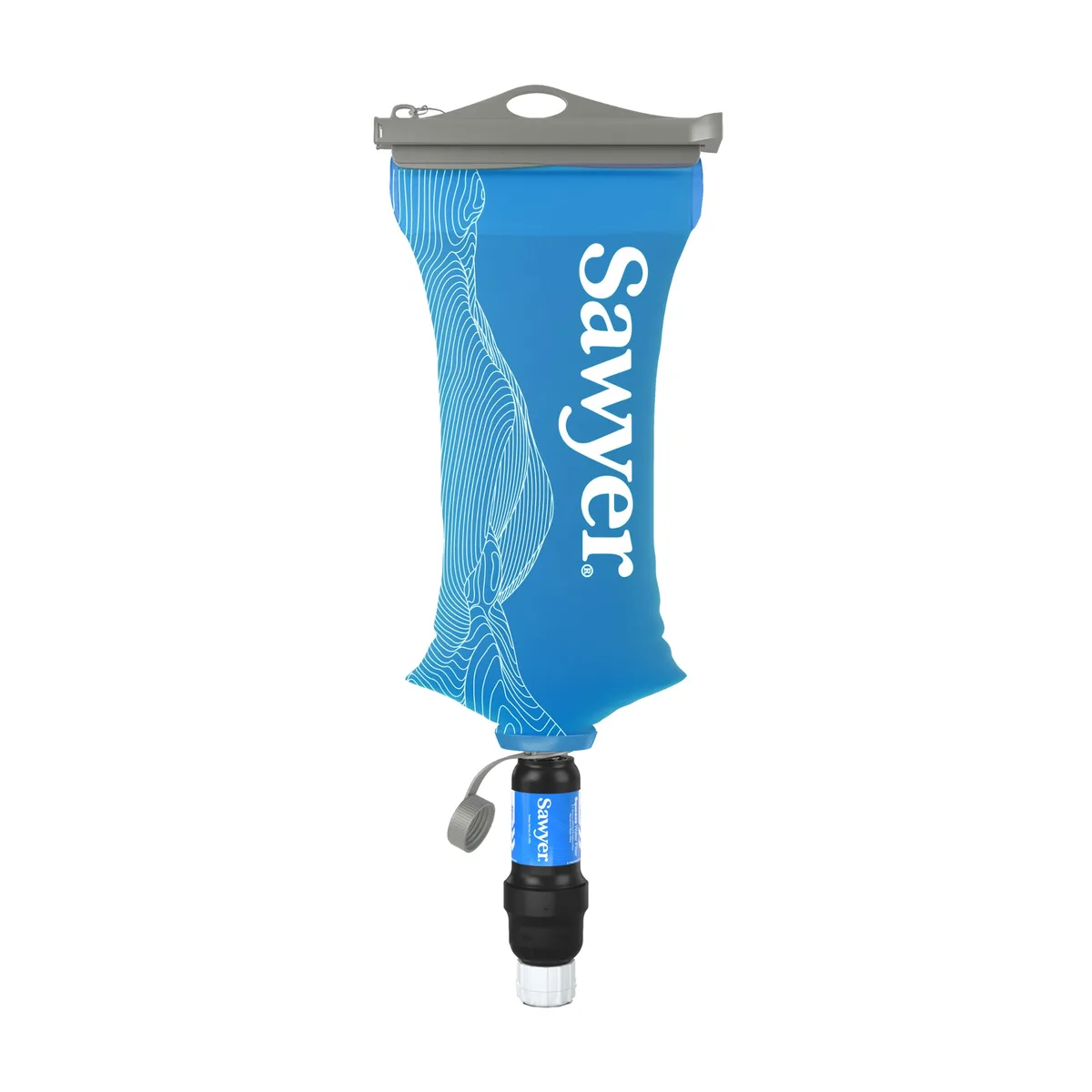
Sawyer Squeeze
This page's filter-then-disinfect method starts with clearing the water, and the Squeeze is the small hollow-fiber filter built for that first step at household scale — strain and squeeze, then boil or disinfect to cover viruses.
Check Availability
Katadyn BeFree 1.0L
A squeeze-bottle filter for one person moving fast — it clears sediment, bacteria and protozoa the same way the Squeeze does, and it still needs the disinfection step after it, exactly as the method on this page lays out.
$49.95 from Amazon| Water | Clear water | Cloudy, colored, or very cold |
|---|---|---|
| 1 quart / 1 liter | 2 drops | 4 drops |
| 1 gallon | 8 drops (about 1/8 tsp) | 16 drops |
| 5 gallons | 40 drops (1/2 tsp) | 80 drops (1 tsp) |
Stir it well and let it stand at least 30 minutes before drinking. The treated water should smell faintly of chlorine; the EPA’s version of the check says if there is no slight chlorine odor, repeat the dose and wait another 15 minutes. The EPA splits its table by strength — 8 drops per gallon for 6% bleach, 6 drops for 8.25% — which lands in the same place as the CDC’s single 5% to 9% table for a clear gallon. Do not use scented, color-safe, or splashless bleach, and do not use bleach with added cleaners. Use a fresh bottle: the EPA specifies bleach stored at room temperature for less than a year, because an old bottle doses weaker than the table assumes.
For a big container, do the arithmetic per gallon rather than guessing a glug — a 55-gallon drum at the clear-water rate is 55 times the gallon dose. In practice, though, a drum is storage, not a drinking batch: the cleaner routine is to store the drum full of clean tap water, rotate it on the schedule in our stored tap water page, and disinfect by the gallon or the jug at the point you drink it, where the dose is small enough to measure honestly. Bleach also has a germ gap boiling does not: the CDC says chemical disinfectants do not work as well as boiling against Cryptosporidium and Giardia. Bleach is the backup when there is no fuel or no safe way to run a stove — a good backup, used with its limits in view.
What do purification tablets actually cover?
Purification tablets cover viruses and bacteria, and only some of them cover parasites. That split is printed on the CDC’s emergency page and it decides which tablet belongs in a kit. Chlorine and iodine tablets kill most germs but will not kill Cryptosporidium. Chlorine dioxide tablets will kill Cryptosporidium — as long as you follow the package directions exactly, including the full wait, which for that organism is far longer than the quick drink the marketing implies. Every tablet is dosed for a stated amount of water, so the label is not fine print here; it is the method.
Iodine carries its own limits. The CDC says people who are pregnant, have thyroid problems, or have a hypersensitivity to iodine should avoid iodine-disinfected water, and that no one should drink it for more than a few weeks at a time. A tablet strip is a fine thing to keep in a car kit or a go-bag. It is a poor plan for a household’s second week, which is one reason the bleach bottle and the pot stay the home answer.
Does running it through a filter purify it?

Photo: Sawyer.
No — a portable filter alone does not purify water, because it does not remove viruses. The CDC’s pore-size lines are specific: a filter with an absolute pore size of 1 micron or smaller removes parasites such as Giardia and Cryptosporidium; 0.3 micron or smaller also removes bacteria; neither size removes viruses. Most small filters remove parasites, the CDC notes, but not viruses or all bacteria. After filtering, the CDC’s instruction is to add a chemical disinfectant — iodine, chlorine, or chlorine dioxide — to kill the viruses and remaining bacteria the filter passed. Filter, then disinfect, is a complete method. Filter alone is half of one.
That is the same line our filter vs purifier page draws from the certification side, and it shapes which products make sense as the second half of a home setup:
- Sawyer Squeeze — a small hollow-fiber filter for the jug-and-bucket scale: strain, squeeze, then disinfect. It is the portable half of the method, not the whole method.
- GRAYL GeoPress — a press bottle sold as a purifier rather than a plain filter; read its claims against the virus line above, which is exactly the test the category lives or dies on.
- LifeStraw Home pitcher — a counter pitcher for everyday tap quality, useful before an emergency, not a substitute for boiling or disinfecting suspect water during one.
Prices last checked: November 7, 2026 — no prices are printed on this page; the comparison pages carry their own verified prices. Our water filters compared and our gravity filters for emergency storage work through what each class is certified to do, in the makers’ own terms.

Survival Garden Seeds, 30 Varieties
Every lot germination-tested with a packed-for date, and the only maker here that tells you plainly most seed lasts 3 to 5 years — not forever.
$29.97 from Amazon
Gardeners Basics Seed Vault
The only vault that prints an exact count for every variety — exact per-variety counts on the listing, a resealable mylar outer bag, and plant markers included.
$23.95 from Amazon
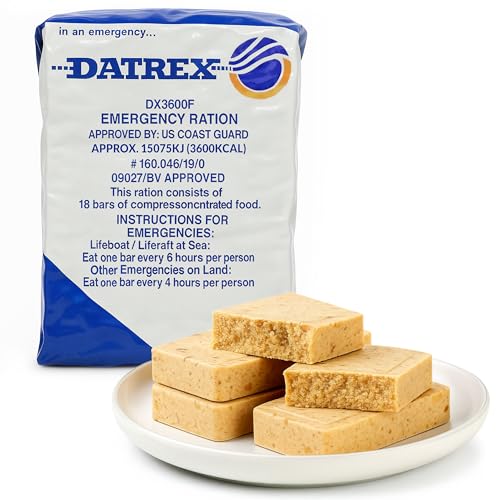
Survival Tabs (180, Maple)
The maker labels these gluten-free and the published ingredient list holds no wheat, barley, rye, malt or oats — but as this page shows, there is no certification or test result behind the label, so celiac readers should treat it as unverified and everyone else as a glove-box backup, not a meal plan.
$48.95 from AmazonWhat about UV light and leaving a bottle in the sun?
UV light can kill germs in small amounts of clear water, and it fails in cloudy water for the same reason bleach struggles there — particles block the germs from the treatment. The CDC describes portable UV units as a small-batch method: filter first, then follow the unit’s directions on clear water. Solar disinfection is the no-gear version of the same idea: fill clean, clear plastic bottles with clear water, lay them on their sides in the sun for 6 hours on a sunny day or 2 days if it is cloudy. Both are real methods with a narrow use — a bottle or a glass at a time, in water you have already cleared — not a way to treat a family’s day of water.
What can no home method fix?
No home method on this page fixes chemical contamination. Boiling and disinfection do not remove heavy metals, salts, fuel, or most other chemicals — the EPA lists those limits in the same breath as the instructions — and boiling a chemical problem can concentrate what is left as water steams off. That limit is also why a creek below a fuel spill, floodwater that has run through a garage or a chemical store, and any water you suspect carries solvents are not treatment problems at all. They are source problems. The fix is bottled water, a neighbor’s clean well, a municipal distribution point — a different source, reached before anyone drinks.
Questions people also ask
How long does disinfected water stay safe to drink?
Disinfected water stored in a clean, sanitized container with a tight cover stays the water you treated — the treatment killed what was in it at the time, it does not protect the container afterward. Keep it covered, pour rather than dipping a used cup or hand into it, and treat a container that has sat open or been dipped into as a new batch to treat again. For water you store ahead of an emergency, rotation dates matter more than treatment dates; our stored-water page works through the six-month home-filled rotation.
Can I purify water with pool chlorine or calcium hypochlorite?
The EPA does publish a calcium hypochlorite route — one heaping teaspoon of high-test granules in 2 gallons of water to make a chlorine solution, then one part of that solution to 100 parts of water — with a caution that the chemical is a powerful oxidant and its label governs handling. It is a real emergency method, and it is the least forgiving one on this page to measure wrong. Households are better served by the plain liquid bleach bottle, bought fresh, with the drop table taped to it.
Is rainwater safe to drink if I boil it?
Rainwater that you boil for a full rolling minute has had its germs killed, which answers the germ half of the question. What boiling does not answer is what the rain washed off the roof on its way down — that is a collection question, not a treatment question, and it is why our Rainwater Collection Calculator pairs its catchment math with a filter-and-disinfect instruction. Treat collected rainwater; do not drink it straight from the barrel.

Big Berkey Water Filter
A countertop gravity system for the household scale this page keeps coming back to — fill the top chamber and let it work through gallons without electricity, then disinfect stored water that has sat.
Check Availability
LifeStraw Home Pitcher
For everyday tap quality before an emergency ever starts — this page names the LifeStraw Home as a counter pitcher for normal use, not a substitute for boiling or disinfecting suspect water during one.
$51.99 from Amazon
ZeroWater 12-Cup Pitcher
A 5-stage pitcher that takes dissolved solids out of tap water for daily drinking — the pre-emergency half of the plan, keeping the stored and filtered supply for when the tap itself is in question.
$27.99 from AmazonFAQ
How do I purify water in an emergency?
Boil clear water at a rolling boil for 1 minute (3 minutes above 5,000 feet satisfies both the CDC’s 6,500-foot line and the EPA’s 5,000-foot line), cool it, and store it covered. If you cannot boil, add 8 drops of plain unscented bleach (5% to 9%) per gallon, stir, wait at least 30 minutes, and double the dose for cloudy, colored, or very cold water. Strain cloudy water first either way.
How many drops of bleach purify 5 gallons of water?
Forty drops — about 1/2 teaspoon — of plain unscented bleach at 5% to 9% sodium hypochlorite for 5 gallons of clear water, per the CDC table. Double it to 80 drops (about 1 teaspoon) if the water is cloudy, murky, colored, or very cold, and let it stand at least 30 minutes before drinking.
Does boiling remove chemicals from water?
No. Boiling kills bacteria, viruses, and parasites. It does not remove heavy metals, salts, fuel, or most other chemicals, and the CDC says water containing fuel, toxic chemicals, or radioactive materials cannot be made safe by boiling or disinfecting. That water needs a different source.
Will a water filter remove viruses?
A portable filter will not remove viruses at the pore sizes home filters are sold in — 1 micron or smaller removes parasites, 0.3 micron or smaller also removes bacteria, per the CDC. After filtering, add a chemical disinfectant to kill viruses and remaining bacteria. Reverse osmosis is the filter type the CDC lists as removing viruses as well.
Related questions
- Filter vs purifier — what’s the actual difference?
- How long can you store tap water — and do you treat or rotate it?
- Can I drink the water heater / the pool in an emergency?
- Why is the 72-hour water supply no longer enough?
Sources: CDC, “How to Make Water Safe in an Emergency” (updated September 19, 2024 — boiling is the best method, 1 minute / 3 minutes above 6,500 feet; bleach tables for 5% to 9% and 1% sodium hypochlorite, double for cloudy, murky, colored, or very cold water, wait at least 30 minutes; chemical disinfectants weaker than boiling on Cryptosporidium and Giardia; chlorine dioxide tablets kill Cryptosporidium when directions are followed; iodine limits; portable filters do not remove viruses, 1 micron for parasites and 0.3 micron for bacteria, disinfect after filtering; UV and solar disinfection for small amounts of clear water); US EPA, “Emergency Disinfection of Drinking Water” (updated February 24, 2026 — rolling boil 1 minute, 3 minutes above 5,000 feet; bleach table by strength, 8 drops of 6% or 6 drops of 8.25% per gallon, double if cloudy, colored, or very cold, stir and stand 30 minutes, repeat if no slight chlorine odor; fresh bleach stored at room temperature less than one year; boiling and disinfection do not destroy heavy metals, salts, and most other chemicals; calcium hypochlorite and iodine alternatives). No product prices are printed on this page. Prices last checked: November 7, 2026.
This question sits under the water questions readers ask us most — the full set is gathered here: What People Are Asking About Water Storage.
Talk it over with other readers. The Truly Preserved Community on Facebook is where readers compare notes on food storage, water, and backup power — and where your questions help decide what we research next. Join the group →
Viewers also searched for these items.

Saratoga Farms 5-Gallon Stackable
Eleven of these stackable 5-gallon containers cover the 56-gallon baseline, and the split lets you rotate, carry and refill one jug at a time instead of wrestling a single drum.
$318.79 from Amazon
TeraPump Drum Pump
A siphon pump sized for 55-gallon drums — battery-powered transfer at several gallons a minute, so filling a carry jug is a minute's work instead of a wrestling match.
$39.99 from Amazon
ProOne Big+
ProOne’s Big Plus handles hard water at the gravity end — the other route our water coverage scores for hard city water and wells.
$160.97 from AmazonPrices shown on this page were last checked November 26, 2026 — prices change; check before you buy.